Terry Prone: In 50 years, nobody stopped Eoghan Harris. That's our shame, not his
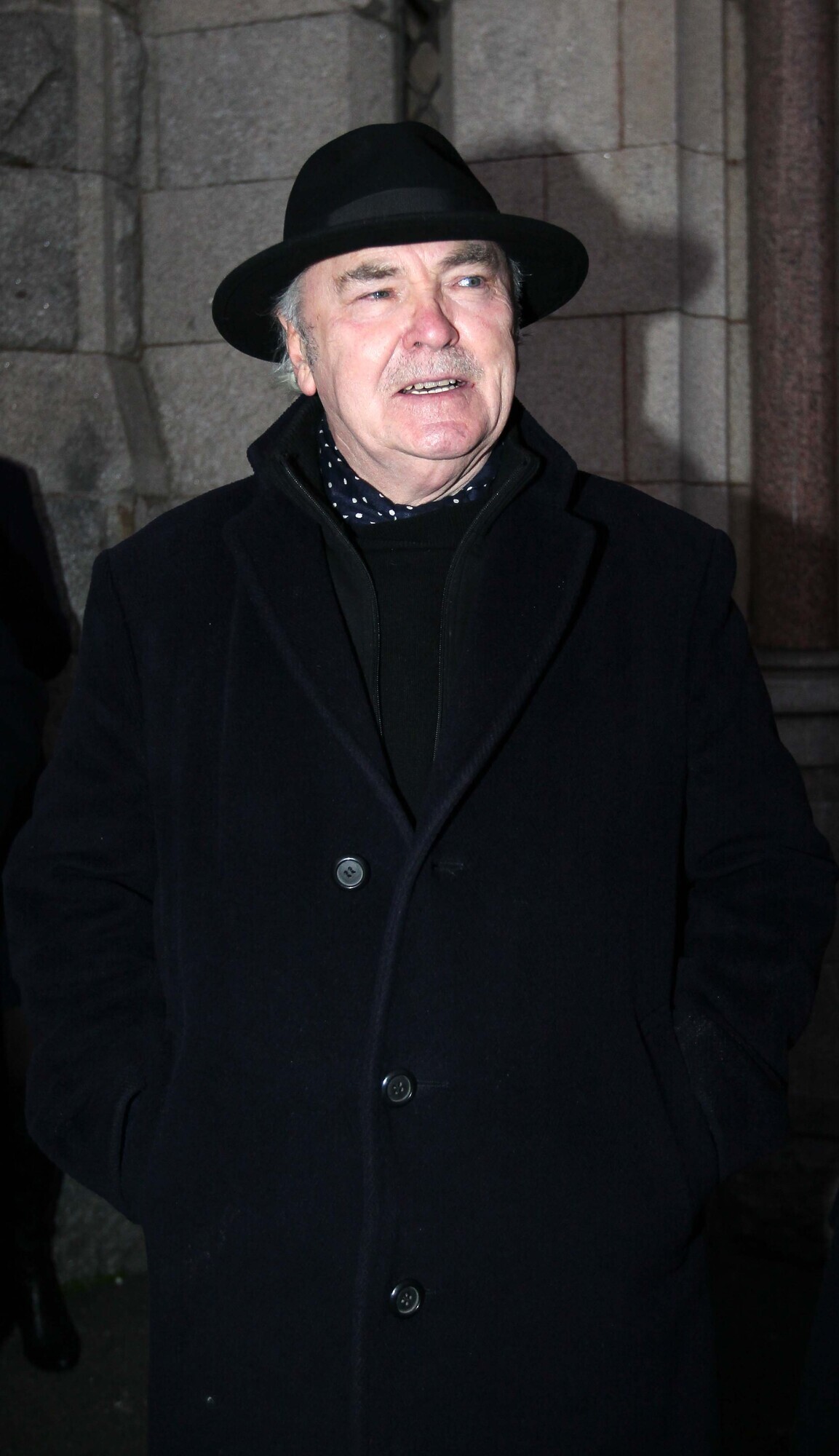
Eoghan Harris has had his contract terminated as a result of being involved in a fake Twitter account.
A client working for a multi-national who has to attend four Zoom meetings a day with zero chance of being called on to contribute confessed sheâs taken to doing her 10,000 steps during the first of those meetings, listening as she goes but not visible onscreen.
The EU hasnât distinguished itself thus far in relation to vaccinations. Speedy development of a simple vaccine passport could redress the balance.
I hear a chirping. Like a bird in distress. Inside my home. Accompanied by the triumphant bellowing of a cat with prey. Rushing out into the main room, I encounter the rear view of Dino, who is settling down to a repast. Without registering one crucial detail, I kick him with a socked foot, yelling profanities at him. He is affronted by this, moving away but not far and gazing at me with concentrated enmity. The detail I missed was a long tail. No feathers. Just the kind of long tail you get on an oversized rat. I panic that the rat may attack the socked foot with which I kicked Dino, but the rodent doesnât seem to have any attack left in him. I apologise to Dino and invite him to get on with the meal I interrupted. He gives me a long âthatâll teach youâ look and exits, leaving the rat as my problem.
Bill and Melinda Gates put out a statement to the effect that they can no longer grow together. Grow together? Ah, lads. Why donât the rich simply say âweâve gone off each otherâ?
My colleague, Robyn, sends a copy of by Fiona Scarlett with a tiny note marveling at this being a debut novel. Sheâs right.
Overnight, Alan English, the editor of the , has canned Eoghan Harris.
Itâs taken a long, long time. When I was a teenage freelance journalist and broadcaster, Harris, then an RTĂ producer, became a legend during a series of âsit-insâ within the national station. My print boss at the time was the wonderful Mary Kenny, and, at a meeting in her office in the defunct Irish Press on Burgh Quay, I listened to her accurately describing Harris as a brilliant, charismatic leader. One of the volunteers over in the TV block in Donnybrook, sitting in as a protest, was my radio producer, Howard Kinlay, already under a management cloud for left-wing activism.
Worried for Howard, I told Mary, in front of the other freelances on her team, that Eoghan Harris was a ruthless demagogue who never considered the possibility that he might be wrong about anything, a man who didnât care about his followers, leading the naive into danger yet somehow never suffering, in career terms, himself.
The silence that greeted this blurt was, I thought, more reverential than the comment actually deserved. Until Mary drew a deep breath, nodded at one of the other hacks present, and said: âYou do know, donât you, that Anne is Eoghanâs wife?â Of course, I hadnât, and, of course, itâs impossible to apologise satisfactorily for something youâve said when you believe every word to be true. What small potential had ever existed for Anne Harris and me to be friends died right there.
I wasnât particularly clever in my teens and I mention what I said then not in schadenfreude but to wonder why, in the half-century afterward, until Alan English, nobody ever stopped Eoghan Harris.
Harris survived and succeeded like the Hydra in Greek mythology. The Hydra had an endless supply of heads, which, until Hercules outwitted it, made it unkillable. Same with Harris, unique in his transient energetic commitment to political parties including, at different times, Labour, Fine Gael, Fianna FĂĄil, and unionists. Fine Gael was badly burned by his tasteless, unfunny, ard fheis skit starring Twink. The party leader of the day had to apologise for that skit at some length. Harris, never. In fact, he found a way to blame Fine Gael for the disaster.
As the noted yesterday, Harris for 20 years denied his secret membership of the Workers' Party, threatening to sue anybody likely to say otherwise. His political loyalties might shift. His modus operandi, never.
His key instrument was the unstoppable monologue. Some politicians at the receiving end worked out that the payoff for humouring him could be a positive mention in his column. The currency was attention. Give him that, and approval flowed from him. His prime need is to be validated, whether as a commentator, screenwriter, or adviser to politicians. So bottomless is the pit of his neediness, itâs no surprise he ended up on Twitter praising himself for oratory, literacy, singing, and heroism.
Most commentators, when RTĂ stops ringing them, know â if theyâre realistic â the station a) thinks theyâve become predictable, or b) finds them a temperamental pain in the arse to deal with. Not so Harris. He used the and â as we now know â his pseudonymous Twitter account for the same purpose: To rail against his absence from the airwaves as being attributable to RTĂ being in the pocket of Sinn FĂ©in.
Insight? None.
Itâs crazy someone could kid themselves theyâd assuage the anxieties of the disaffected Northern Ireland working class through a Twitter account with fewer than 2,000 followers. Itâs crazy to insult this paperâs Aoife Moore in such crude terms that she needed the help of gardaĂ and a counsellor to cope with it. (And, donât forget, the account impugned Aoifeâs journalistic standards as well as laying twisted sexuality on her.)Â
Itâs crazy he and some other anonymous old persons would set up and use eight sock puppet Twitter accounts so ineptly. (The word âtribalâ is a giveaway. Harris always uses it to smear people he disagrees with.) Itâs crazy that, having been discovered, fired, and exposed, he would still think he would win by going on RTĂâs to be interviewed by someone whoâd been Tweet-abused by him. Itâs even crazier that, when Sarah McInerney instanced this abuse, he basically told her it was all right because she was a strong presenter.
This is parallel universe stuff. But it has worked. For 50 years, Harris built a career out of duplicity, force of personality, lack of insight, flashes of creativity widely separated from each other, frenzied self-regard, and sheer uncaring nastiness to others. Anybody whoâs come into contact with him could see him for what he was. And is.
Because he has never changed.
But in half a century, nobody stopped him. Nobody stopped him. Thatâs our shame. Not his.
I am twice blessed. Or at least, as of yesterday, twice vaccinated. Oh, the places Iâll go! If they ever open up, that is.