Daniel McConnell: Labour's hard work still not resonating with the public 
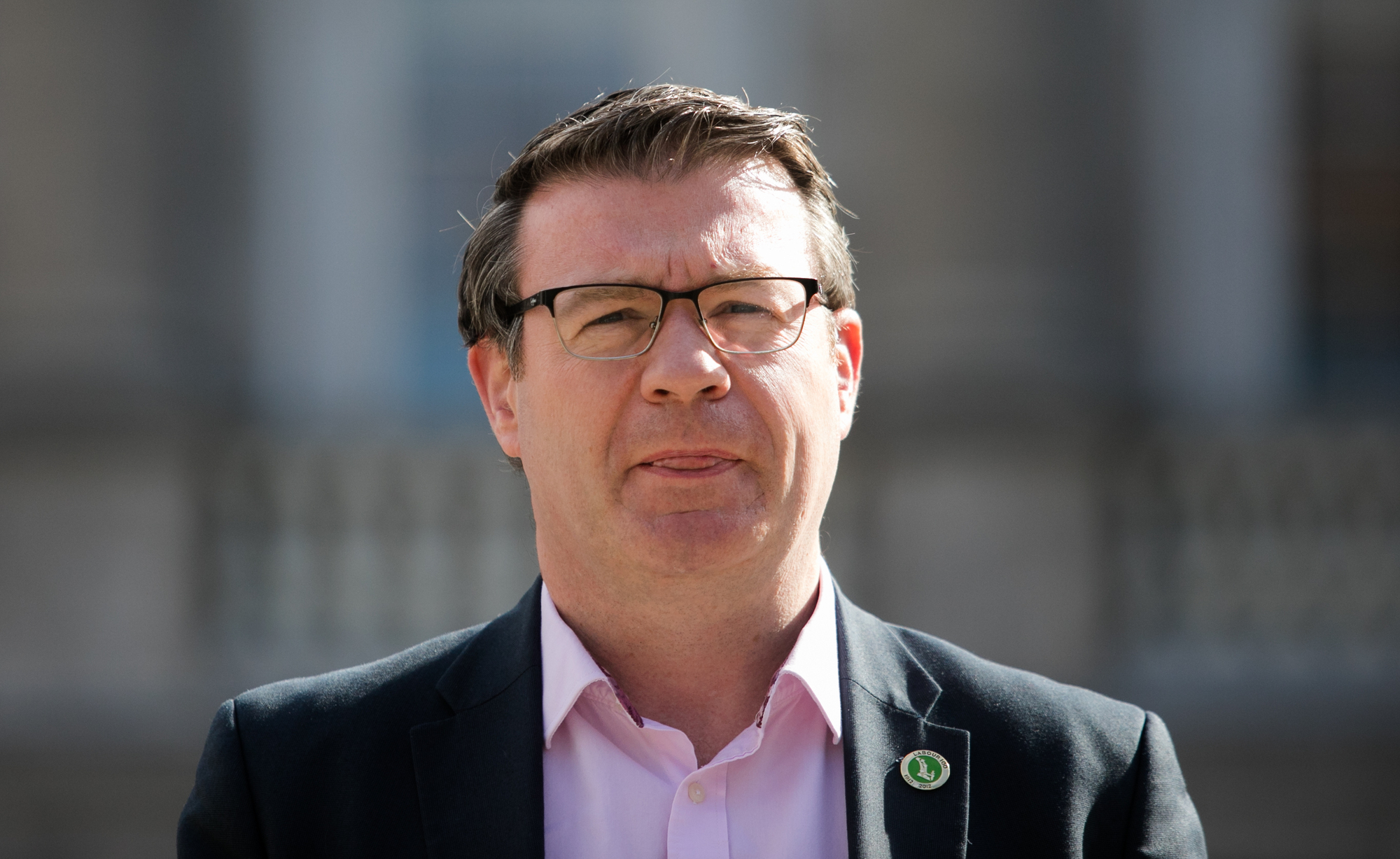
Labour finds itself stuck on 4% in polls, and despite Alan Kelly's probing presence in the Dáil, doesn't seem to be connecting with a public it alienated during its time in government
Daniel McConnell: Labour's hard work still not resonating with the public 

Labour leader Alan Kelly has brought a sharper edge to the party, particularly in the Dáil, and also on the social agenda. Picture: Gareth Chaney/Collins

The shockwaves from last weekend’s Red C opinion poll largely centred on the disastrous 11% poll rating for Fianna Fáil.

Were such a result to be replicated on polling day at a general election, the party would be reduced to somewhere between 14 and 18 seats.

The discontent among the lead party in Government was palpable and the mutterings around the need for change have intensified this week. 

The poll was also a disappointment to the ranks of the Labour Party, which finds itself stuck on just 4%.

Indeed, since the general election in February 2020, the party has bobbed between 3% and 5%, despite the change of leader from Brendan Howlin to Alan Kelly.

The primary source of frustration for its members is that Kelly has brought a sharper edge to the party, particularly in the Dáil, and also on the social agenda.

Ministers regularly acknowledge that Labour has punched above its weight in terms of the impact in putting the Government under pressure.

The party, too, has a strong if small Oireachtas team and a firm base of 51 councillors, yet for whatever reason cannot reconnect with an electorate that abandoned it wholesale in 2014 and 2016.

For the country’s oldest party with a proud tradition of leading social change, its poor current standing is a long way from the record 37 seats it won under Eamon Gilmore in the 2011 general election. 

Many of us remember the “Gilmore for Taoiseach” campaign, which, even then, but more so now, smacked of outrageous hubris.

With the country in dire economic circumstances, those who followed Gilmore into power said they were doing so for the good of the country.

That may be, but from a purely political standpoint, Labour’s time in government, along with Fine Gael, has proven to be a disaster for the party.

It may have seen itself acting in the national interest, but its former supporters didn’t agree.

Howlin, recently speaking about this very matter, said: "I have no doubt it was a government that righted the ship and saved the economy.

"But I think a political lesson that has been learned is that if you do put the interest of the country absolutely before the party, there's a very high price to pay, and I'm not sure political parties will pay that price in the future. Any political party."

After the 2016 mauling at the polls, Joan Burton relinquished the leadership and a reluctant Howlin was convinced to seek the position by colleagues who feared what would happen should Kelly take charge.

For a normally democratic party, none of Kelly’s colleagues were prepared to nominate him to allow him stand and Howlin’s rise was assured.

While he said it would take two years for any noticeable change in terms of public support, a Howlin bounce never materialised.

The party did little to detoxify itself and, sure enough, even though the 2020 election saw the return of Ged Nash and Aodhán Ó Ríordáin to the Dáil and the arrival of Duncan Smith, Labour returned with only six seats.

Aodhán Ó Ríordáin speaks to the media on the Leinster House plinth. File picture: Leah Farrell/Rollingnews.ie

Predictably enough, Howlin quickly fell on his sword and Kelly was ushered in as leader.

Kelly, in opposition, has shown a dogged-like persistence in following up on issues. It was his questioning about the treatment of then Garda whistleblower Maurice McCabe that ultimately led to Frances Fitzgerald’s departure as tánaiste.

His pressure on CervicalCheck was key in moving the issue forward and his focus on the vaccine issue has been the sharpest in the Dáil.

However, Kelly suffers from his own previous time as a minister, with many people on the left refusing to forgive him for his role in the introduction and rollout of water charges.

Although, as he would put it, he was “handed the greatest hospital pass in political history” from Phil Hogan, Kelly and Labour will forever be seen to have been on the wrong side of the divide on the water-charges issue.

Internally, there are many traditional Labour supporters who don’t see Kelly as “real Labour”, hence their preference for the “ultra-woke” Ó Ríordáin who had challenged Kelly for the leadership.

In a 2015 interview, Kelly admitted he is “no bastion of the left” and is known to hold conservative views.

Between the residual toxicity and question marks over its left-wing credentials, in a highly crowded left-wing space in the Dáil, Labour appears to have no room to manoeuvre.

Many of its previous heartlands have been surrendered to the likes of Sinn Féin.

Take the constituency of Dublin Mid-West which comprises townlands such as Clondalkin, Lucan, and Palmerstown. In 2011, Labour, through Robert Dowds and Joanna Tuffy, took two out of four seats.

The party won no seats here last year, Sinn Féin's Eoin Ó Broin and Mark Ward taking two seats.

Other areas such as Cork City, Kerry, and Galway, where Labour once was a constant presence, are now hostile to the party, it seems.

Unlike its UK counterpart, the Irish Labour Party has had a more middle-class urban support base. It has never been a truly national party so many of the seats it has managed to hold in 2016 and 2020 were more personal votes and fiefdoms than any signal of a national trend.

The party has not had a strong tradition of holding seats when retirements happened and the expected retirement of Howlin in Wexford next time around is another likely loss.

The party must be looking to where it can make potential gains.

Its five senators are the obvious starting point for at the next election and Marie Sherlock in Dublin Central and Rebecca Moynihan in Dublin South Central are obvious ones to watch.

Mark Wall, son of former party chairman Jack, is another who must deliver a seat if the party’s future is to be rescued.

Sinn Féin will be confident that the surge for change that swept so many of its candidates into the Dáil last year can be maintained.

Should no significant improvement materialise in the short run for Labour, the calls for a merger with the Social Democrats are only sure to intensify.

With virtually nothing to distinguish the parties in terms of policy, the clear impediment to any sort of merger is personality, particularly that of Róisín Shortall, who left Labour in acrimonious circumstances.

It is never possible to limit the reasons why people do or do not decide to vote a certain way.

If Kelly and Labour are to see their fortunes revive, they can only hope that all their hard work at national level and in the Dáil begins to resonate.

Much easier said than done.

x

More in this section

Revoiced

Newsletter

Sign up to the best reads of the week from irishexaminer.com selected just for you.

Cookie Policy Privacy Policy Brand Safety FAQ Help Contact Us Terms and Conditions

© Examiner Echo Group Limited