Elaine Loughlin: It's sick that Ireland doesn't have illness benefit for low-paid workers
Growing up, Lent meant giving up chocolate and the reappearance of the Trócaire box in our house.
We scooped up our pennies and even found the odd shiny 50p to donate to famine-afflicted countries in Africa, to islanders ravaged by hurricanes in Central America and other communities impacted by severe poverty.
We generously and rightly give to these collections but continued to ignore our own working poor.
Workers don't need charity donations, instead they require the Government to act on a measure that should already be a basic entitlement.
In August, as Covid-19 swept through our meat plants, serious concerns were raised that employees were being effectively forced to turn up to work even if they had symptoms, as taking time off would also mean a loss of income.
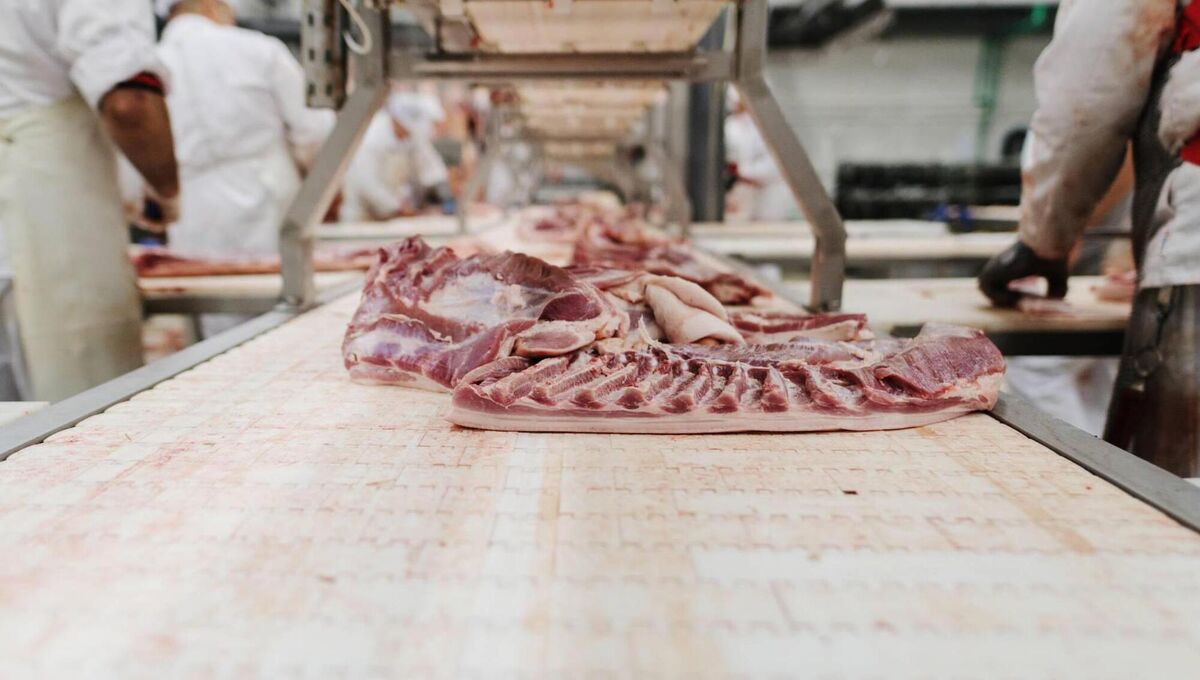
The pandemic highlighted a persistent issue for mainly minimum-wage or low-paid workers who feel obliged to work even if they are not fit to.
"For low paid workers, even if they are on the enhanced illness benefit they still suffer a very significant loss of earnings, that could be €50 a week, which may not be a lot to some people, but it's enormous to others if they are low paid and very much struggling to make ends meet," said Labour senator Marie Sherlock, who brought forward a a statutory sick pay bill back in September.
Meat plant workers accounted for 42% of workplace infections between November and February 13.
Of course. we cannot say how many of those cases could have been prevented if statutory sick pay was already introduced, but it has been pointed out that the lack of paid sick leave in this country is a fundamental weakness in fighting Covid-19.
Between 800,000 and 1m people do not have a sick pay scheme in work, meaning they are totally reliant on what Siptu economist Michael Taft describes as a "woefully inadequate illness benefit from the Department of Social Protection".
Ireland is now just one of only five EU countries that doesn't enshrine the right to sick pay in law. The UK also provides statutory sick pay and a new scheme was recently introduced in the US.
In the community sector, people who work side-by-side doing the same work can be treated differently when it comes to sick pay, depending on their source of funding, community worker Linda Scully told a webinar entitled 'Healing our Sick Pay System'.
"Some might have sick pay and others might not. This creates an arbitrary and unfair discrimination,” she said.
Speaking at the same event in October, manufacturing worker, John Montgomery said: “It can take a week for workers to access the illness benefit payment, which is very small. This means that workers either come into work while they are sick or they take time off and lose their pay."
Leo Varadkar, as Minister for Enterprise, launched a public consultation process last November which received a total of 118 submissions.
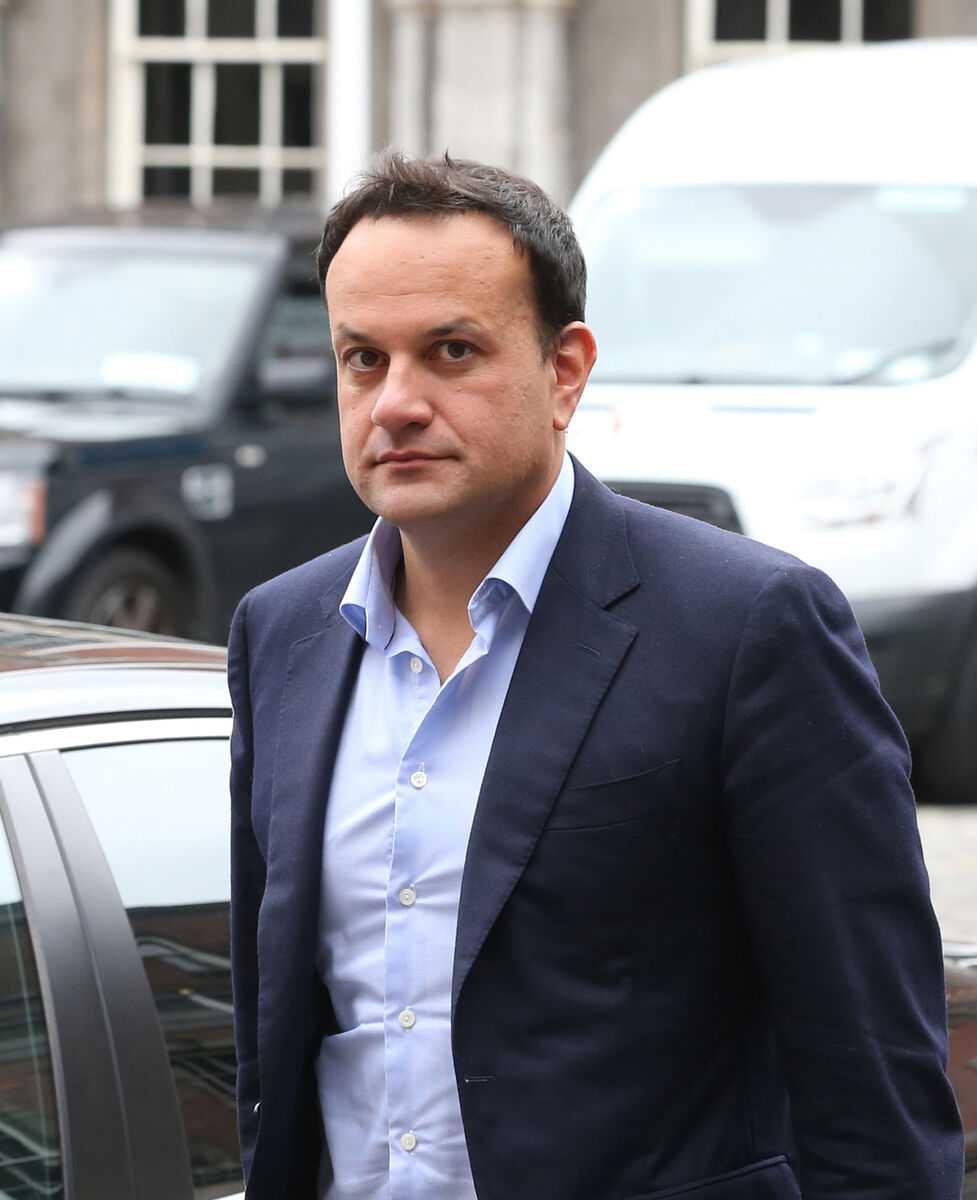
Launching the consultation process, Mr Varadkar said he wanted to introduce a statutory sick pay scheme that works for employees and employers.
Equally, his department recently stressed the importance of protecting employers.
“The intention is to develop a scheme that is fair and affordable and that does not place an undue burden of costs on employers. “
“Any move to introduce a statutory sick pay scheme which will place a new financial burden on employers must be balanced with the need to support the viability of the business and enterprise sector, thereby protecting jobs," the department wrote in correspondence to the Oireachtas committee on enterprise and employment earlier this month.
Solidarity-PBP picked up on this point and ran with it in the Dáil, claiming the Government continues to represent the interests of big business and not vulnerable workers.
"If it is a populist conspiracy theory that the Government represents the interests of the beef barons and not the interests of the workers, why, 10 months after this issue was first raised in the Dáil, has the Tánaiste not acted to introduce sick pay for meat factory workers?" Paul Murphy asked on March 4.
The Tánaiste was quick to point out that "workers need jobs, and we always have to bear that in mind in our policies too".
A spokesperson for the Tánaiste said he was committed to introducing a statutory sick pay scheme in Ireland and work is progressing on the heads of a bill. It is hoped a bill will be enacted and up and running before the end of the year.
But Ms Sherlock believes the Government has been "hedging its bets" that the pandemic would simply go away and the issue of sick pay would dissipate with it.
Statutory sick pay cannot and should not be purely linked to Covid. The Irish Cancer Society has also called for statutory sick pay and enhanced supports which it says are needed to help cancer patients return to work.
"There will always be a need for sick pay whether we have a pandemic or not, obviously it's more urgent now because there are large numbers of people who need it," Ms Sherlock said.
Covid has provided a new perspective on the term 'essential worker', as many of us had the luxury of safety cocooning from behind laptop screens.
Eventually, we will all be vaccinated and Covid will become a distant memory, but the danger is that as normal life resumes, we will also forget about our binmen, our shelf-stackers, our meat plant workers and the issue of sick pay will not be tackled.
The Government needs to learn that change must begin at home.
- The pandemic has undoubtedly exposed Ireland's poor planning and provision for life in our later years. the Health Committee will discuss the regulation of nursing homes and a new model of care for older people.
- Given the announcement to close over 100 of its branches, the appearance of Bank of Ireland officials at the Joint Oireachtas Committee on Finance, Public Expenditure and Reform and Taoiseach is likely to be an interesting one.
- The much-anticipated Family Leave Bill (2021) is due for debate in the Dáil on Wednesday afternoon. However, Children's Minister Roderic O'Gorman has already said a change of mindset is needed, as nearly 50% of dads don’t take parental leave already on offer.
- The proposed EU Covid green pass to allow for greater travel signed off on in Brussels last week, is sure to be raised with Transport Minister Eamon Ryan when he takes questions in the Dáil.
- The Thursday morning slot has become an almost permanent speaking session for the Health Minister, who will be in for further interrogation on the Government's vaccine rollout and hotel quarantining.
- The Taoiseach will take part in a EU virtual meeting of leaders on Wednesday and Thursday. Items on the agenda include the response to the Covid-19 pandemic, the single market, digital transformation and the economy and relations with Russia.
- The cost of insurance and those making false claims has been a hot topic in recent years and the regional group of nine TDs are bringing forward the Civil Liability and Courts Bill to tackle this. The bill would increase the penalties relating to fraudulent claims and would impose legal costs on those found guilty. “Each week An Garda Síochána receive reports of fraudulent insurance claims and there is a perception that fraud and exaggerated claims have been increasing in recent years, however, at present there is no consequence or risk to taking such a claim,” independent TD for Galway East Sean Canney said ahead of the debate.
The Tricolour flag flown over the Dublin GPO in 1916 is handed back by the British to representatives of the Irish Government in London. "A cloak and dagger atmosphere permeated the arrangements for the handing over in London yesterday of the historic flag which flew over the GPO during the Easter Rising," the reported.
61 people died in Ireland’s worst ever air disaster. The following day a report on the front page of the said Aer Lingus had confirmed that "little hope could be entertained of finding any survivors from the worst tragedy in the history of its operations when a Cork-London Viscount aircraft with 61 people – including two babes in arms – plunged into the sea off Stumble Head, near Fishguard, Wales, just before noon."
In the US, Ronald Reagan is shot. The following day the reported that the president had a bullet removed from a lung after the assassination attempt. He was shot by John Hinckley Jr as left the Washington Hilton hotel after addressing a union convention.
Tourism minister John O’Donoghue launches the 'Value Menu Restaurant Guide' to offer meals at three price points – €15, €25 and €35. However, the scheme did not make the front pages as just days before US president George Bush had launched project 'Shock and Awe' on Iraq.
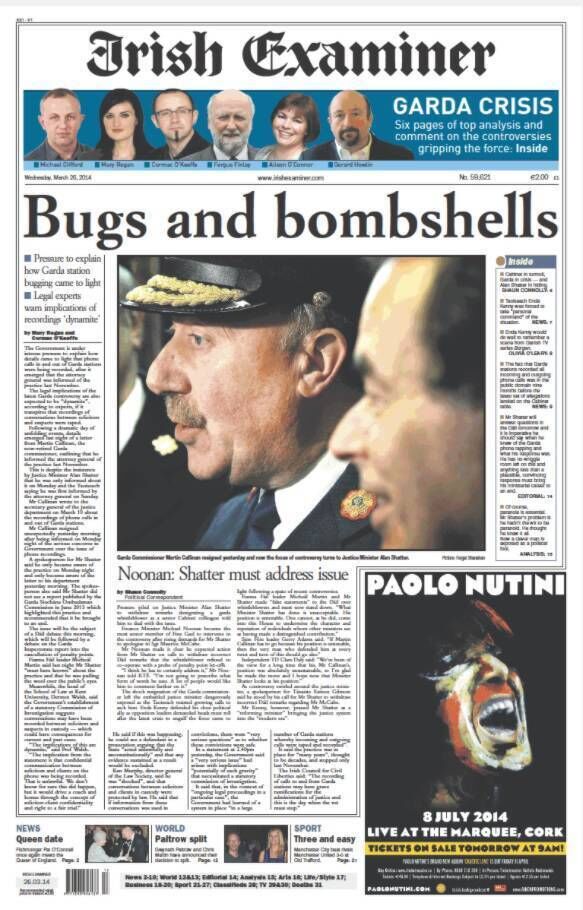
Garda commissioner Martin Callinan resigned after months of controversy and a now-famous appearance before the Public Accounts Committee during which he described whistleblowers, Maurice McCabe and John Wilson as “disgusting”.

CONNECT WITH US TODAY



Be the first to know the latest news and updates