Clodagh Finn: A bright spot in a year that was strictly for the birds
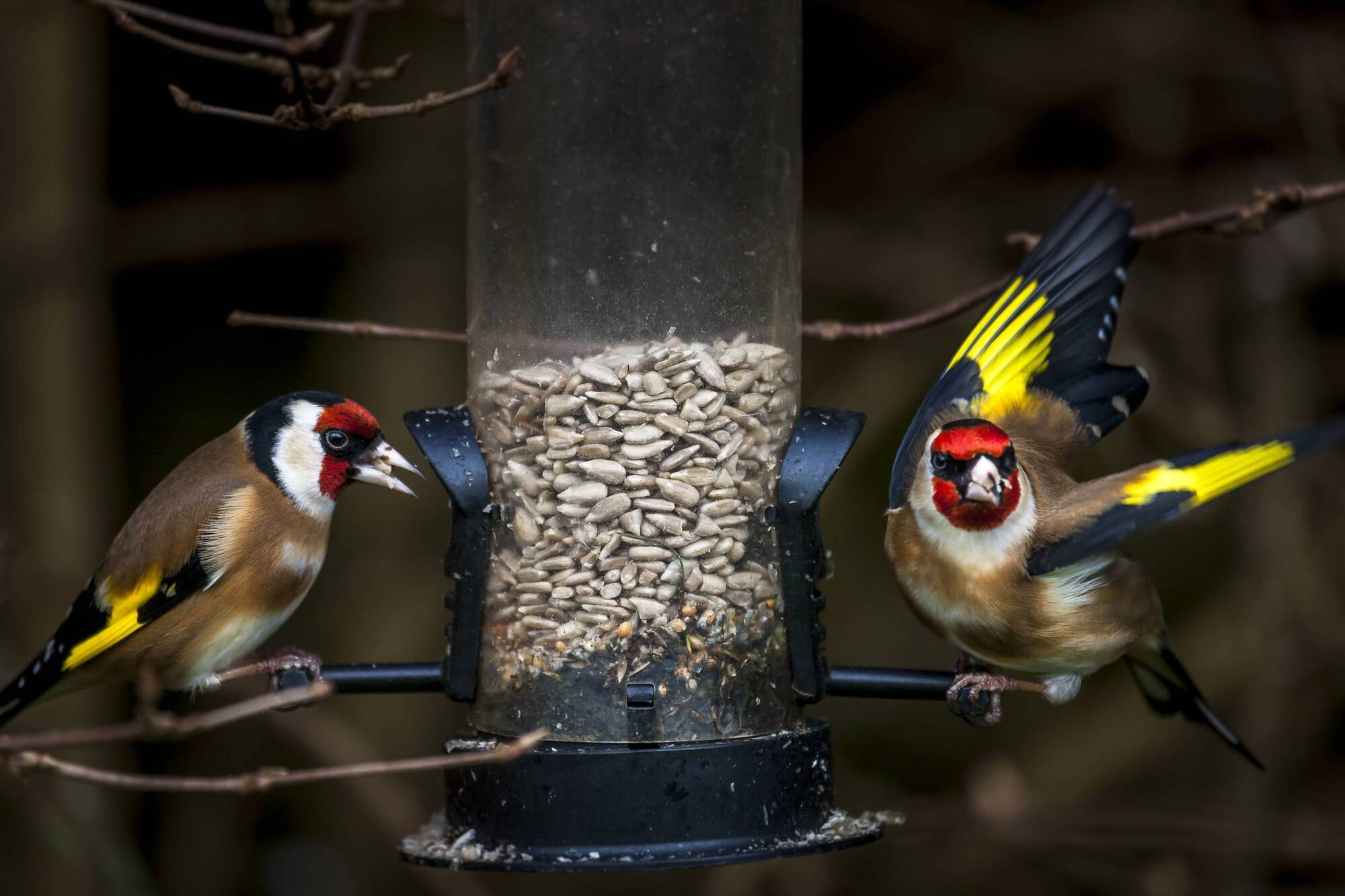

“Look!” I said. “Come quickly! There are four, six ... no, eight goldfinches at the birdfeeder.”
I watched as a charm — the collective noun for goldfinches, apparently — dipped and bobbed from the telephone wire to gather on the birdfeeders just outside the kitchen window.
Word had clearly got out that this household, late to the party, had finally got the message that goldfinches love a particular kind of seed (nyjer seed, if you’re asking). It’s been a revelation, not so much the seed itself, but the realisation that birdwatching from the kitchen window has turned out to be the best pandemic activity of them all.
Almost as quickly as they had come, the goldfinches were gone, but they had transformed a dull day in late November. Charm by name, and charming by nature. Such are the small wonders that are getting us through these days of uncertainty, dread, and looming lockdowns.
It’s no surprise, then, to read that birdwatching has become the new binge-watching, to quote a Canadian TV channel which made the clever observation that, at a time when we have all been glued to our screens, the greatest big-screen TV may well turn out to be the window to the garden, for those lucky enough to have one.
There, the drama is unfolding as more and more of us are shaken into a new awareness of the natural world and the deep joy that it can bring. The other day, for instance, I was stopped in my tracks on an urban lane by a robin, in full song, perched on the branches of a bare tree I had never noticed before.
I was fascinated to read afterwards that birds have regional accents, just like humans. Research has shown a noticeable difference between town and country bird-song. City birds, scientists found, sing at a higher pitch to reduce the echoes of sound bouncing off buildings.
It has taken a pandemic, but at least now people are starting to look at the wonder of the natural world around them. Who could ever have predicted that Irish Rail would play the sound of birdsong on its PA system in November as part of a public art project by sound artist Christopher Steenson to highlight one of the upsides of lockdown — a dramatic fall in noise pollution?
I wonder if it featured the song of town or country birds, or both?
Such are the questions of deep importance that fizz to the surface when we are given time to think.
I’m beginning to learn the collective nouns for birds too, courtesy of the wonderful Birdwatch Ireland website which, incidentally, has just launched its Irish Garden Bird Survey, the annual citizen science survey that asks members of the public to note the bird species visiting their gardens from December to February.
Get charting. You’ll be in good company, because that’s exactly how famous naturalist David Attenborough spent lockdown when Covid-19 forced him to cancel his travel plans. He kept track of the birds visiting his garden and listened to them.
It offered a vision of what the world might be like if we had more time to sit and stare, he said, rather poetically, last week.
As we brace ourselves to become level-5 homebirds yet again, it looks as if we will have a lot more time to do just that. And there are few better ways of spending lockdown. Watching birds from the kitchen window or through the slats of the blinds of my makeshift home office has been a constant bright spot in a year that has thrown us an unending series of curve-balls.
For a while, it seemed as if our garden played host to nothing but tidings of magpies, to quote my newly acquired knowledge. They seemed to be everywhere, but often visiting alone, with their ill-tidings of sorrow, to quote the well-known rhyme, “One for sorrow, two for joy…”.
A friend was even convinced the same magpie was turning up in her garden every morning to goad her. She spent a good portion of lockdown waving at it, to dispel the jinx.
I did the same to solo visitors, but soon there were so many magpies and they so often came in pairs that I gave up. I also began to see how beautiful these much-maligned birds are, and how clever and playful. I spotted two of them on the roof of the shed pecking at a six-inch dog chew that they had clearly harvested from the grass below. Impressive.
It’s a little unfair that magpies have such a bad name, but at least their collective noun is hopeful, unlike say, an unkindness of ravens or a murder of crows.
Crows, and other corvids, are among the smartest birds in the world. Some can use tools or play tricks, and they even hold ‘funerals’, gathering around a dead crow to, scientists think, assess the danger of predators. Though who’s to say there isn’t more to it?
They also watch us, and if you feed them they will not only come to recognise you, but your car also.
There is so much to know about birds. Watching them helps to uncover some of their secrets but, as perhaps we are now beginning to appreciate, they also tell us much about ourselves.
On a particularly plodding pandemic day, a friend told me how she got renewed strength from watching birds building a nest. Just when their painstaking work seemed complete, the nest fell from the tree, crashing to the ground below. Without missing a wing beat, they started all over again.
Little wonder that birds — and the characteristics we ascribe them — are so deeply ingrained in our idioms, our literature, our myths, and our understanding of the world.
In a few days’ time, the smallest bird in Ireland will take centre stage as people around the country mark Wren or Wran Day, a tradition that goes back to ancient times. One story has it that the little bird was hunted on December 26 because it once betrayed St Stephen. Another claims the little bird rumbled an Irish ambush against the Danes by landing on a drum and making a noise, while another version has it that it happened while the Irish were fighting the English.
What’s impressive, in either case, is that the story of the wren and the ditty that goes with it have survived through the centuries. We might not see the Wren Day processions this year, but the old rhyme will certainly be recalled.
“
”
There will be time to recall so many other bird stories in the coming weeks now that our own wings have been clipped once again with a return to level 5 restrictions.
Maybe this time we’ll do as David Attenborough suggested, and allow ourselves more time to sit and stare.
CONNECT WITH US TODAY



Be the first to know the latest news and updates