Terry Prone: I blame Paul Galvin for making me lose my car keys
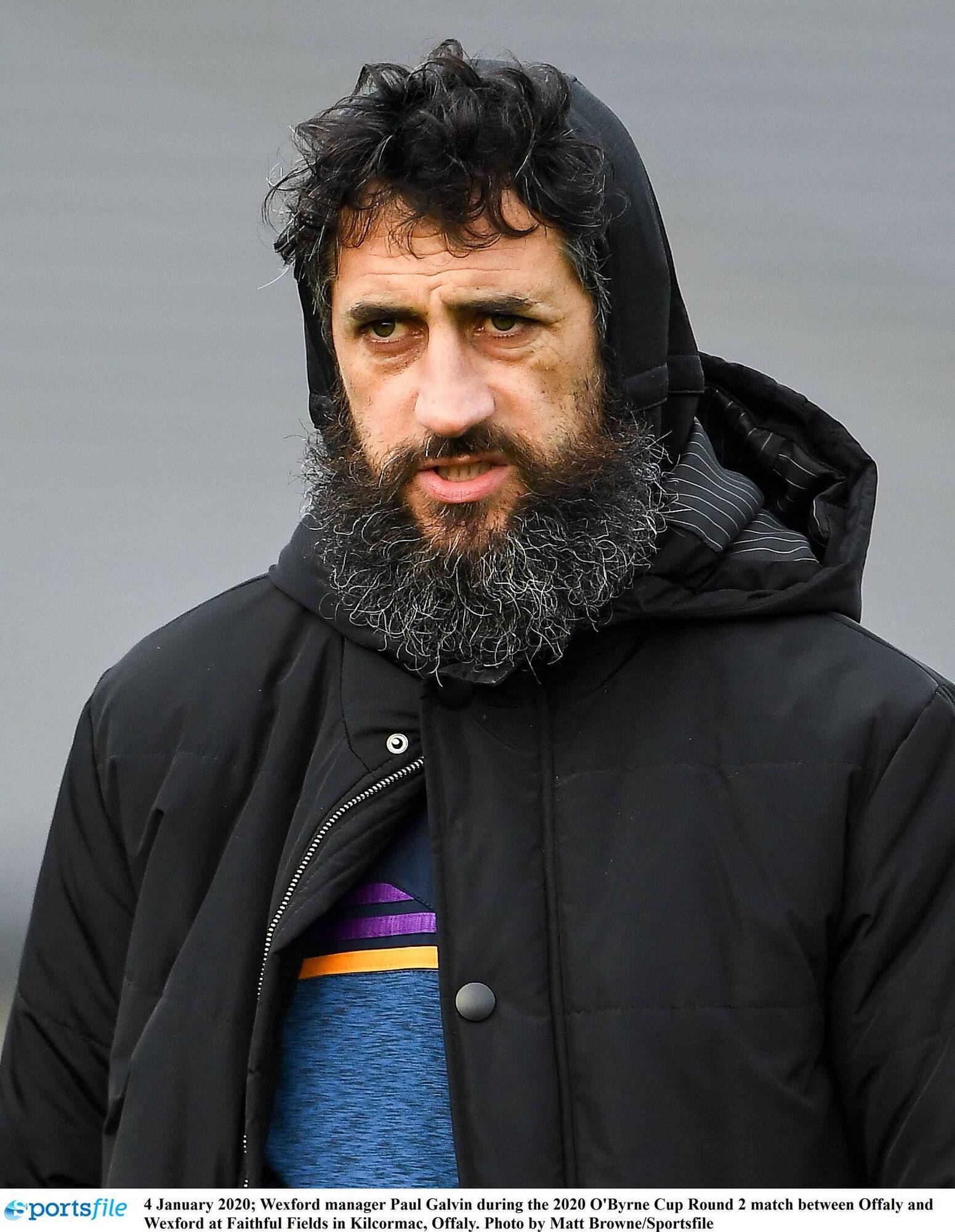
Paul Galvin on the sideline during his time as Wexford manager earlier this year. Picture: Matt Browne/Sportsfile

It’s not a good start when the subeditor working on my column contacts me to point out, with understated courtesy, that I’ve managed to fit eight days into my week and that seven is the limit.
I am apologetic but unsurprised. Without the normal weekly dividers, days run into each other.
To the frequently asked question “What the hell did I come into this room for?”, I now have to add “And what the hell day is it, anyway?”
Maybe, as you get older, the daily silent query “Am I fatter today than yesterday?” gets replaced with “Am I more batty today than yesterday?” Or maybe you get the two together in a BOGO for the brain-challenged.
I blame Paul Galvin for making me lose my car keys. In the face of an even more decided imprisonment, I make a mad rush into Dunnes Stores to buy six red velvet cushions for the black leather chairs gifted me by my son.
That adds up to an awful lot of bags, and I sit on a round couch to sort them before realizing I’m being smouldered at in a threatening way by a poster of Galvin, who collaborates with Dunnes Stores on a range of “urban street wear".
I have never done anything on Galvin, but he shoulders at me in such a threatening way, I abandon the sorting and head for the car, where I find I have no car keys.
Doing the rounds of courtesy desks for an hour will give you a profound case of buyer’s regret about cushions, not to mention severe reservations about Galvin.
Having wandered around Easons, I feel I must buy a book and pick up pretty much at random. Later, I read it in one entranced chunk.
Why did nobody ever tell me about Catherine Ryan Howard?
This is the best thriller for years, centred on a genius plot device and written with such unselfconscious authority, the reader is never permitted to stop believing in the characters for a moment.
The good news is that this writer has two other books to her name. Not hinting for Christmas or anything.
First thing, I look out the bedroom window as a luminous dawn lightens the sky, to find the little cove I overlook filled with swimmers.
Well, five, at least, all with those coloured buoyancy balloons attached to them, giving each the appearance of having a second head, this one oversized and pink. They should write a book called . Or .
Before thriller-escapeism, I was reading Svetlana Alexievich’s , an oral history of the Second World War as experienced by Russian children as young as four, recalled in their sixties and seventies. Brief stories of terror, of loss, of grief, leaving each one of their tellers maimed in a different way.
They tell of fathers forced to dig their own graves and then shot in the back of the head, of mothers raped to death, of starvation so harsh that one ten-year-old trapped and killed his beloved pet dog in order to have something to eat — and grieves to this day about that betrayal.
Albeit far from uplifting, it is, nonetheless, a useful book to read at this time, if only because it hammers home the relativity of suffering.
In this morning’s , the leader writer compares Marshal Georgy Zhukov and General George Patten unfavorably with other leaders because these two were “indifferent to the sensitivities of the soldiers they led” and “secured loyalty often through fear.”
Perhaps because of Alexievich’s book, I can’t help but think that Zhukov mightn’t have had much time to think of individuals when he was trying to lift gruesome inhumanity is illustrated by the fact that cannibals could face one of two charges: eating the already dead and murdering the living in order to eat them.
In that context, expecting a commander to show sensitivities to his soldiers might not be realistic.

In addition, two people showed immense loyalty to Zhukov, neither of whom experienced his undoubted capacity to terrify. One was Eisenhower, who sent him gifts long after the war ended and frequently spoke of his admiration for the Russian leader. The other, oddly, was Stalin’s son.
When Stalin conferred on Zhukov the signal honour of leading the victory parade in Moscow after Germany surrendered, he added to the validation the gift, for the day, of his own magnificent grey horse.
Zhukov knew just how important would be the symbolism of being mounted on the horse everybody knew to be Stalin’s.
What he didn’t know, until Stalin’s son sought a secret meeting with him to tell him, was that the horse hated every rider but Stalin and unseated anyone foolish enough to mount it.
That Stalin’s son confided in Zhukov was the reason his father was lending the animal: Believing that it would throw the Marshall right in the middle of the Parade, right in the middle of Moscow.
Zhukov took the advice seriously and spent the three days before the parade working intensively with the horse until he was sure the animal knew who was boss.
The parade passed without the ritual humiliation planned by his leader.
Which, of course, prompted Stalin to demote and effectively exile the man who had led at Leningrad, Stalingrad, pioneered the use of tanks in the USSR and created a generation of soldiers — those who survived — who worshipped him.
This paper’s editorial criticisms about the Marshall are justified. Zhukov never pretended to his soldiers that he saw them as anything other than cannon fodder. But he was more than that.
DAY 27
Watching Dr. Ronan Glynn on a children’s TV programme apologising for not having cheerful news to offer, you have to think that those Nphet guys have cornered the market in well-mannered restraint.
Throw a full brown composting bin of criticism at them and they stay at the same emotional level and make nice, even though they must want to throw a plumply rotted tomato or two back at their critics.
The Red C opinion poll in the says a whopping 66% of people agree with the second lockdown, with only 18% opposing it.
Hate to apply the old Nixon phrase about “the silent majority", but despite much coverage suggesting the opposite, that’s the reality. We don’t like it. But we’re ready to do it.
CONNECT WITH US TODAY



Be the first to know the latest news and updates