Louise O'Neill: Marian Keyes is a national treasure and we are lucky to have her
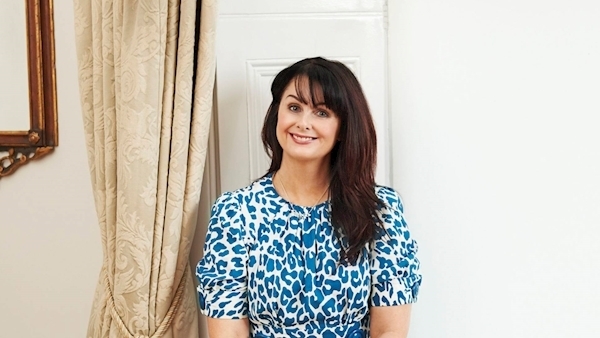
writes about her love for Irish author Marian Keyes
In my final year of college, I took a module on Jane Austen. The professor was exactly the sort of man I had imagined I would encounter at Trinity — he was eccentric, dryly funny, knowledgeable about his chosen subjects, and a compelling lecturer. One day, he told us a story about a programme he had been asked to contribute to as an expert on Austen’s novels. He had, he said, been given a list of contemporary novels written by women, “chick-lit” as we so derogatorily referred to them at the time, and he’d been asked to decide which modern author, if any, could claim to be the successor to Jane herself. Our professor hadn’t enjoyed any of those novels as much as he loved Austen, but he did compliment one author amongst the bunch. Marian Keyes, he said. She was very good.
There was a moment of silence and then a quiet voice piped up at the back of the room. A young woman, saying “I love Marian Keyes,” her hesitation evident. But with that, it was as if a dam had burst, with more and more of us speaking up in agreement, declaring that we too, loved Marian. I often think of that lecture, of the way we referred to her by her first name, as if we knew her, as if she was our friend. But I also think of our collective reluctance to speak up in the first place, our reticence to admit our affection for her brilliant, thought-provoking novels until a man said he admired her work, thus giving us permission to say the same.

I’ve written before in this column about the systemic sexism within the publishing industry, despite the vast majority of fiction readers being female. There have been concentrated attempts to improve in recent years, but the majority of books reviewed in media publications are by men, and the people writing the reviews themselves tend to be men as well. Women are less likely to win prestigious literary awards and when they do, statistics show many of those novels feature male protagonists rather than female.
Women writing about issues that directly impact women’s lives are dismissed as writers of mere ‘domestic fiction’, and that it is less important somehow than men’s fiction. Even for younger readers, there is a belief that boys won’t read books written by women, or books with a female heroine, whereas girls are presumed to be happy enough to read either. This has resulted in years of female readers feeling ashamed of the books they love, and an entire generation of wildly successful Irish writers being ignored. If there were male literary writers in the 90s who were selling books in the same quantities as Marian Keyes, Maeve Binchy, Cathy Kelly, Cecelia Ahern, and Sheila O’ Flanagan, there would have been bonfires lit at the crossroads in their honour, politicians waiting at the airport to welcome them home. Instead, we continued to sell that age-old poster of ‘Irish Writers’, a cast of all-male faces, Joyce and Beckett and Wilde and Yeats staring out at us. Reminding us that in order to be a Proper Irish Writer, you had to be a white man.

I’ve loved Marian Keyes’s novels for as long as I can remember, and I’ve often been put in the position of having to defend her work when people say ‘oh, I don’t read that sort of novel’. Excellent novels, I ask in return? Well-written, laugh-out-loud funny, heartbreakingly honest novels? Novels that deal with issues such as alcoholism, domestic violence, and depression? No less than Zadie Smith hailed her as “one of the most important feminists” in modern writing, saying she found Marian’s novels “moving and brave”. Are those the sort of novels you don’t read?
But I do feel that things have been slowly changing. More and more women I know cite Keyes as an inspiration, waxing lyrically about how much comfort and joy her work has given them. For my own part, I often talk about my memory of reading Rachel’s Holiday, Keyes’s third novel, and realising the main character’s behaviour was all too familiar. I could see myself in Rachel and I didn’t like it because it forced me to confront my own addiction. It was an uncomfortable and yet ultimately transformative moment. Her work is important, not just to me but to the millions of readers around the world who have had their own moment of uneasy recognition when reading a Marian Keyes book, in realising that they too have been raped or abused, that they too are suffering with a mental health issue.
I’m lucky enough to call Marian a friend now, and time and time again I have been blown away by her kindness, by the love and generosity both she and her husband, Himself, have shown me.
She’s endlessly supportive of other writers, always trying to lift other Irish women up, using her voice to amplify theirs. And so I want to use my platform to say this: Marian Keyes’s new novel, Grown Ups, is out this week. It is, to my mind, one of her very best. If you’ve never read her before, start here. She is a national treasure and we are lucky to have her.
LOUISE SAYS
Grown Ups by Marian Keyes. The Caseys are a glamourous family, using any opportunity they can to spend time together. But at a birthday party, one careless remark threatens to unravel all the lies they’ve been telling, the secrets they’ve been keeping from one another. It’s wise, empathetic, and compassionate; Marian Keyes at her best. I absolutely loved it.
I’m so excited that the brilliant Louise McSharry finally has her own chat show – she was born to do this. Tune into 2fm on Saturdays from 9 – 11am.