Properly funded Sláintecare would make Ireland a healthy place to live
We are the only country in Western Europe which doesn’t provide free, universal access to primary care, writes Victoria White

Properly funded Sláintecare would make Ireland a healthy place to live

Forget the shamrocks and the harps and the four green fields for a moment. The reason given by most Northern Nationalists I know for being against joining the Republic is that they want to keep their NHS.

I can’t blame them.

The NHS is far from perfect. The UK has never got into the Top 10 of health systems in the Euro Health Consumer Index.

Of NHS areas, Northern Ireland has some of the worst outcomes in the UK.

It is certainly true that many Northerners believe our health service is much worse than it is. I recently had to explain to a Northern journalist that more than 44% of the population here had access to medical or GP cards.

Still. At least in the North there is one health service for all. It is free at point of entry and doctors’ prescriptions are dispensed free.

They at least know where to go with their health issues and there aren’t huge glaring gaps between one bit of HSE provision and another and between public and private care; gaps into which people fall regularly.

Sláintecare is meant to deliver access to free, universal care within the next decade.

It was reckoned that €3bn should be allocated to Sláintecare in its first six years but only €200m is to be spent this year, the first full year of implementation.

Sitting here in otherwise heavily-resourced South Dublin, I often have no idea where I am meant to bring my family’s health care issues.

I have a GP because I got in before the rush but appointments have to be booked and are often hard to get, which is a problem because the health problems do not often book ahead.

My GP is the extent of the “primary” care provision which is meant to address most of my needs under Sláintecare but she is a sole trader with a small, private business.

The Government contracts such GPs to provide services but their idea of Sláintecare implementation seems to be to hand free GP visit cards to anyone who will vote for them while providing absolutely no further resources or funding to the GPs themselves.

The number of medical and GP visit cards has gone up by 40% in recent years.

Meanwhile funding cuts to GPs of up to 38% which were made under the Financial Emergency Measures Bill in 2009 have not been restored.

There is a massive crisis of GP availability pending, with estimates ranging from 17% to 31% of GPs planning to retire in the next five years.

It is calculated 1,310 new doctors are needed and we are training 187 a year. While there are plans to train an extra 100 doctors from this year we can have little confidence that many of them will choose general practice in Ireland. And who could blame them?

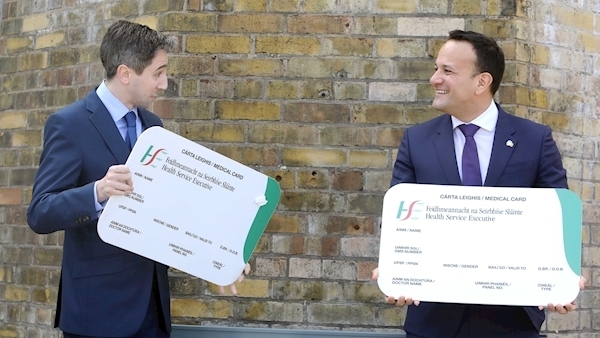
This week Minister Simon Harris was out congratulating himself that the implementation of budget changes which raised the income threshold for the GP only medical card will mean up to 100,000 more people will get one.

He described this as “a very tangible outcome of the Sláintecare report”. Yet the National Association of GPs, the only organisation which represents GPs only, were never consulted.

What is Harris’s game?

Where in God’s name are the GP hours to be found to service this new demand?

No one’s arguing against primary care, which is meant to save €5 in the rest of the health service for every €1 spent. A hospital bed costs €1,200 per night, while care at home costs less than €100 per night.

Yet who is going to deliver this primary care, if not GPs, which under Government plans, are a dying breed?

Oh sorry, I forgot “community services”. Except sitting here in heavily-resourced South Dublin I don’t even know where my “community service” is.

There are two HSE centres within commuting distance and I was sent to one of them from hospital for physiotherapy. I suppose that was Sláintecare. I have never visited the other one except to pick up EU healthcare cards. I don’t even know what its purpose is.

Meanwhile my autistic son is due to be kicked out of his specialist disability service this year when he turns 18 but thanks to the HSE’s aptly-named plan, “Progressing Disabilities” (rather than abilities) no-one knows where he will then go for services.

His current service can’t even confirm that anyone will prescribe for him the medication they recommended.

Yet he’s lucky he had the service up to now.

If his intellectual disability had been deemed “moderate”, not “mild” , the autism service would have refused to take him and I have met several parents of such kids who have no service whatsoever.

Sláintecare, which has all-party support, is meant to “create a system where care is provided on the basis of need, not ability to pay” within this decade; it is a wonderful plan.

We are the only country in Western Europe which doesn’t provide free, universal access to primary care.

The Implementation Strategy published last year cautions that Ireland will not continue to be seen as an attractive place to live if its “unreliable and inequitable” health service continues to lag behind that of other countries.

What no-one seems to be saying is that Ireland will not be united unless our health service is perceived to be as good or preferably better than that which is available north of the border.

Our populations are getting older and older. Within a decade the population of the South will be one million strong while in the North, the percentage of over-65s and over-80s will go up by 25% and 40% respectively.

Older people vote. Health care is at the top of their agenda.

Most old people won’t vote for worse health care.

It seems the total population of the island makes it the perfect size for which to design a state-of-the-art health service; neither side of the border is big enough on its own.

We already collaborate, with examples including Altnagelvin Hospital in Derry which provides cancer care to patients from the Republic and Our Lady’s Hospital in Crumlin which provides heart surgery to children from the North.

I started this research with the screw-ball idea that the UK should franchise the NHS out to the whole island if we agree to fund the North.

The more intelligent members of my family laughed me off the stage.

They’re right.

The most recent poll puts support for a United Ireland at just 32% in the North. As Brexit looms and the Government squares up to it in a green jersey, they should understand that the most tangible thing they can do to remove the border, hard or soft, is to fearlessly fund and negotiate Sláintecare and make this whole island a healthy place to live.

More in this section

Revoiced

Newsletter

Sign up to the best reads of the week from irishexaminer.com selected just for you.

Cookie Policy Privacy Policy Brand Safety FAQ Help Contact Us Terms and Conditions

© Examiner Echo Group Limited