Reckless, incompetent Brexiteers make Trump look statesmanlike
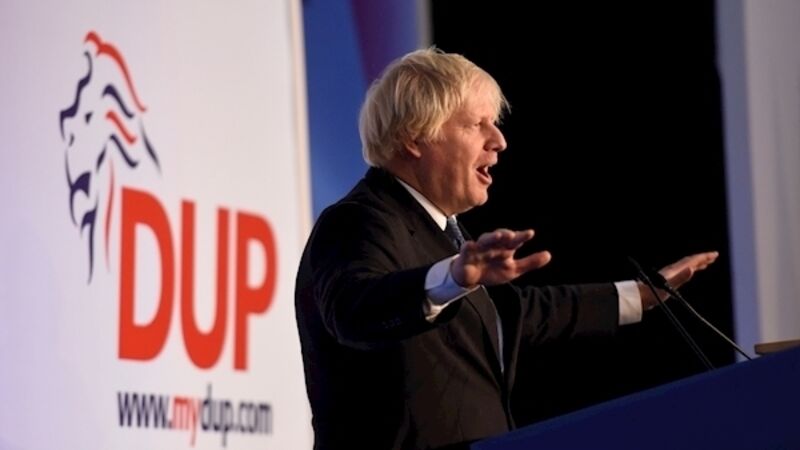
The reason the DUP hates the deal is because the Irish Government helped negotiate it, writes
The British establishment (and some of their so-called allies in Northern Ireland, not to mention their incompetent opposition) has managed, over the past few months, to achieve something I wouldn’t have thought possible. They’ve made US president Donald Trump look coherent, even, occasionally, responsible.

Some of them have spent days working themselves into a lather about an enormous document few of them have even opened, let alone read. They seem to believe their government has deliberately, and consciously, sold out everything that Britons hold dear. They’ve done everything short of accusing their own prime minister, Theresa May, of behaving like Neville Chamberlain and committing some terrible act of treason (Chamberlain was British prime minister at the outbreak of the Second World War).
And that’s the moderate Brexiteers. The harder-line version is based on a lie, and its proponents, like the disreputable Boris Johnson or the loathsome Nigel Farage, appear determined to peddle it every day, as if it were the truth. The lie is a simple one, and it goes something like this.
“When we decide to leave the European Union, they’ll be sorry. The EU needs us far more than we need them. The minute we’re free of that ghastly institution, there’ll be countries queuing up to make trade deals with us. British factories, employing British workers, will be exporting British products to grateful countries all over the world.
“The money will be rolling in, and we’ll be able to build hospitals and schools and houses in all our quaint towns and villages. And we can get rid of all those east Europeans and Muslims and Africans, who are terrorising our neighbourhoods right now.”
It’s the same set of lies that won the referendum. They can’t admit that they sold Britain a pup.
It was always going to be the case that if Britain could just walk away from the EU after 45 years of membership and the EU did nothing to protect itself, that would be the beginning of the end of any notion of European union.
In other words, once Britain voted for Brexit, there was always going to be a hard bargain.
David Cameron originally foisted the Brexit referendum on his own country because he thought it was going to be easy. He thought it was a safe bet, the easiest way to steal Ukip’s clothes at a time when they appeared to be on the rise. It never even occurred to him that Brexit could win.
But Cameron unleashed political forces that appealed to the worst insecurities and fears of the British people, forces that destroyed him. He failed to realise that the cunning of Farage, and the lies of Johnson, would defeat reason and common sense.
Somewhere, I hope and assume, Cameron is hanging his head in shame. Ever since he departed the scene, his successor has had the unenviable task of trying to figure out what kind of deal was possible and then deliver it.
It took her a long time to realise that there was a balance to be struck between rhetoric and reality, and longer still for her to summon the authority to go out and try to make a reasonable agreement.

But she’s there now, and it seems she is more or less entirely alone. She has made an agreement with Europe that enables her country to leave the EU without wrecking the EU.
She can now assert, as she did yesterday, that Britain has regained control of its borders. She can begin the job of negotiating trade deals with other countries. She can order the devaluation of the pound sterling.
That’s about it, really. Not a lot else is going to change. Muslims and people of colour, who are citizens of the Commonwealth, will still be able to come and go, broadly speaking (that’s people from 50-odd countries, from Antigua to Zimbabwe). The British economy will still largely depend on its ability to import from Europe and export to Europe — it will all just become harder to do. Currency values and interest rates will continue to be influenced by factors outside British control.
The most likely outcome is that Britain will become weaker and weaker, economically. It won’t happen overnight, but it won’t be easily reversed, either. Despite the delusions of some of the more ardent Brexiteers, there is no empire to fall back on, and there are no great centres of industry that the world can’t do without.
And Britain will become more divided. Britain’s older generation may feel utterly British, but its younger generation has a much more European outlook. That generation is now full of resentment at what its elders have done.
In the middle of all this, there are two political entities whose behaviour has perhaps been the most disgraceful.
First, the DUP. One of the things that has held progress in Northern Ireland back for years has been the old concept of the zero-sum game — ‘I can only win if the other guy loses. If the other guy is protected in any way, I’m not.’
The attitude of the DUP to the agreement that has now emerged is a classic manifestation of the zero-sum mentality. The agreement doesn’t damage Northern Ireland. It protects it. It doesn’t undermine Northern Ireland exports or agriculture. It protects them both.
And it doesn’t, and can’t, damage the status of Northern Ireland within the United Kingdom, because that status is written into international law, and even into the constitution of Ireland.
(Article 3 says: “A united Ireland shall be brought about only by peaceful means, with the consent of a majority of the people, democratically expressed, in both jurisdictions in the island.”)
All strands of unionism campaigned for that. No, the reason the DUP hates the deal is because the Irish Government helped to negotiate it. They hate it because we support it. There is no other reason, nothing else they can point to. They believe it’s all part of a conspiracy against them, because they’re incapable of figuring out anything else.
The other mind-boggling element in all of this is the position of the British Labour Party. It has been conflicted and divided since the beginning of the Brexit fiasco, and, as a result, utterly incapable of providing leadership, or even a coherent idea of its own.
The Mugwumps were a sort of political faction in 19th century American politics, known for being morally superior, but also so-called because they had their mugs on one side of the fence and their ‘wumps’ on the other. At a time when their country needed a clear and effective position, the British Labour Party just looks like modern mugwumps.
And the increasingly bizarre alliance of dishonest Brexiteers, zero-sum DUPers, and the mugwumps of the Labour Party now looks set to make a bad situation worse by voting down the only agreement in town, and replacing it with complete chaos. Between them all, they could end up making Donald Trump look like an international statesman of high renown.