Can mice really sing?
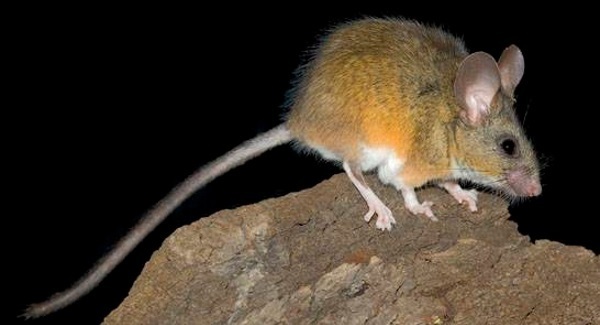

A male house mouse, captured in Detroit in 1925, had an extraordinary ability; it could sing. Normal mice produce high-pitched squeaks but this one warbled like a bird. Was its talent inherited or acquired?
Can mice really sing?

Scientists at the University of Michigan bred it with laboratory mice but none of the resulting offspring sang. How a mouse managed to produce such extraordinary sounds also defied explanation but, with the technology available back then, that problem couldn’t be solved either.

Reports of musically talented rodents surfaced from time to time and a scientific paper appeared in 1932, but the case of the singing mouse was largely forgotten. Then, in 2004, ecologist Matina Kalcounis- Rueppell began studying animal sounds in a forest at night. The noises she heard were mostly bat clicks, frog croaks and insect chattering but there were mysterious high-pitched sequences occasionally. One sounded suspiciously like whalesong. Was it produced by a singing rodent?

Kalcounis-Rueppell installed sound and ultrasound recording devices in the territories of mice she had previously trapped and tagged. She knew the identities of the individuals and the locations of their territories. By slowing down the tapes, higher-pitched sounds were brought into the range of human hearing. Sequences could be traced to particular rodents.

In 2006, she reported that 65 unique vocalisations had been recorded over six nights. They came from two species, the California mouse and the brush mouse. Subsequent results suggested some songs are produced by males, while others come from females. Rodents, apparently, use song in courtship and territorial defence just as birds whales and humans do.

There are more than 1,300 rodent species in the largest mammal super-family. Ultrasound communication has now been demonstrated in 18 genera. The house mouse and brown rat, ubiquitous in Ireland, can communicate ultrasonically.

High-pitched sounds don’t travel far. Despite this, the mouse world, long thought to be silent, may be a noisy one; it’s just that our ears can’t detect the sounds. Hearing the hymn ‘Silent Night’ will never be quite the same again! How strange that the world’s largest mammals, the whales, and some of the smallest, the mice, make rather similar sounds. Whales have conspicuous vocal organs which transmit echo-location pulses. How rodents ‘sing’ is much harder to explain. Do they use a ‘boiling kettle’ technique? We vibrate the folds in our larynx. Could mice do the same? That part of the singing mouse mystery has now been solved; a paper on the subject has appeared in Current Biology.

“Mice seem to be doing something very complicated and clever to make ultrasound” says Anurag Agarwal, a co-author. Using ultra-high speed cameras, the researchers showed that mouse vocal folds aren’t moving during sound production.

The songs are produced by an air jet from the windpipe applied to the wall of the larynx, making it vibrate to produce an ultrasonic whistle. Jet engines generate similar high-pitched sounds; it’s as if the mouse has one inside its throat.

“We found that mice make ultrasound in a way never found before in any animal,” says lead-author Elena Mahrt.

Song-birds whales and mice have similar communications problems. The birds can’t see each other in thick scrub or forest, so males resort to broadcasting their territorial messages and mating invitations vocally. Visibility can be even poorer in the deep oceans where whales live.

Mice are nocturnal creatures so ultra-sound is ideal for them; it’s inaudible to many of their enemies. A mouse’s home-range is usually very small. Like Bluetooth transmissions, ultrasounds don’t travel far; they get the message out locally while attracting minimal unwelcome attention.

  • Mahrt, E et al. Mice produce ultrasonic vocalisations by intra-laryngeal planar impinging jets. Current Biology 26. 2016.

More in this section

Revoiced

Newsletter

Sign up to the best reads of the week from irishexaminer.com selected just for you.

Cookie Policy Privacy Policy Brand Safety FAQ Help Contact Us Terms and Conditions

© Examiner Echo Group Limited






