Recalling sacrifice has many dimensions
There will be some ceremonies marking the occasion in Ireland, probably far more than there might have been at the height of the Troubles some decades ago, but the scale and centrality of those ceremonies will not accurately reflect the involvement of Irish people in Allied forces during both world wars.
After decades of inculcation, we still see these things in black-or-white terms. Even though our history is complex and utterly nuanced, our responses remain largely tribal, one-dimensional reactions to a bitter history.
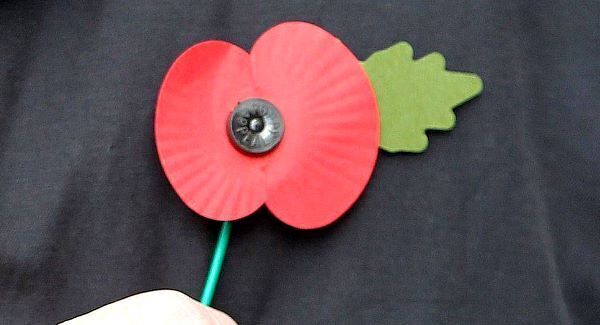
Despite our newfound recognition of this honourable tradition, we are far less comfortable acknowledging the Irish men and women who fought in both world wars than we might be. This discomfort, possibly a minor version of the ambiguity around IRA terrorism some decades ago, means that wearing the poppy to remember the dead of all wars is not as popular as it might be. That simple, neutral symbol has been utterly politicised on both sides of the Irish Sea.
Here, it is very often seen as a West Brit kowtowing to an alien and repressive imperialism. Across the Irish Sea wearing the poppy almost seems obligatory and is too often a coarse expression of unattractive, unthinking jingoism.
The truth of course, as in nearly all of these cases, lies somewhere between these polarised positions.
Anyone even vaguely aware of how the tectonic plates collide on this small island cannot but be alert to the power of symbolism, its power to insult, offend, cow, and anger. Its power to divide and deepen that division. Rather than being an expression of identity or a way of remembering, of honouring, symbols are often used as weapons to sustain a conflict that lost its meaning and integrity decades ago.
Just recently the usual naysayers expressed their disbelief that the Republic’s anthem was not played before Ireland’s games at the rugby world cup. This wilful blindness fails to recognise that a true Republic would easily accommodate such a creative, positive ambiguity and that recognising the cultural differences in our 32-county team is a strength that celebrates our independence, our Republic and our republicanism in the most positive, honourable way.
As 2016 and the centenary celebrations that year will bring edges ever closer it is important that we give some deep and honest consideration to how we mark the events of a century ago. Will we indulge in an Irish version of what has, in Britain, been described as “poppy fascism” and makes wearing of the poppy all but mandatory. Or will we use the celebration of a single brief event, one that had absolutely no democratic mandate, to consider how the opportunity that chain-breaking brought has been used? The men and women of 1916 could no more have imagined Ireland of 2016 than those who fought in the Battle of Clontarf a millennium earlier, but if we want to honour them we should use the occasion to recognise that wearing a poppy does not denigrate them but rather honours their hopes and ideals of liberty and freedom for all.

CONNECT WITH US TODAY



Be the first to know the latest news and updates