Take the wifi away from teens, then stand well back
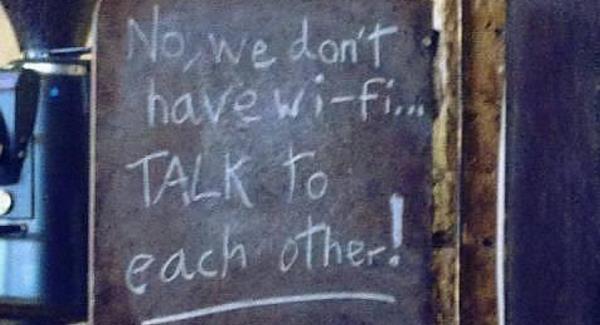
So what happens when a teen’s access to wifi is denied? Suzanne Harrington finds out

Take the wifi away from teens, then stand well back

There’s a chapter in Johann Hari’s brilliant book Chasing The Scream — the most comprehensive and engaging yet on our pointless ‘war’ on drugs — titled ‘The Grieving Mongoose’ . It describes how throughout the animal kingdom, various mammals display behaviours around mind-altering substances. Like hen parties and football fans, elephants have been known to get drunk and go on the rampage ; a bereaved mongoose was seen deliberately getting off its head on hallucinogenic flowers to take its mind off the loss of its mate; and everyone knows what catnip does to cats. It drives them insane.

As does wifi to teenagers. So what happens when a teen’s access to wifi is denied? Cut off at the source? In a daring experiment, I take a group of wifi-dependent adolescents to a place where there is none: the Great Outdoors. It starts promisingly enough. Distracted by tent pitching, foraging for dinner at the campsite supermarket and squabbling over the washing up, it is almost dark before the first cry plaintively emits: ‘What’s the wifi code in this place?’

We are on a wooded hilltop overlooking the sea. There is no wifi code, I explain. The teenagers take this very badly. One has to Instagram her friends back home to impart some important information Hashtag boring holiday, hashtag wish I was dead. That kind of thing. Another, on discovering she cannot message her boyfriend of seven weeks — the one she has seen just two days previously— bursts into tears and retires sobbing to her tent. The youngest one hurls his phone to the floor and says he wants to go home. I realise I am surrounded by addicts in acute withdrawal, and the safest option is to withdraw — to the safety of my own tent, with ear plugs to block out the sound of their wailing.

The cold turkey continues with outbursts of rage and despair. I am on hand with ice cream and Nurofen (for myself obviously) to ease the transition. By day three it has started to ease. The teenagers begin to interact with each other without the aid of screens, and by the evening there is a significant breakthrough — they have been sighted playing cards together.

After a week the withdrawal from all screens has been successfully completed. Old pre-digital customs — playing football and table tennis, arguing about stuff not related to possession of remote controls — have been gradually reintroduced. I remain in the background, carefully observing and taking notes, like David Attenborough amongst the silverbacks — but braver. I’d like to see David Attenborough trying to deprive a bunch of young gorillas from their drug of choice.

Away from their devices, the teens make new friends. All goes splendidly until one of these new acquaintances whips out his fully functioning phone in front of them.

‘Of course there’s wifi here,’ he says scornfully. ‘Who told you there wasn’t?’

x

More in this section

Revoiced

Newsletter

Had a busy week? Sign up for some of the best reads from the week gone by. Selected just for you.

Cookie Policy Privacy Policy Brand Safety FAQ Help Contact Us Terms and Conditions

© Examiner Echo Group Limited