Life on low pay is often far too hard - The Low Pay Commission
Some businesses always oppose any proposal to improve the rate, warning that to do so would have a negative impact on competitiveness. That reality is of little comfort to the families barely making ends meet, if at all, because their main bread winner is paid the pretty paltry €8.65 an-hour minimum wage.
Those in favour of a decent minimum wage need only to refer to some stark statistics. In Ireland, 9% of families where the head of the family has a job live in persistent poverty. A person earning the minimum wage earns €8.65 an hour, or €340.60 for a 40-hour week, which translates into €17,992 gross over a full year. The Central Statistics office published a report just yesterday which showed that average weekly pay stood at €704.34 at the end of December, up 2.3% on the €688 recorded a year earlier. This means that the minimum wage is less than half of the average wage, hardly an matrix that shows social equity is alive and well in Ireland. In fact, according to the CSO, just 4.7% of the workforce are paid the minimum wage, so increasing it even marginally may not be such a huge challenge.
The fact that so many people struggling on low pay are entitled to claim the Family Income Supplement, a weekly tax-free payment available to employees with children, shows that the State recognises the workers’ dilemma. This payment is also an indirect subsidy to employers who might have to pay their employees better if this lifeline did not exist. It may be time to review this arrangement, especially if the companies who pay workers so little that they are entitled to this welfare payment regularly record good profits.
When he spoke at the launch of the Low Pay Commission, which has been established to assess the appropriate rate for the national minimum wage, Taoiseach Enda Kenny said it is morally unacceptable and economically unwise for people at work to experience poverty. It is impossible to disagree with that statement, but changing that unfortunate reality is a huge challenge, especially in a world where the gap between rich and poor grows at an accelerating pace.
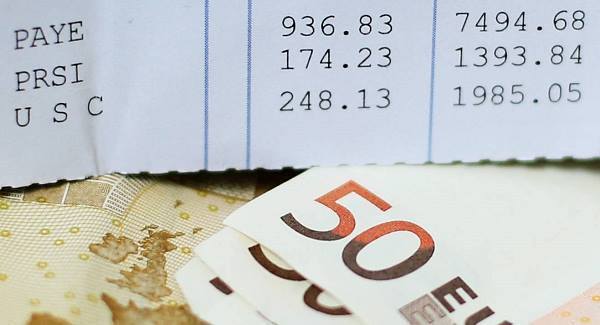
Ireland’s minimum wage has not been increased in eight years and, recognising the impact of this, Mr Kenny pledged that a further 80,000 low-paid workers would not have to pay the Universal Social Charge. This welcome move makes 500,000 workers — 25% of the workforce — exempt from USC. Having a decent minimum wage is just one of the ways a society expresses its commitment to humane social policies, ones that protect the weak and vulnerable from the worst ravages of the free market.
The challenge now is to find a level that serves those reliant on it — and our recovering economy — well. Employer organisations and unions will undoubtedly disagree during this process, but this review should be seen as a step towards restoring the ideas of social justice and good business principles that took such a battering over recent years.