Brussels Briefing: A weekly round-up of the most interesting news from Europe
From here on anybody not satisfied with what they bought in another EU member state will be able to get a judgment in their own country, and have it enforced free of charge in the other state.
Up to now, dissatisfied customers had to go through an intermediate procedure to seek redress in another EU country that could cost up to €12,000. Now this requirement has been abolished.
Even for purchases made from a non-EU country, consumers and businesses will be able to get a court judgment in their own country.
There will also be an end to the loophole that allowed a person to delay proceedings by rushing to a court in an alternative country. Now the court chosen by both will have priority.
While there is tacit agreement among EU countries that the union will not expand — at least for the time being — one country has its sights set very firmly on becoming a member.
Tiny Moldova, while trying to escape the less than tender embrace of former colonial ruler Russia, intends to make an official application to the EU shortly.
Their government knows it is a long shot, but it believes that like a little drop of water falling constantly on a stone, they can win the war through attrition.
And while France, together with some other countries, may not be enthusiastic at all, Moldovan politicians hope that when their neighbour,Romania, assumes the EU six-month presidency in 2018 that they will get a more friendly hearing.
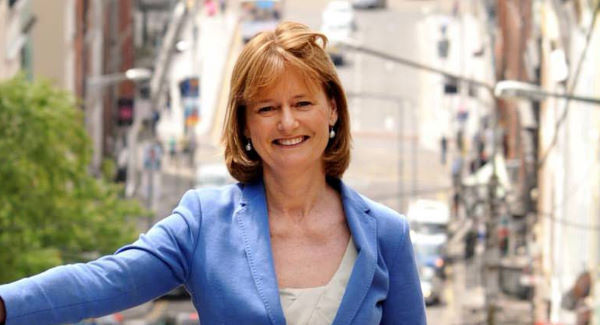
After one of the most dramatic reductions in road deaths in the EU, the number of fatalities in Ireland is on the increase, Munster MEP Deirdre Clune has pointed out.
She cites a report that shows that Ireland has also had one of the most drastic cuts in spending on road maintenance due to the economic crisis.
While the reduction is all the more dramatic because of the big spending on roads before the crisis, the Fine Gael MEP points out that the cost of not keeping up road standards is significant in financial terms as well as deaths.
As well as regular maintenance, drivers should be able to report potholes and other problems through the internet, she said, quoting reports from the European Parliament and the Asphalt Industry Association.
However, a Dutch company, PR Aviation, that did so, and sold on the flights for more than Ryanair was charging, says that under EU law, Ryanair cannot stop it doing so.
And it says the box it ticked on Ryanair’s website agreeing to its terms and conditions, including not using the information for commercial purposes, is illegal.
On Thursday the European Court of Justice will rule on the matter. Its decision could have big implications for Ryanair and for the travel site business generally.
Cyprus Airways has collapsed after the European Commission ruled about €65m it got from the state was illegal aid and must be returned.
It left lots of people on the island with tickets but no flights.
The low-cost airline association issued a very Ryanair-like statement saying it had come to the rescue and would ensure nobody was left stranded.
Borders for barring orders have just been abolished. Now a court order obtained in one EU country is valid and enforceable in any other member state. Restraining, protection and barring orders issued in one country will now be recognised throughout the EU through simple certification.
This replaces the need to reapply to the courts in the new country for an order, or go through a complex procedure to have the original order recognised.
In November rules setting minimum standards for rights, support and protection of victims through the EU becomes law. Denmark is the only country excluded through its opt-out from justice areas.
With Russia spending vast sums of money communicating with Russian speakers globally, justifying its invasion of Ukraine, many neighbouring countries are getting concerned. Countries like Latvia, with 27% of its population ethnic Russian, are warning that the lies and massive propaganda on social media, TV and radio is spreading a dangerous hatred against the West.
Several countries want the EU to co-operate in launching a TV channel in Russian that will attract people through excellent entertainment and balanced news bulletins.
But others are asking if this is not a form of propaganda and wonder if the EU should be involved.
Russian president Vladimir Putin is unlikely to join world leaders gathering at the site of the Auschwitz death camp this month because distrust caused by the conflict in Ukraine has cast a pall on arrangements to commemorate the Holocaust.
The Nazi camp, where about 1.5 million people were killed, most of them Jews, became a symbol of the horrors of the Holocaust and a war that ravaged Europe. Seventy years later, conflict and political division are hampering preparations to mark the anniversary of its liberation.
Host country Poland — one of the most vociferous critics of Moscow over the Ukraine crisis — did not send a full diplomatic invitation to Putin, wary of the domestic political consequences of inviting the Russian leader, according to sources briefed on arrangements for the January 27 event.
CONNECT WITH US TODAY



Be the first to know the latest news and updates