Sharks’ short shrift in life aquatic
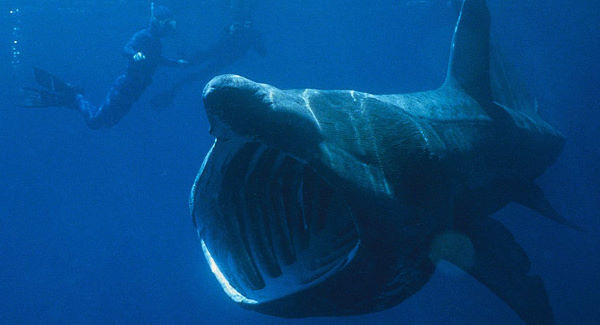

Nothing happened for several minutes after entering the cage. Then, suddenly, a shark emerged from the dark depths below. Encountering a 4.5m giant, an arm’s length away, is an exhilarating experience. Other sharks arrived. The cage lurched as one collided with it, giving a vivid sense of how massive these creatures are.
Great whites are in the news just now; a decade-long research project on these wonders of the deep is drawing to a close in New Zealand. Dr Malcolm Francis and colleagues at the National Institute of Water and Atmospheric Research have tried to discover where great whites go and what their habitat needs are. Ninety-five sharks have been tagged in New Zealand waters since 2005. Sensors attached to dorsal fins provided data on migration and local movements. Pop-up acoustic tags gathered information on light levels, temperature and depth.
Young great whites, the scientists found, feed on fish and squid until they are about 3m long. Then, congregating around seal breeding colonies, they begin targeting pups. Sharks usually remain close to the surface in the afternoon but can dive to depths of 200 to 800m at other times. The deepest level recorded was 1,246m.
Why they do this is a mystery. At the onset of the southern autumn, equivalent to our spring, great whites head northwards to tropical waters. They move in remarkably straight lines, at an average speed of 5km/h, staying near the coast and not venturing far out to sea. One female travelled 2,020km in 20 days.
Climate change is driving temperatures upwards in the North Atlantic, so much so that great whites are expected soon in Irish waters. They may even be here already but mistaken for porbeagles, the local ‘top dog’ of the sea. This native fish resembles the great white superficially, although it’s less than half the size of the foreigner.
The porbeagle, too, is in the news. Listed by the International Union for the Conservation of Nature (IUCN) as ‘vulnerable’, it is one of seven shark and ray species added, last month, to Appendix II of the Convention on International Trade in Endangered Species (CITES). The designation means porbeagles can still be hunted but trading in their flesh and body parts is restricted. The CITES listing doesn’t offer complete protection, but it’s a step in the right direction. In 2003, the basking shark, the biggest fish in Irish waters and the whale shark, the largest in the world, were added to the list. In July, the scalloped hammerhead was classified as endangered under the US Endangered Species Act.
Over 400 shark species are found worldwide. Boris Worm and colleagues at Dalhousie University in Halifax estimate the number killed each year could be as high as 273 million, mainly for their fins, which are used in the Far East to make soup.
The average annual exploitation rate, Worm and his co-authors claim, is between 6.4 and 7.9% of total populations. The ‘rebound rate’ for most species is around 4.9% per year. If these figures are correct, sharks are in big trouble; they are not producing enough offspring to withstand current levels of exploitation.
Shark teeth appear in the evolutionary record, for the first time, between 420 and 450 million years ago. These fish whose skeletons, like our ears and noses, are made of cartilage, saw the dinosaurs come and go. They survived the ‘Late Devonian’ extinction, 360 million years ago, the ‘Permian extinction event’ a hundred million years later and the catastrophe which wiped out 75% of the world’s species 66 million years ago.
Now the 6th global extinction is under way; we are wiping out species at an unprecedented rate. Will sharks survive that too? If we don’t change our ways, they won’t.
- My visit to Dyer Island was sponsored by the South African Tourist Board through RTÉ.
CONNECT WITH US TODAY



Be the first to know the latest news and updates