Nations must build on Sarajevo legacy
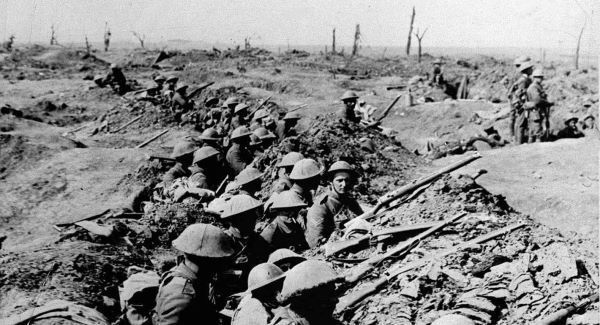
The industrial-scale carnage, the unprecedented social change, the redefinition of women’s roles in society, the irreversible mechanisation of war, industry and agriculture, the first great steps in electronic communication, aviation and advances in medicine were all accelerated and made everyday because of the demands of the Great War.
The seismic artillery barrages on the Western Front, when tens of thousands of field guns pummelled men and earth as if to remake that which could not be remade, continued the work of Russian revolutionaries and brought the age of traditional, political and land-based empire to a close. The European social hierarchy, presided over by an hereditary aristocracy since the Crusades, was changed for ever. Democracy usurped the ages of deference and feudalism. By murdering Franz Ferdinand, Archduke of Austria-Este, Austro-Hungarian and Royal Prince of Hungary and of Bohemia, and from 1889 until his death, heir presumptive to the Austro-Hungarian throne, Gavrilo Princip began a revolution which continues to this day.
The latest episode, or skirmish if you prefer, came just yesterday, when Ukraine signed a historic co-operation agreement with the EU. Former Soviet buffer states Georgia and Moldova celebrated a relatively newfound independence with similar agreements. Ironically, Russia — the cradle of 20th century revolution — reacted vehemently as its former colonies asserted the very freedoms it hoped to achieve for its people by destroying the tyrannical Romanov dynasty just a century ago. Those three countries have chosen post-WWI opportunity rather than pre-WWI serfdom. That they can do so and not fear a military consequence is a legacy of WWI.
It is a victory of sorts, and a refutation of the suggestion that WWI was a pointless, unnecessary war, that this realignment will not provoke another grand-scale war. Events of recent days, when all of Europe’s leaders stood as one in the Belgian town of Ypres to honour the WWI dead, and coming so very soon after world leaders — including Vladimir Putin — stood together in Normandy to mark the 70th anniversary of D Day, shows the multinational peace-sustaining solidarity forced upon us all by the catastrophes of the last century, all of which are rooted in a single act in Sarajevo.
Yesterday’s assertion by the left in the European Parliament that the next European Commission will have to replace the policy of austerity with economic stimulus and a growth policy, can be seen as another episode in the revolution that began a century ago. Just as the settlement terms imposed on a broken Germany after WWI made another catastrophe inevitable, relentless reductions in living standards and opportunity must eventually have catastrophic social consequences. Surely the international solidarity, the community of nations, made real by the need to make sure there will never be another world war is strong enough to achieve that noble aim? It may, however, have to confront empires of a very different, less vulnerable kind to realise that essential objective.

CONNECT WITH US TODAY



Be the first to know the latest news and updates