Brussels Briefing
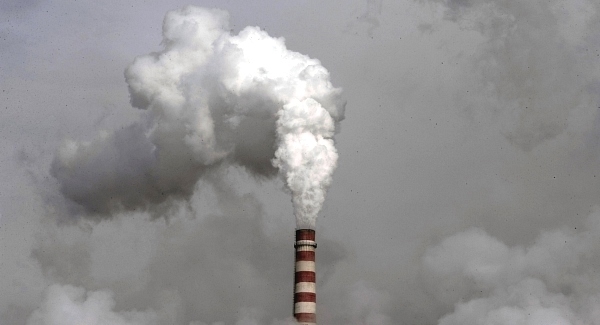
Air-pollution is dangerously high in parts of Europe, especially in Belgium and France because the particulates from traffic — especially diesel, wood burning stoves and agricultural fertilisers — is not be dispersed by this particularly calm weather.
France introduced free public transport in Paris for a few days, cut the speed limit in places, limited fertiliser spreading and advised against burning wood in fireplaces. Belgium too has introduced speed limits in the most affected areas.
Particulates can cause or aggravate heart and breathing problems. To check levels, go to the European Environment agency’s real time map: http://www.eea.europa.eu/themes/air/air-quality/map/real-time-map
In time, Eritreans will be seen as one of the most persecuted peoples on the planet but, in the meantime, they are finding few sympathetic to their plight.
Fleeing a dictatorship with no free media and massive poverty despite rich minerals, they find themselves in Israel that puts them in prison camps, or in danger of drowning as they try to reach their old colonial master, Italy.
Sweden has agreed to take quite a few, including from Israel, but finds that their new residents are facing another trial as they receive demands for huge ransoms of up to €24,000 to rescue their relatives kidnapped and tortured by Bedouin bandits in the Sinai.
Europol and Home Affairs Commissioner Cecilia Malmstrom have issued a warning to all police forces in Europe that this may be happening to vulnerable people they are sheltering too.
The idea was that anybody planning to frack for gas would need to do a study on the likely impacts — especially with reports of water being polluted, earthquakes and fires resulting.
Britain, which has declared itself open for fracking, had been lobbying fellow EU member states to get this need abolished.
MEP Marian Harkin pointed out that they have been successful, as the commission withdrew the requirement from the legislation going through the parliament during the week.
Ireland’s “victory” of ensuring every country had its own commissioner could be scuppered in November when the new body is put together. Instead there could be super-commissioners, and not-so-super-commissioners clustered around them.
The idea is also in a report produced by the think-tank CEPS which included former taoiseach John Bruton. The European and national parliaments should have better oversight, including in national budgets and banking union.
The role of the Commission Secretariat-General — currently run by Catherine Day — should be re-examined and the growing use by member states (the Council) of agreements between them should be limited. It also appears to suggest impact assessments on proposed new rules should not be done by the commission but by independent boards.
With the multinationals’ ‘patent cliff’ delivering a severe blow to Irish growth, the need to boost indigenous goods is increasingly important.
However, according to MEP Jim Higgins, the beef industry is facing a real threat.
Trade Commissioner Karel De Gucht warned him that the US is pushing hard to open Europe to American beef imports.
Canada has already won some ground in its EU trade deal that sees 50,000 tonnes of beef being imported. Mr Higgins said the Irish industry, which depends on exporting at least 95% of what it produces, could not survive a similar big blow from the US deal, and urged the Government to lobby against it.
The Government, however, is already on record as maintaining the need to open up for high-tech goods and services.
The industry will have to wait another year to discover its fate as negotiations are expected to last at least that long.
EU leaders wanting to rein in Russia’s empire-building may not find it easy to track the assets they want to freeze thanks to myriad trusts and shell companies facilitated by European governments.
This may, however, encourage them to agree with the European Parliament’s vote to set up public registers of the real owners of companies and trusts across the EU when it comes before them for approval. Described as the “getaway car” for crime and corruption, Jim Clerken of Oxfam in Ireland identifies it as one of the steps needed to tackle growing inequality where €1 trillion a year is lost to tax evasion in Europe and where such anonymous accounts facilitate theft in developing countries.
While Ukraine is expected to take over the climate- change agenda at the EU leaders’ summit in Brussels this week, the energy issue will remain on the table, given reliance on Russian gas, and Europe’s wind energy association came up with interesting figures.
Wind produced 100GW of power in the year, enough for 57m households and equivalent to 38 nuclear power plants. But thermal and nuclear consume 44% of total EU water use for cooling. Wind does not need water and could save up to €17bn in water by 2030.












