Christine Buckley - A life of courage and inspiration
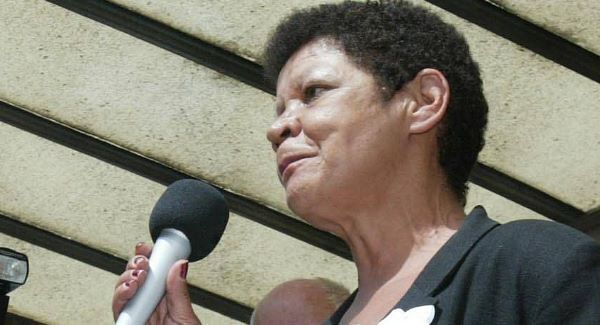
She was one of the inspirational figures in the first generation of Irish people who successfully challenged the evil active in so many of the institutions entrusted with the care of this society’s unwanted and most vulnerable children.
Her terrible experiences — and those endured by some of her peers — and her determination to see truth acknowledged, as well as the steel in her soul, made her a catalyst for change and a rallying point for so many of those who were repeatedly betrayed by the cruelty and hypocrisy of this society. Betrayed in the first instance by family, then by those charged with their care and later by a society that refused to believe, or in reality pretended, that the horrors recorded in report after report, harrowed face after harrowed face and broken life after broken life, could happen in a society that was, superficially at least, dedicated to high ideals.
Speaking truth to authority is never easy or comfortable but speaking truth to a disbelieving, compromised and sometimes vindictive authority is even more difficult. Though a quarter of a century has not passed since Christine Buckley first publicly described, in 1992, the abuse inflicted on her at Dublin’s Goldenbridge orphanage, an irreversible cultural shift has taken place since then. It would be worse than foolish to pretend that such abuse will never again occur, but now the disbelief and hostility experienced by those who first raised their heads above the parapet is no longer tolerated.
Indeed, the dishonest response of the institution of the Catholic Church to revelations like those made by Christine Buckley have cost it its pre-eminent position in Irish society. Though that Church has repeatedly apologised to those so abused, questions about its commitment to reform were raised as recently as last weekend. Ian Elliott, the former chief executive of the Catholic Church’s National Board for Safeguarding Children, challenged the report published after a child protection audit in the diocese of Down and Connor, suggesting that it did not accurately reflect the situation on the ground.
Christine Buckley’s death, and her life too, is as good a reason as any to consider our attitude to whistleblowers. It is reasonable to assume that the great majority of whistleblowers come forward because of the highest motives — to expose wrongdoing and champion the truth. Yet, in so many instances, they are greeted with barely concealed hostility.
Garda Commissioner Martin Callinan’s “disgusted” outburst at a Dáil Public Accounts Committee hearing is one example. The way bereaved parents were treated by some maternity staff at Portlaoise Hospital is another. Sheena McMahon, who highlighted Garda corruption in Donegal, was slandered in the most terrible ways. Tony Spollen, as AIB internal auditor in 1989, discovered institutionalised fraud around off-shore non-resident accounts but nobody in the bank wanted to know.
Is it possible that we are only interested in the truth if it is a harmless, pastel-coloured interpretation of our world? Do we only want to embrace truths presented as an affirming assurance rather than a challenge to our comfortable, sometimes corrupt consensus? Not so very long ago the answer, unfortunately, would have been ‘yes’, but because of the courage of people like Christine Buckley that is no longer the case. For that alone we are all in her debt.

CONNECT WITH US TODAY



Be the first to know the latest news and updates