Dylan’s predictions - The times they are still a-changin’
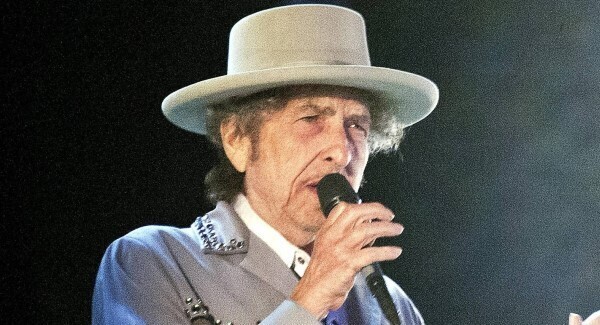
It was, in an almost unprecedented way, a powerful catalyst in the politicisation of popular culture. The threatening but optimistic ballad became many things to many people over the last five decades, but in 1963 it seemed an inter-generational challenge, seditious, revolutionary, defiant and despite all of that, utterly life affirming and hopeful. The song’s power, it’s simple force, and huge sweep is such that it remains an almost unequalled manifesto.
It is not overstating anything to say that this song, and so many more of Dylan’s great conscience calls, played a central role in the moral formation of millions right across the world. It was, it is, that significant.
But was he right? Did great change come? Did the citadels fall? Did the perpetual loser really win in the end?
In the terms of 1963 most certainly, in today’s terms possibly. The pendulum has swung maybe a few degrees too many towards the idea of society little more than a market, as a collective of consumers rather than interdependent population facing the world’s challenges together. The expectation that each generation’s life will be better than their parents’ lives, that it would be less fraught and more comfortable, is no longer as strong as it was a decade ago but it is probably still stronger than it was in 1963. As the chasm between rich and poor widens, as ownership of the world’s material wealth becomes ever more concentrated, the need for states to be able to manage capitalism in a more equitable way remains unsatisfied and ever more pressing.
This was the case in 1964 too and was one of the driving forces behind the decision of the Fine Gael parliamentary party to, in May of that year, endorse Declan Costello’s Just Society programme, a document, in Irish terms at least, as revolutionary as ‘The Times They Are a-Changin’’. Costello’s successors could do worse than revisit that fine document and wonder if more needs to be done to realise its objectives.
In the half century since Columbia records released Dylan’s third album — he has released nearly 50 and sold nearly 60m — there has been huge social change: women’s rights, free education, divorce, family planning and on a far more basic level, decent housing for the great majority of people living in Ireland and access to health services unimaginable 50 years ago. We have also enjoyed the great material improvements brought about by our own efforts and membership of the European Union. The population of the Republic rose from an all-time low of 2.8m in 1961 to a record high of 4.6m last December — a figure that would be even higher if emigration, Ireland’s age-old scourge, had not returned with such a draining force.
Yes indeed, the times have changed and by and large for the better, but huge challenges and inequities remain. In confronting them we could do far worse than use the hard honesty and unwavering humanity Dylan celebrates in all of his work as part of our roadmap to that noble end. Unfortunately even a voice as powerful as his can only point the way.












