The recession - So, which cuts will we accept?
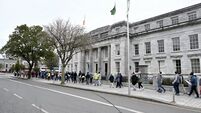
Others marched over education costs. The demonstrations were passionate, animated, vehemently anti-government — especially Fianna Fáil — and totally unanticipated by Brian Cowen or anyone else when the calamitous and hastily prepared budget was introduced.
One group of protesters has already achieved its objective and the vast majority of those over 70 will continue to enjoy medical cards.
However, it must be very difficult for someone working for less than the €36,500, over-70 threshold, while trying to pay a mortgage, raise and educate a family and pay off a car loan, to gracefully accept that they are earning too much to qualify for a medical card while their mortgage-free, child-free but aged neighbours do.
This fiasco has again strengthened the argument for a universally recognised welfare threshold applicable to all citizens, no matter what their age or circumstance.
The other Wednesday demonstration was probably just the first of many we can expect over education cuts. It seems, too, that the farming community feels hard done by and is stirring itself for some sort of anti-budget campaign.
The protests were welcome acts of engagement with the political system. However, they represent a vivid but belated reversal of the see-no-evil apathy that made significant contributions to the mess we are in.
The Government has been forced to make a humiliating U-turn on medical cards, but only time will tell if a combination of a revised drugs’ policy and new arrangements with doctors will realise the savings sought in the budget. It is, however, certain that the savings will have to be made one way or another.
Though far less entertaining than Dublin’s street protests, several indicators published yesterday show how very difficult our circumstances are.
FÁS has warned that unemployment might exceed 8% by this time next year. In January of this year that figure was 4.8%. The agency also predicts a further rise in 2010 unless there is a significant upturn in the global economy. This has huge implications for the circumstances of thousands of Irish families. The figures also suggest that the assumptions used to shape our budget are overly optimistic.
In another wake-up-and-smell-the-coffee warning it was revealed that fewer than 4,400 new cars were registered last month. This figure is over a third down on last year. However, the number of second hand cars registered has continued to rise, with a 5% increase for the year to date, suggesting price sensitivity has led to record used-car imports. The motor industry is a weather-vane sector and the news that the number of new goods vehicles registered fell by almost 50% last month just adds to the gloom. Yesterday’s huge auction of surplus building equipment in Kildare, where most of the buyers came from abroad, can do little to restore confidence either.
If that was not enough the main Irish bank shares closed at about half the value they were just a few weeks ago when Mr Cowen was forced to introduce the Government deposit guarantee.
Yet, there is hardly a measure in the budget that has not been vehemently opposed. Just yesterday the bookmakers’ representative organisation said it wants government to “dramatically change ... its recently announced betting duty hike, in a bid to avoid widespread business closures and jobs losses in the industry.”
All this despite the chilling statement from Mary Harney which bears repeating: we are spending about €10,000,000 a day — yes, a day — more than we are collecting in various revenues.
The reality is that this recession is going to force itself into all of our lives whether we like it or not, and we must take whatever measures we can, no matter how unwelcome, to confront it.
We can do it in a managed and fair way, trying all the time to protect the needs of the weakest and most vulnerable, or we can appease the loudest and most powerful no matter how unjust their case.
It is unfortunate and unavoidable but public sector pay is a huge part of the problem we face. We simply cannot sustain the growth in what it costs to run this State. Public servants secured benchmarking for little or no return and enjoy security and benefits unimaginable outside public service. Government must impose what is already implicit, tacit or otherwise, right across the private sector — an immediate and indefinite pay freeze for all but the lowest paid public employees.
Otherwise Tuesday’s protests will, in time, look quaintly entertaining and well mannered.
CONNECT WITH US TODAY



Be the first to know the latest news and updates