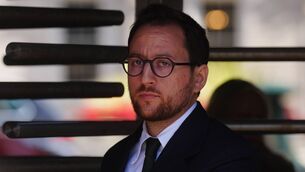
Publicans rise to the occasion as FF grassroots wither and die
But it happened at the annual conference dinner of the Vintners’ Federation of Ireland in the City Hall in Cork during the week.
Not once, not twice, but five times, according to one publican who is definitely not the same political colour as Fine Gael’s PJ Sheehan, Mayor of County Cork, and the target of all that adulation.
The former TD was given the accolades by the representatives of most of the country’s publicans when he proved that drink is apolitical.
Standing ovation number one came when, having discharged the formalities to his hosts and fellow guests in his opening remarks, he declared there were too many people trying to tell publicans how to run their pubs.
They were being told who to let in and not let in, who to serve and not to serve, where to smoke and where not to smoke. The best person to look after the interests of his customers was the publican.
“There are a lot of serious concerns for rural publicans today. And yet they are the hubs of local communities catering for weddings, funerals, even election post mortems - and I can speak from experience about that,” he said in the manner of an old pro who has seen it all, including the bad news from an election count.
Standing ovation number two came after launching into a broadside against Justice Minister Michael McDowell’s plan to turn the nation’s topers into a café society.
“I fully support the VFI in their position that this country is already over-pubbed,” thundered Paddy, and the converted rose in their hundreds to applaud his wisdom.
They had hardly sat down to address their pints and shorts when they were on their feet again to endorse his sentiment that “it makes no sense to multiply them as outlined in the proposals set out by the Minister for Justice.”
When he said that the proposal to introduce more licences and make alcohol even more accessible defied logic if the aim, as the minister stated, was to curb excessive drinking, he had them drinking out of his glass - and he knew it!
He could have been outside a church gate on the last Sunday before an election, and a Fine Gael church at that, so enthusiastically were his words lapped up.
PJ added that there were 13,000 licences in the country, one licence - if not for everybody in the audience - then for every 300 men, women and children in the land, far in excess of Britain and the Continent.
His remark that publicans were only seen by the Government as tax collectors was greeted with the approval of the misunderstood for one who knew exactly what they had to put up with.
When he eventually resumed his seat to thunderous applause, and his final standing ovation, had Paddy Sheehan proposed a cut in the price of the pint they would have agreed - almost.
In any case, even if the Holy Spirit had descended on City Hall and told the tax gatherers to show such compassion to their customers, he would have been refused.
Not that the publicans have anything against spirits, holy or otherwise, but they could have pleaded an undertaking given to the High Court that pub owners would desist from coming together to recommend drink prices.
That commitment arose from the settlement of a civil action taken against the VFI in 1998 by the Competition Authority in which it promised not to make recommendations on price and profit margins.
Although the VFI, obviously, denied that its members ever engaged in anything as despicable as price-fixing, they somehow always got fixed upwards. At the same time, in the same locality.
God only knows how many times it got fixed between the time the Competition Authority launched its civil claim and the settlement of the case.
According to the chairman of the authority, Dr John Fingleton, the settlement signalled the standard for future conduct in the industry in that publicans will no longer be able to gather together to fix the price of drink, which they never did anyway. Did the man never hear of texting?
THE fact that he suggested competitive pressures already at work in the industry were exercising downward pressure on prices leads me to believe he didn’t.
Or else he doesn’t go into pubs.
Despite the fact that Bertie Ahern plans to spend £93 million of taxpayers’ money this year on spindoctors, consultants and legal experts, it seems that his own party is not getting the message - or is ignoring it.
Apparently, battalions of the Soldiers of Destiny have gone AWOL, with about half of its membership having deserted the party or at least not reporting for duty.
Or, maybe, they just got sense.
In any case, having been given an assignment to check out the state of Fianna Fáil’s membership, Finance Minister Brian Cowen uncovered the unpalatable fact that it stood at between 15,000 and 20,000, which is about half the number of serving members they believed they could call up.
Incidentally, he’s gone so quiet in the past couple of months that you would be forgiven for thinking that Brian Cowen had been lost in action himself.
He probably went under cover to compile his report which shows that Fianna Fáil is a party of rural, ageing and increasingly inactive grassroots.
In his words, there are “probably more members dying than joining Fianna Fáil.”
Does this mean that the only way out of the party is to die, or that people would rather die than join?
A quarter of the local organisations are inactive and about half manage to summon up enough enthusiasm to meet once a year, while 58% of cumainn had recruited no new member in three years.
His investigations also uncovered a new meaning for the word ‘active’ which might have a bearing on the parlous state of the party’s membership.
Brian Cowen discovered that the active cumainn “actively discourage new members joining the party.”
This begs the question as to where the extra 10,000 new members FF are looking for are going to go, seeing that half the party barely exists and the other half doesn’t want to know about them.
Now, despite the fact that half the party has disappeared, their general secretary, Seán Dorgan, has denied that Fianna Fáil is in decline.
They might have a few problems in relation to their membership base, but major parties across Europe were experiencing the same thing.
I don’t think Sinn Féin is, and this might explain Fianna Fáil’s missing numbers.

CONNECT WITH US TODAY



Be the first to know the latest news and updates