UCC looking to future with confidence
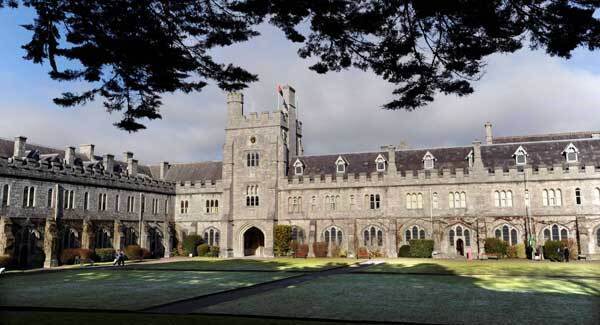
It also reflects the present. That one of the largest tranches of the investment is a €64m package to increase student accommodation recognises one of the new, market-driven barriers to access to education. Only time will tell if that State-funded expansion of student housing will meet the needs of tomorrow. The college anticipates that its student population will increase from 21,000 to 23,000 in the coming years. More than half of that increase will be made up of external students, as the investment is predicated on high-fee foreign-student numbers increasing from 3,300 to 4,400.
Some €37m is earmarked for a new dental school, €27m to develop the college’s Western Campus, and €90m on a new student hub, a new creative hub, and investment in the business school. Meanwhile, €23m will be spent on a clinical medical school and €10m on ancillary regional developments, including hospitals in Waterford, Kerry, and Tipperary.
These figures inspire confidence and will create up to 500 jobs during construction, but they do not resolve ongoing, debilitating funding issues in third-level education. Neither are they spectacular in the context of other investments, especially by digital companies.
Three years ago, Intel announced a €3.5bn investment at its Kildare base; Google is planning a €150m data centre in Ireland. Last year, Trinity College recorded an income of €339m, a figure that seems almost paltry compared to Oxford University’s €1.5bn. Despite UCC’s best efforts, and the best efforts of all Irish third-level institutions, this is the high-bar world they compete in.
That the announcement comes so soon after Michael Moriarty, general secretary of Education and Training Boards Ireland, warned that too many students go on to third-level education must at least raise an eyebrow. Responding to an EU report that found that Irish workers are among the most overqualified in Europe, he suggested that parents’ “obsession” with ensuring their children reach third-level drives this misalignment. Around one in six students in higher education — about 6,000 — fall out in their first year. Construction services and computer science have some of the highest casualty rates, as high as 80% on some courses. About 60% of school-leavers progress to higher education, one of the highest rates in the EU.
These are not new questions and they will animate the education debate for some time yet, though nobody can predict with any certainty for how long. They may become irrelevant. The relentless rise of artificial intelligence will change the world for today’s undergraduates in ways we can hardly imagine. All sensible educational programmes recognise this. Despite all of that, the UCC investment ensures that the college will continue to play a very positive role in this region for at least another 182 years. Good news for a change.