I have rekindled my love affair with France, as France has with Europe
WHEN I was 16, I wanted to be French. The French ate baguettes. They were tanned. They wore espadrilles.
France offered me the only escape route out of my south Dublin existence. I resolved to become fluent in the language: I found myself a French au pair job, for the summer of fifth year. I had no childcare experience. I just knew I wanted to speak French fluently, and, three months later, after a truly miserable summer, I did.
Until this week, I have always considered that French summer a waste of time. I quickly lost interest in France and French. Then, I began to detest the place. The navy jumpers. The beige trenchcoats. The conservatism and the conformism. Most of all, the secular thought police, with their intolerant edicts against Muslim girlsâ veils and their all-in-one swimsuits.
I began to see the place as an ex-colonial power unable to cope with its diminished stature. I saw it as arrogant and nationalist and racist, and over.
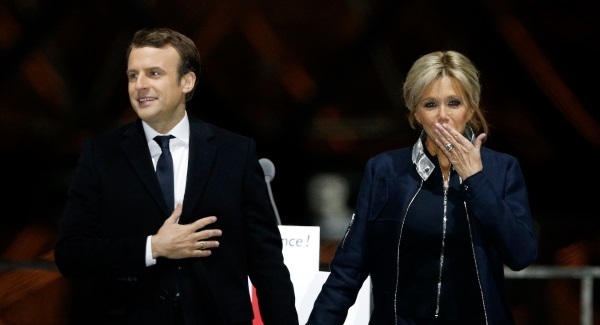
Then, along came Emmanuel Macron. Unimaginably, he was holding up a mirror to France and saying, âwe have to changeâ and he was also saying, âWe are the European Union. It was we who wanted it.â For the first time in about three decades, I wanted to use my French and I sat down to watch all of the final Macron-Le Pen TV debate, two hours of brilliant verbal combat about the central issues facing Europe.
Both combatants were fantastic performers. Marine Le Pen would have been formidable as Franceâs first female president, but her gender never featured in the campaign, because right-wingers donât count as women, apparently.
But Macronâs performance was spine-tingling, because he seemed to be telling the truth.
He unflinchingly faced the French with aspects of their colonial history, such as the âwar of memoriesâ waged by the horrors of the Algerian War. He seemed sincere when he said he would never insult a Muslim, because of his or her religion. But he appealed to French nationalism to strengthen allegiance to the EU: âWe built this Europeâ.
Le Penâs patriotism began to sound hollow beside Macronâs. Her solution to the challenges of globalisation â kick foreigners out, close the borders, and return to the mythic past â looked more and more ridiculous.
What was fascinating was how close her solutions were to those of state socialism, and the links between extreme right and extreme left have been explicit in this campaign, with Le Pen openly courting the followers of communist Jean-Luc Melenchon, and quoting his slogan: âDegagez-les!â or âKick them out!â By contrast, Macronâs solution does not adhere to the edicts of left and right which have made France â with an unemployment rate breaching 10% â the only major country in Europe whose economy is not in recovery.

Yes, Macron wants to free up trade: He wants lower costs for employers when they hire people and a lower corporation tax, of 25%, for instance. But he wants to balance that by protecting people with unemployment insurance if they give up their job and look for another, or if they are self-employed.
There is no point, he says, in attempting to preserve the âjobs of the pastâ in the face of the digital revolution; but people must be âarmedâ to find new jobs. To this end, he is promising a âŹ15bn investment in youth training. By contrast, Le Penâs calling card was guaranteed retirement at 60, if you had worked for 40 years, another point on which she and the communists agree. That measure would have cost âŹ30bn.
Election promises are easy to make, to paraphrase Pat Rabbitte, but some of Macronâs are inspiring. He wants to ban fracking. He will issue no new hydrocarbon exploration permits. He will decrease the nuclear energy component by one third. A million houses will be insulated, starting with the âmost modestâ. He will increase the price of carbon. He will ban unrecyclable plastic and brand appliances with their expected lifespan.
Children in deeply disadvantaged areas will be in classes of 12. Only four subjects in the final exam, the baccalaureate, will be examined, with the rest continuously assessed. There will be no mobile phones in schools. Volunteers will be encouraged to provide extra classes after school.
Macronâs final pitch, his âcarte blancheâ in the debate, was to focus on disabled children, 20,000 of whom have no school provision. Many autistic children go abroad for treatment, and that identifies the failure of French social protection.
The autism spectrum was only diagnosed in France from 2004, because the vested interests in the health service would not let go of their sacred scriptures.
He will cut âŹ60bn from the budget of his seriously indebted country. He may be the first major European politician to lay out with honesty a future for social democracy. He understands and accepts that globalisation is here to stay. He understands we need banks. He understands the possibilities of the euro and its implications for national economies.
âOoh la la!â he announced when Madame Le Pen suggested a return to the franc. How would the French import with their devalued currency? How would they cope, when a large part of the value of their savings was wiped out?
âI take the French for adults,â he said, âI donât lie to them.â If this is so, Macronâs inauguration on Sunday, as Franceâs 25th president, will mark a watershed in recent European history. If a parliament is elected that can carry out his reform agenda, then he might save Europe.
My love affair with France will be rekindled and I hope that our Irish republican tradition of by-passing the UK, and taking France for our model, might be rekindled. We, too, need to be âtaken for adultsâ by our politicians, and that has not happened.
The Labour Party was nearly wiped out in Ireland because they promised Fairyland before the 2011 general election: A land in which the exigencies of globalisation could be ignored, while employment was maintained; in which the strictures of euro membership could be repudiated without consequence. Fine Gael sang along to some degree, then switched to moaning, âthe Troika done itâ. Fianna FĂĄil did the right thing in containing a crisis largely caused by their own inability to grasp the implications of the single currency, but they now pretend they werenât there.
Yes, we need, as Macron says, a re-engagement with Europe, through citizensâ assemblies and other means, to beat the âvirus of defianceâ. But, first, we need honesty.
We need to be treated like adults, so we can elect adults who make us strong members of a Europe that trades, that co-operates, that coheres, and which fiercely protects its weakest citizens.