A project of renewal - Town ready to fight the good fight
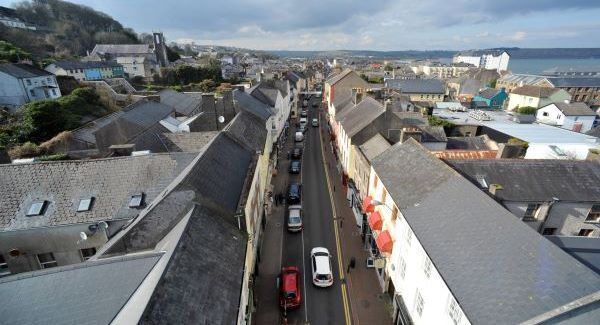
The ancient East Cork town was alive with local businesses or manufacturing. Intervention from the outer world came primarily from a State that supported health services, education, policing and welfare needs. Tourists, local or international, were welcomed each summer. Though this support was essential, it would have counted for nothing without Youghal’s idea of itself, without its strong sense of community, common purpose and self-worth. Like most towns in its situation, it largely stood or fell by its own efforts.
Today, the town is struggling. It is a shadow of its former, bustling self. The town centre is pockmarked with shuttered retail premises. As many as 40 buildings that once housed business are vacant and closed, and some are falling into dereliction. Two secondary schools have been amalgamated. Large retail centres were built on the fringes sucking the life-blood from its centre. Industry, especially textile industries, left with a cumulative loss of 2,500 jobs in a town of 8,000 souls. That figure is not so much a body blow but something pretty close to a death sentence.
But the town, the community, is fighting back. A Youghal Forum has been established to try to rejuvenate the town. It will be supported by South and East Cork Tourism Limited and it is intended to unite all of the town’s interests so it might not, like so many other towns that have succumbed in an ever-changing world, become something that looks like a ghost town where its children have very few prospects.
It is returning to the basic principles of united, determined self-help epitomised by two of the organisations that did so much to encourage ambition and generate prosperity on this island — the co-operative movement and the credit union movement.
These empowering, liberating ideas were invoked in the area recently when a community-based project brought a reliable, worthwhile and very welcome broadband service to remote communities that had been more or less abandoned by commercial interests that chose commercial possibilities over sustaining communities.
There may be a lesson in the Youghal project for other towns. As the Dáil becomes fractured and struggles to deliver on the basics of public administration; as our local authorities are left under-resourced but are nevertheless expected to provide costly services without charging for them it will fall to communities to become their own saviours. This development may not be a bad thing. It will, or at least it should, help bring to an end the destructive disengagement from public affairs that far too many people indulge relying on the faceless, remote “them” to support their lives and needs.
The Youghal Forum faces huge challenges but the rewards may be great too. A rejuvenated, vibrant community is a nobel prize worth fighting for — for any town or village.

CONNECT WITH US TODAY



Be the first to know the latest news and updates