School targets achieved: Students surpass new standards
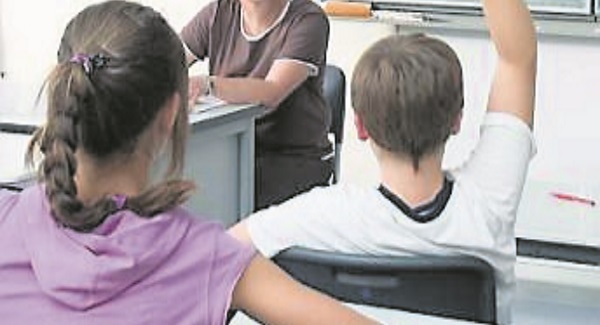
This is a considerable achievement on several levels.
It shows that stimulating programmes work; that the majority of students thrive when challenged, and that by reaching one benchmark without any great struggle, the bar can be raised again.

All in all, a win-win outcome celebrated yesterday when Education Minister Richard Bruton set a new set of targets for reading and maths scores.
This advance, however, does suggest that earlier programmes underestimated our children’s capacity to learn.
If this is so, and the report suggests it is, then earlier generations may not have realised their potential because prevailing standards underestimated their ability.
The figures also beg a question — are there subject areas other than maths or English where children might benefit from a more demanding curriculum?
They, most importantly, suggest that one-step-at-a-time targets can become self-fulfilling ambitions. In any event, the assessment must encourage more demanding objectives around our children’s education. Another win-win situation.
Even though students have made great progress, that progress has been uneven. Efforts to raise literacy standards have been more successful that those aimed at improving numeracy. This has led to a renewed focus on higher standards in numeracy.
The half-term report has also, in a kind of back-to-the-future way, led to a new emphasis on meeting the needs of high-achieving maths students. This came about after a number of domestic and international reports concluded that our higher-scoring students did not reach the same levels as their international peers.
If this is a return to the old idea of streaming, of recognising that all talents are not the same, then so be it. Talent is precious and it must be developed in whatever way is appropriate to maximise potential.
Education is a central political issue in our world. It is not an overstatement to suggest it is a battleground fought over by forces of very divergent values and ambitions.
It is entirely legitimate to wonder if the resurgence of hostile, xenophobic nationalism in Europe would be possible if people now promoting political extremes had a full understanding of their history or of the consequences of their actions.
It is important to ask if they would be so aggressive in “making their country great again” — be they English, Dutch, French, or American — if they had been taught to understand that the pursuit of lebensraum — physical, emotional, or psychological — is always a path to catastrophe.
The link between Hungary’s aggressively nationalist prime minister Viktor Orbán and literacy and numeracy scores in Irish classrooms may seem tenuous but it is not at all.
If we educate our children, we are less likely to have to endure an Irish Orbán because education is far more than the three Rs.
In today’s world, it is the most effective security we can offer our children.