We have a chance to build something out of the shame and sorrow of past
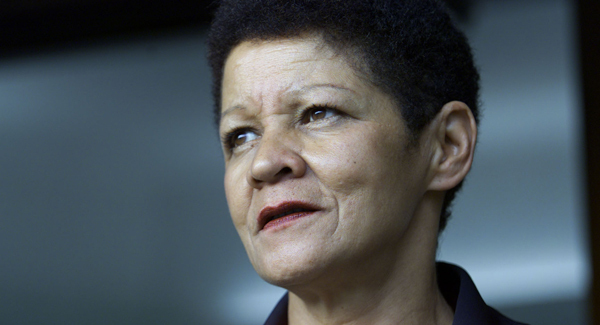
We need a truth commission to enable survivors to tell their stories, in whatever way they want to, writes Fergus Finlay.

We have a chance to build something out of the shame and sorrow of past

Stop for a minute to think about the things we’ve discovered — maybe things we always knew in our heart of hearts — about the way we treated mothers and babies. About the way we treated children and adults with no voice, no defence.

If we can, put the anger and the shame to one side.

There’s no revenge possible here. There’s no accounting for the historic past. There’s only what we do now. How do those who need to make amends do so? How do we show respect for people who have been damaged? How do we change the future to make sure it never happens again?

Of course, in the present, there has to be accountability.

We still don’t know how some decisions were made, and who made them, and why they were made. We still don’t know if there are other babies discarded and abandoned.

If the present commissions of inquiry do their work, we’ll soon have the answers to those questions. But it isn’t enough. It isn’t a complete answer to the question of the past.

To be a survivor of abuse and a campaigner at the same time requires courage over and above the norm. Every time you raise your head above the parapet you run the risk of being plunged back into what happened to you.

There are survivors who have wanted for years to confront their abusers but found, when they had a chance to do so, that the pain was too great, that the power their abusers had over them was still there.

But some went on regardless.

The bravest woman I ever knew was Christine Buckley, who was the first to tell her story in the detail that was necessary, and who battled relentlessly for other survivors of abuse until the day she died.

She had a chance to confront her abuser, and found herself becoming a frightened vulnerable child in the presence of the other.

But she did it. Not, she told me, for revenge, but because the thing that mattered most was truth.

The children who were sent to institutions, the mothers sent to mother and baby homes or Magdalene laundries — they were robbed in all sorts of ways.

Robbed of their children in some instances, of their childhood in others. But they were also robbed of an identity, of a past they could talk about, of the family connections the rest of us have in our DNA.

It’s because of Christine Buckley, and the thousands of other survivors, that I strongly believe the past needs a truth commission.

Such a body needs to have the power to assemble every bit and scrap of information we have, to gather together all the records that exist, and to preserve every bit of data — including archival footage, court records, and church and official data.

The Ryan Tribunal collected a huge amount of material, and that is under lock and key somewhere. There are dozens of other sources.

A truth commission also needs to enable survivors to tell their stories, in whatever way they want to, and it must help and facilitate people who want to trace their origins.

All of this is possible — there are models that can be followed, including the Shoah Foundation, the monumental body established by Steven Spielberg to enable survivors of the Holocaust to tell their stories. That foundation is located in the University of Southern California, and I believe we should do something similar here.

It will take law, possibly even a constitutional amendment, and it will take resources. But a complete telling of the truth of the past, especially from the perspective of those who had to endure its terrible injustice, is essential if we are to finally begin to do justice.

What of the present? Of course there are major issues of individual and corporate accountability still outstanding, and they must be dealt with. But there is one over-riding issue that we have to face up to.

Judge Ryan said it best when he talked in his report about the deferential relationship between Church and State. That relationship has done immense damage to this country, and the time has come to end it once and for all. Of course there will be those who point to the good that religious have done in the past, but none of that good depends, or ought to depend, on power.

We need to take back hospitals, including land and premises, from the ownership of the Church or religious congregations. We need to redesign our schools system so that patronage is no longer invested in a church, and we need to demand the handing over of school properties to the State that funds them. We need to insist that any organisation funded by the State is accountable to the State, and cannot hide its books behind a cloak of canonical secrecy.

None of that will be easy, and there is no doubt it will be hard- fought.

We know now, though, that the Church took a conscious decision that it would contribute only what it chose to to the cost of redress, and then only after driving an unconscionable bargain to protect itself. If the past deal cannot be undone, we have to arrive at a point where that level of power and control can never be exercised again, except through democratic norms.

And what of the future? It may seem ironic, even grotesque, to say it in the face of everything we know about the past.

But it would be possible for us to ensure that Ireland came to be seen (to coin a phrase beloved of Enda Kenny) as the best place in the world to have a baby, and to be a baby.

That wouldn’t be cheap — but other countries, the same size as us, have set out to do it. It means investing in ante-natal and post-natal care. It means radically increasing the amount of paid parental leave available. It means recognising and celebrating the arrival of a baby in tangible ways. It means ensuring that every baby, and its mother, gets to see a public health nurse in their own home five times in the first couple of years of life. It means investing in high-quality child care.

All of that would involve not just a strategy (there’s loads of them and more are promised) but a national resolve. It involves reorienting tax money into services that deliver a really good start.

Other countries have done it, and got a huge payback.

The child who is welcomed into the world is the child who grows up to complete an education and to find a place in the world.

It’s no coincidence that countries that invest in childhood survive economic shock, and have stable and strong economies and societies.

We have a chance to build something out of the shame and sorrow of the past.

But only if we don’t wring our hands. Only if we refuse to accept that we are powerless in the face of that past. We can change the present and the future. And it’s time we did.

We need a truth commission to enable survivors to tell their stories, in whatever way they want to

x

More in this section

Revoiced

Newsletter

Sign up to the best reads of the week from irishexaminer.com selected just for you.

Cookie Policy Privacy Policy Brand Safety FAQ Help Contact Us Terms and Conditions

© Examiner Echo Group Limited