Method of bringing Fianna Fáil back to power leaves Micheál Martin exposed in a crisis
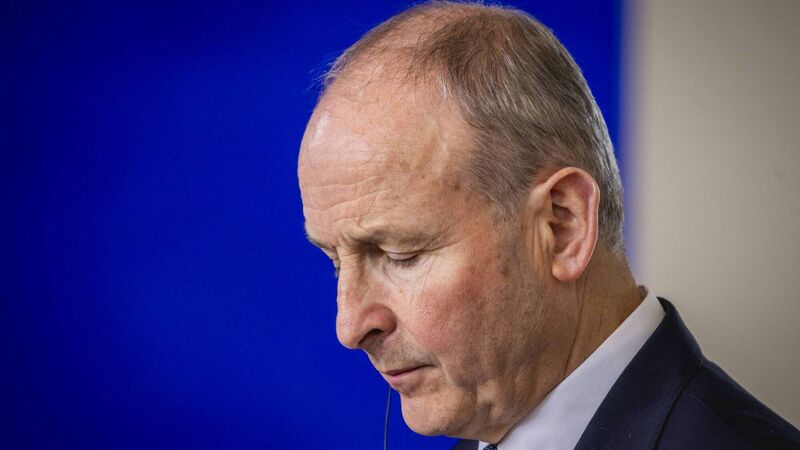
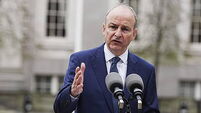
Micheál Martin came to politics young, running for the city council in 1985, having barely completed his third-level education. Unlike Jack Lynch, his entry to politics was at the ground floor rather than through fame achieved on the sporting field. Picture: Fianna Fáil/PA
The man from Cork had a huge win against the odds. “The biggest comeback since Lazarus,” according to RTÉ’s political correspondent.
He held Irish politics in the palm of his hand in that moment, a full term in government all but guaranteed. And then, within two short years, he was gone, effectively turfed out by those whom he had led to the Promised Land.
So it went in 1977 for the leader of Fianna Fáil. So it may go now with another Taoiseach from Cork.
There are a few differences between Jack Lynch and Micheál Martin, along with other similarities, one of which may well be a crucial determinate in Martin’s political fate right now.
First, the differences. Lynch came to politics with a clutch of All-Ireland medals in his back pocket, having hurled for Glen Rovers and the county. He also dabbled in football, being part of the St Nicholas side that got to a county final. Playing with him on that team was one Paddy Martin.
Read More
Paddy’s son Micheál, the current Taoiseach, is a Nemo man.
He didn’t make it to the county team, although his own son Micheál Aodh is the current Cork goalkeeper.
Martin came to politics young, running for the city council in 1985, having barely completed his third-level education. Unlike Lynch, his entry to politics was at the ground floor rather than through fame achieved on the sporting field.
His first successful election to the Dáil was in 1989, and he has been there for the 37 years since.
In his longevity, he resembles a politician more from the Lynch era than his own. So much for differences.
The similarities include a cautious disposition, a preference to hug the middle ground rather than head out along the political spectrum, and a status that can attract admirers from beyond their own political tribe.
Former Northern Ireland ombudsman and senator Maurice Hayes described the Glen Rovers man as possessing “grace and dignity, class and style”.
Some of those attributes fed into Lynch’s electoral success in 1977 when he won a landslide election, increasing his party’s seat compliment by 15 to 80. He had been out of power for four years, and many had written his political obituary.
“Jack is back!” blazed the hometown headline in the Cork Examiner. In The Echo, a front page piece by reporter Dick Brazil wrote what might have seemed obvious but, in retrospect, was the red rag to fate.
“His leadership has now been put beyond question and he can remain at the helm as long as he wishes, and certainly throughout the life of the 21st Dáil,” he wrote.
From there on, he made the mistake of the hurler who has just goaled and mistakenly believes that his talent has ensured the game is well beyond the opposition’s capacity to retrieve: He pulled up, thinking that the game was won.
Towards the back end of 1979, there were two by-election defeats in the bag and a scheming Charles Haughey whispering into the ears of a whole clutch of young Turks who had been elected on the Lynch wave. That heralded the end.
There are two by-elections scheduled for next month, and they may turn out to be a major blow to the current Taoiseach’s aspiration to lead until the end of 2027.
He took over the party in 2011 when it was going through an existential crisis. The rest of the country wasn’t paying too much attention to the party’s woes as the economic crash was visiting misery on every home and business.
The blame for such upheaval, when the State was just getting used to prosperity, was laid firmly at the door of Fianna Fáil.
Martin brought the party back from the brink, but the manner in which he did has some echoes with one of Lynch’s foibles.
Lynch was popular with the public, but not necessarily with his own parliamentary party.
Bertie Ahern, who was first elected in the 1977 landslide, later wrote in his memoirs that Lynch hardly knew him in the years after that election or even what constituency he represented.
One incident that Ahern recalled was passing the leader in the corridor of Leinster House and Lynch didn’t even acknowledge him.
That created the kind of vacuum in which Haughey was able to build his campaign to unseat the aloof Lynch. Martin has always been at pains to stress that he is not a removed or aloof figure. Yet there is much to suggest that he is perceived that way by some members of his parliamentary party.
It is that perceived characteristic that returned to haunt him this week, when some in his parliamentary party expressed frustration in the wake of the fuel protests. A letter from the three youngest TDs — James O’Connor, Ryan O’Meara, and Albert Dolan — pointed out that many of their peers see “no connection between what happens at the ballot box and what follows in Government”.
They didn’t explicitly criticise the Taoiseach, but noted that: “Too often today, we find senior colleagues expect us to just explain their government difficulties to our communities. That is not the role we want, nor will we accept it any longer.”
A similar theme emerged from party elders like Seán Ó Fearghaíl, John McGuinness, and Willie O’Dea. The veteran Limerick TD summed up the sentiment.
“We seem to have lost the one virtue of which every democracy depends, namely the ability to hear anger before it turns into rebellion,” he said.
“So the leadership must take a good chunk of responsibility for the way this has developed.”
O’Dea is an interesting weather vane, as he has never expressed reservations about Martin and is most likely beyond ambition for promotion by any alternative leader.
Some 12 years ago, when Martin was two short years into his tenure, his leadership style first came into question.
When O’Dea was asked about it on Morning Ireland, he said: “I say this with the greatest respect to my colleagues: I look around the table, in my mind’s eye, and I don’t see the messiah. And when I look in the mirror, I don’t see him either.”
That was then, when Fianna Fáil was battered and bruised. Martin was in the early stages of reviving his pummelled party.
As those who had survived the 2011 election attempted to pick themselves off the floor, it seemed obvious that he concluded he would have to plan and act with a tight focus.
The approach served him well as he raised the party from its knees, wore the sackcloth and ashes, and attempted to carve out a smaller niche in the political firmament.
Issues such as the marriage equality referendum and the repeal of the Eighth Amendment to the Constitution could have presented problems to a party that might have had notions above its station. He ensured that wasn’t to be. Over the course of a decade, his approach — in terms of leading the party — was vindicated. He didn’t have a specific power based in the ranks. He did not attract the kind of devotion that some of his predecessors did. His style may have alienated some of them, but it was also one that chimed to some extent with voters beyond.
Then came the ultimate vindication with the result of the 2024 election, a return to power, a return to being the biggest party, albeit in a very different context to the one that existed in 2011.
Arrival in the Promised Land can change the game completely. Go ask Moses.
The Jim Gavin affair brought frustrations to the surface among the ranks and, this week, there has been a repeat. The ultimate outcome is likely to be a confirmation that Martin will not serve until the end of 2027.
When Lynch died in 1999, he was buried in St Finbarr’s Cemetery in Cork following a State funeral.
Customarily, the graveside oration for a deceased Fianna Fáil leader is made by his successor.
However, in this case, Lynch had selected Desmond O’Malley to do the honours. O’Malley had left the party four years previously to set up the Progressive Democrats.
The snub was direct and reflected Lynch’s complicated relationship with his party.
Martin has been more respected than loved within the ranks. His achievements are valued and appreciated right across Fianna Fáil. He is rooted in the party in a manner that Lynch never was.
But when things get cranky, when the foot soldiers fret about their career and electoral prospects, Martin is more exposed for the very approach he applied in bringing the party back to power. That’s politics, and he knows it more than most.


CONNECT WITH US TODAY



Be the first to know the latest news and updates