New Cork Luas route: Key changes, 24 stops and potential impact on homes and businesses
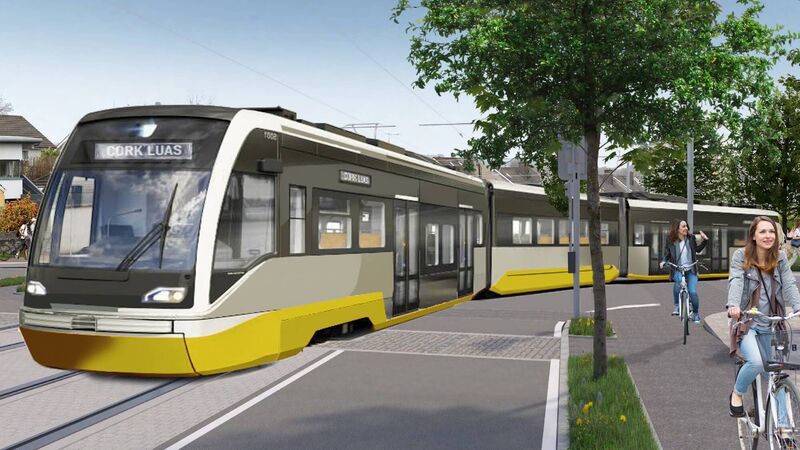
Cork Luas route to be unveiled, with the €1bn light rail project set to spark debate over impacts on homes and businesses.
The preferred route for the €1bn-plus Cork Luas light rail system will be published this Friday at 11am and will mark the beginning of a fresh round of non-statutory public consultations.
Even though the very ambitious project has no committed timeline, the latest proposed route – running 18km from Ballincollig in the west to Mahon Point in the east, through the city centre – will prove controversial and generate much debate.
Some aspects have leaked, with a two kilometre extension expected west of Ballincollig, significant changes in Bishopstown, and what are understood to be minor adjustments at the eastern end.
Among the 24 stops along the line will be the Munster Technological University, Cork University Hospital, University College Cork, Kent Station, the Docklands, Páirc Uí Chaoimh, and Mahon.
Read More
The projected journey time from Ballincollig to the city centre will be 35 minutes, with the full route taking 55 minutes.
The project will include a 1,000-space park-and-ride facility to be located in Ballincollig, and a ‘mobility hub’ in Mahon, both equipped with bike parking, EV charging, and pick-up/drop-off points. Also included will be a new public transport bridge to carry trams from Kent Station across to the south docks, where thousands of new homes are planned.
As many as 2,300 passengers per hour are projected to use the system in either direction at peak times, according to Transport Infrastructure Ireland (TII), with services running every six minutes, or more frequently if demand increases.
More than 1,000 public submissions were made after the first draft of the proposed route was published.
We take a closer look at four key sections of the route that are likely to spark the most debate.
The day after the reported that the new Cork Luas route could cut through their training grounds, two prominent Bishopstown sporting clubs were contacted by TII to arrange meetings for today.
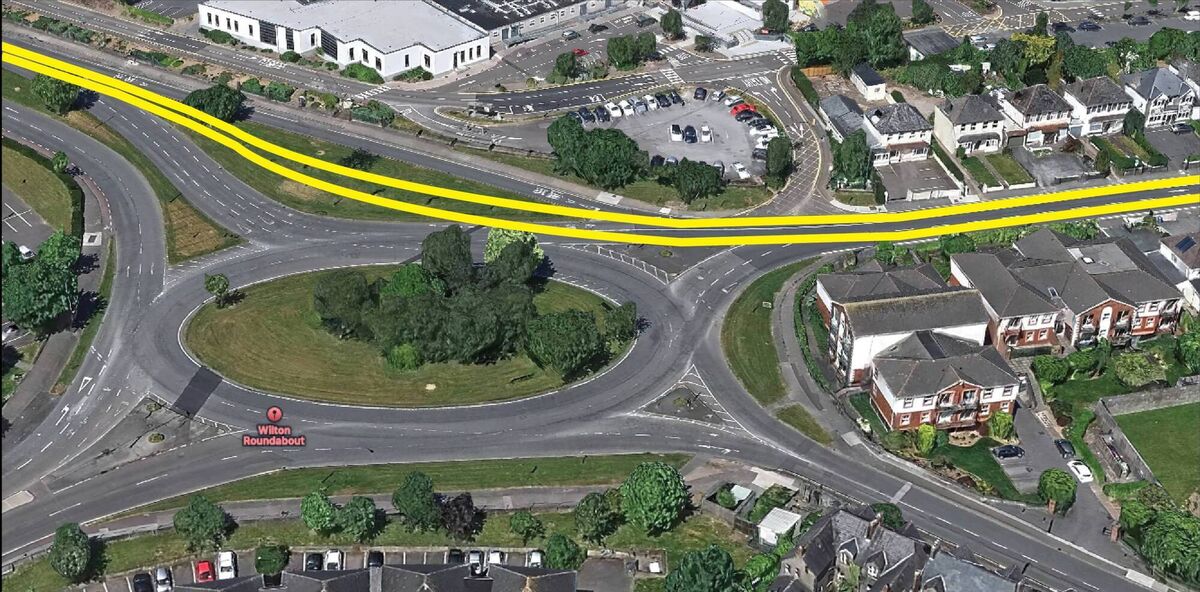
When the EPR for the €1bn-plus light rail was published last April, it showed the light rail running eastward from Curraheen Rd “joining Bishopstown Rd and sharing with general traffic until Cork”, travelling beside the front, southern boundary of Cork University Hospital (CUH) and turning left and northward at the Wilton roundabout.
At the time the EPR was published, concerns were raised at the notion of two train lines sharing the Wilton Rd – which is already a notorious bottleneck – with local, commuter, and bicycle traffic, as well as with BusConnects.
According to information received by the , the revised, preferred route will see the light rail turning left before it reaches the western boundary of CUH, heading north and then east behind the hospital, cutting through several housing estates and likely impacting upon the grounds of Bishopstown GAA Club and Highfield RFC.
From the limited details available, the revised route will run parallel to the rear boundary of CUH, before rejoining the Wilton Rd at some point towards Dennehy’s Cross and heading toward Victoria Cross and on for the city.
Precise information on the revised route is thin on the ground, with TII refusing to provide information beyond saying the route will be unveiled at 11am on Friday next, kicking off a fresh round of non-statutory public consultation. Local representatives have called for the preferred route to published early, to allay the fears of local residents, as well as the concerns of the sports clubs.
A senior Government official told the last weekend that they were optimistic there shouldn’t need to be wide-scale compulsory purchase orders or house demolitions in Bishopstown, but without clear facts, worries are only likely to grow. When TII contacted Bishopstown GAA and Highfield to arrange meetings with both clubs today, the clubs asked to see maps of the precise revised route, but TII declined. Publicly, neither club would speak on the record, but privately members expressed concerns about any interference with the dimensions of sports grounds, which have to conform with precise measurements. Some members of both organisations were furious at being contacted by TII – as they see it – so late in the game, seeing it as a too little too late attempt at damage limitation.
“It’s a complete shitshow,” was the verdict of one member of Highfield. “Why couldn’t they consult us before we read about it in the paper?
"The uncertainty was causing “fierce anxiety, in the club and in the community”, they said.
“Why couldn’t they show us the plans beforehand? Why can’t they show them to us now? Some people are worried sick about this.”
Asked if it would publish the preferred route early to allay concerns of residents along the route, TII said: “We are preparing the materials for the launch of the preferred route which will take place as scheduled on Friday, April 17”.
Read More
The publication of the revised Cork Luas route was delayed last April by a dispute over whether citybound trams should turn left or right at the junction of Washington St and the Grand Parade. That choice could shape daily life in the city centre for decades to come.
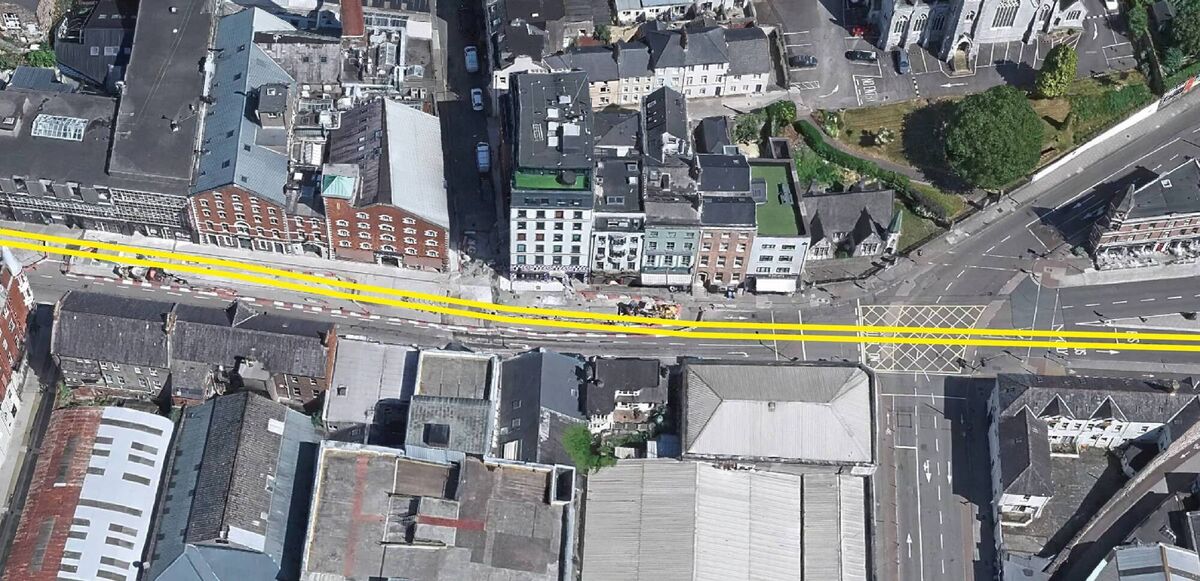
Ultimately the decision was taken to turn left at Finn’s Corner – the EPR’s maps warn of “potential impact” to the building – with trains then swinging right by Daunt’s Square and along down Patrick St.
The route then crosses Patrick’s Bridge and turns right onto MacCurtain St, bound for Kent Station and a new public transport bridge across to Kennedy Quay and on to the Docklands.
Running a tram along Patrick St, the city’s main thoroughfare, might seem a logical choice, but some have questioned the wisdom of introducing two parallel train tracks on the perpetually busy MacCurtain St.
The street was extensively revamped in late 2023, with significant investment in public realm improvements, the widening of pavements, and the re-introduction of two-way traffic for the first time since 1968.
Submissions made to TII in the non-statutory consultations which followed the publication of the EPR last year saw some respondents suggesting an extension of the so-called Pana ban, which was introduced in 2018, with the closure of both Patrick St and MacCurtain St to general car traffic. Concerns were raised by respondents – including the controversially named Victorian Quarter group – about the route’s potential effect on outdoor dining on MacCurtain St.
Several businesses, including MacCurtain Wine Cellar, Paladar Bar, Hotel Isaacs, and The Glass Curtain, made submissions voicing worries about the economic impact of the project on their businesses. Concerns about potential damage to building basements and cellars were raised by businesses, as were fears regarding restricted pedestrian access, and reduced access for guests and suppliers.
The Metropole Hotel drew attention to “the need for access to maintain its historic building by using large equipment, like a mobile elevating work platform” and further “requested protective measures for decorative columns and the building façade”.
Social Democrats TD Pádraig Rice made a submission suggesting that taking an alternative route taken along the quays would “avoid disrupting a recently upgraded street and offer regeneration opportunities for the quays”. Noting that the quays are currently dominated by car traffic, he suggested that availing of an alternative route skirting MacCurtain St “would have the dual benefit of bringing life to areas that have been neglected for too long, while also acting as a pathway for pedestrians heading into the commercial centre”.
Speaking to The Echo last year, Seán Gargano from MacCurtain Wine Cellar made a similar suggestion.
“Our quays need regeneration and in other European cities these projects don’t go bang down the arteries of a city but feed onto them, in Dublin the Luas doesn’t go directly down Grafton street but adjacent to it,” he said.
MacCurtain St needed pedestrianisation, Mr Gargano said, rather than adding more traffic.
“Luas plus cars, buses and bicycles mean the street will be choked with traffic – our beautiful outdoor spaces, like seating outside pubs, will be pushed back, and there will be overhead cables visually disrupting the area.”
The name ‘Victorian Quarter’ regularly infuriates Sinn Féin councillors over its association with the Famine Queen, and there have been half-hearted efforts to rebrand it ‘The VQ’. Presumably the hope will be that the Luas doesn’t leave VQ standing for Vehicular Quagmire.
This time last year, when Con Dennehy’s customers told him the Cork Luas EPR showed the tracks going through his pub, The Venue in Ballintemple, he asked if it was a belated April Fool’s joke.
“I thought it was a wind-up,” he told the “The great and the good were above in City Hall launching it and we knew nothing about it.
“They published the thing and launched it, and they never told us they were knocking the pub.”
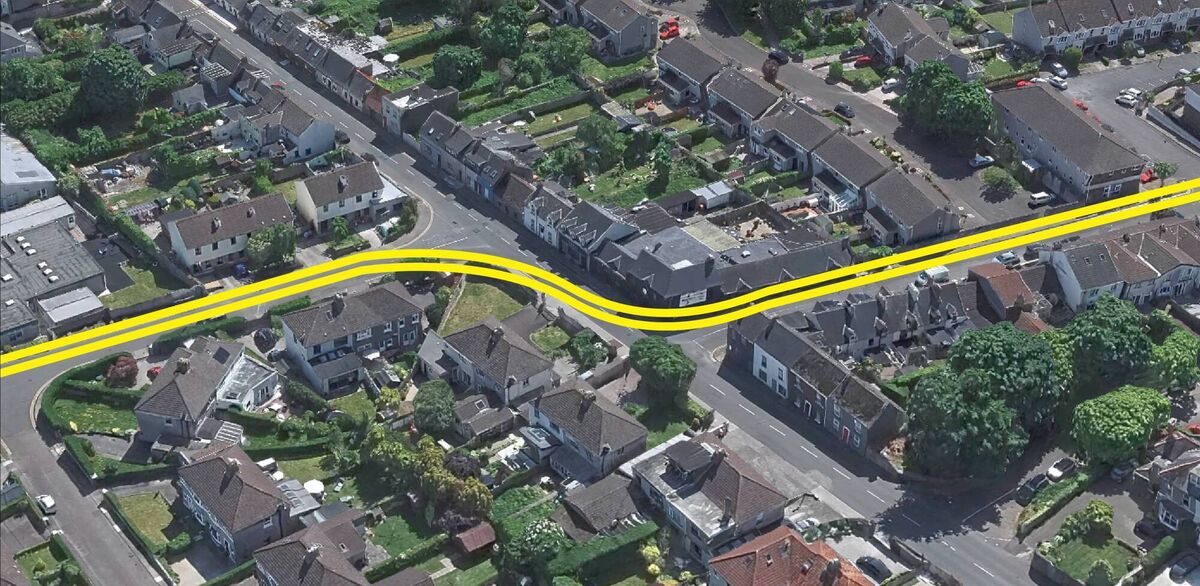
Mr Dennehy and his partner, Kate Tierney, have run the popular bar, which is located on the corner of Churchyard Lane and the Blackrock Rd, for more than 11 years, and it has been a pub for more than a century.
Last year, Paolo Carbone of TII told this newspaper that he accepted that Mr Dennehy and Ms Tierney had not hear directly from the project team that it was on the line of the emerging preferred route, but said that they were spoken with the day after the EPR was revealed. He said that further engagement had taken place: “We are still selecting the route, and we are balancing the need to give them certainty with the fact that we are still selecting the route,” Mr Carbone said.
In the report published on the submissions made during the public consultation on the EPR, TII acknowledged: “Churchyard Lane is a pinch point on the route. It connects key destinations; but it is narrow, and residents have raised several concerns about the impact on them.”
Mr Dennehy said he and Ms Tierney had intended to “get out” but the EPR had “put the kibosh” on those plans.
“Realistically, nobody is going to by a pub with a CPO (compulsory purchase order) hanging over it, regardless of how long that CPO might take,” he said.
“I mean, if it’ll ever happen at all, it might be 2050 or 2060, and I can’t wait around for that.”
The preferred route will be published on Friday, and that will be followed by another round of non-statutory consultations. The TII will then consider the submissions arising from those consultations before a final route design is prepared for the application of a railway order.
Under the Transport (Railway Infrastructure) Act 2001, a railway order is a statutory planning authorisation, and it is required to build or alter major railway infrastructure, permitting construction, environmental mitigation, and compulsory land acquisition.
Mr Dennehy believes that if The Venue bar remains on the preferred route on Friday, then his business will remain “in limbo” until the final route is published.
“We can’t go forward, we can’t go back, we’re stuck and we don’t know when we’ll see an end to this,” he said.
“We’re not the only people in this position, there’s a lot of people left in limbo over all of this, and it’s really not fair.”
He further cited issues with subsidence in the area, and said the tram lines would in effect “cut the village in half”.
As far as Mr Dennehy is concerned, it would make a lot more sense for the Cork Luas to follow the old railway route to Mahon, which is now part of the Passage Railway Greenway, a walking and cycling path that follows the former Cork, Blackrock and Passage railway line.
“It’s the logical place to put it, but TII seem to know better,” he said.
Several submissions were also made by residents’ groups, representing areas including Churchyard Lane, Maryville, Russet Court, Avondale, Copperhill, Ardcairn, Temple Hill Lawn, and Beaumont Cottages.
“Comments were made about potential devaluation, loss of privacy, and disruption to daily life,” said the report. There was concern about the displacement of traffic to smaller roads, like Crab Lane, and unclear enforcement of access restrictions.
For the final stretch of the Cork Luas EPR heading east, trams come down from Churchyard Lane and swing right, passing a stop on the Well Rd and on then to Skehard Rd.
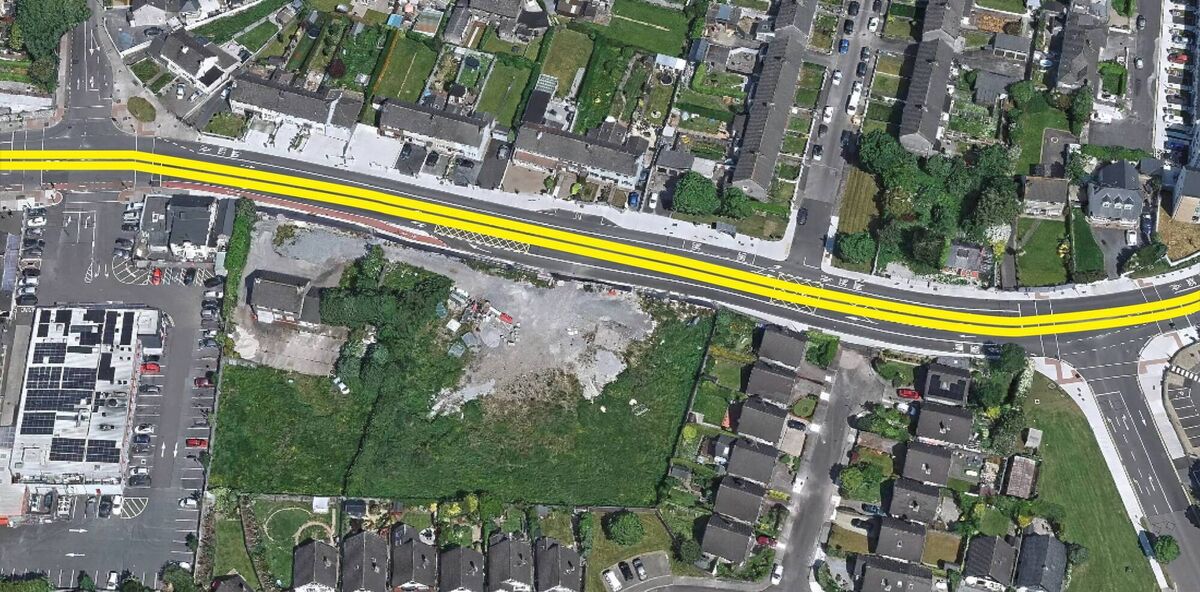
Along Skehard Rd it passes stops for Woodvale Rd and the eponymous Skehard Rd, before turning down for a stop at the Greenway, and then south to Mahon Point, where a mobility hub is planned. Like its counterpart at the Ballincollig start of the route, the Mahon hub will also offer bike parking, EV charging, and pick-up/drop-off points.
Sources have told the that the preferred route will contain some “minor changes” at its eastern end, perhaps in the Ballinlough or Ballintemple areas, or perhaps in Blackrock or Mahon. Like other flagged alterations from the EPR, there has been precious little detail offered about those putative changes.
In submissions to TII following the publication last year of the EPR, concerns about the potential impacts of the route were raised by businesses in the Skehard Rd, among them a barbershop, beauty salon, hairdresser and pharmacy.
Local business owner Martin O’Donovan said that the proposed route impacted businesses more than private properties and that it would cause potential road safety issues.
However, residents in the Skehard Rd and Well Rd areas were also worried about the possible impact of the rail line on access to private properties, including driveways, parking areas and gardens. They described potential challenges for private vehicles crossing the tram line, especially where turning movements may be restricted. Peter Horgan, Labour Party city councillor for the south-east ward, highlighted another potential concern which he said was not unique to the area.
“It’s vital that the Cork Luas on the Skehard Rd coexists and supplements the route of the sustainable transport corridor in BusConnects.
“We simply cannot countenance digging up the roads for BusConnects and then come along in a few years’ time and dig them back up again for tracks for the Cork light rail,” he said.
“There needs be joined-up thinking on this, and there is evidence that there is joined-up thinking, but we have to ensure that both TII and the NTA [National Transport Authority, which has responsibility for BusConnects] are of the one mind and are co-ordinating for Skehard Rd and all of the residents living there,” he said.
This had to be a priority right across the Luas route, he argued.
“When we see the plans for the preferred route next Friday, that will be the first question I will be asking: ‘Have you spoken with the BusConnects team, and do your plans coexist and complement theirs?’ “As far as I’m concerned, we will get one chance to get this right, this will be the future of transport in Cork and it really is imperative that we do get it right.”
Last May, Paolo Carbone told The Echo that TII was considering all of the concerns which had been raised about the Cork Luas EPR following the publication of the EPR, “and we welcome submissions on it as part of the consultation”.
Friday’s publication of the preferred route will tell whether those submissions were heard.


CONNECT WITH US TODAY



Be the first to know the latest news and updates