The scourge of fly-tipping: How illegal dumping is defacing Cork’s countryside
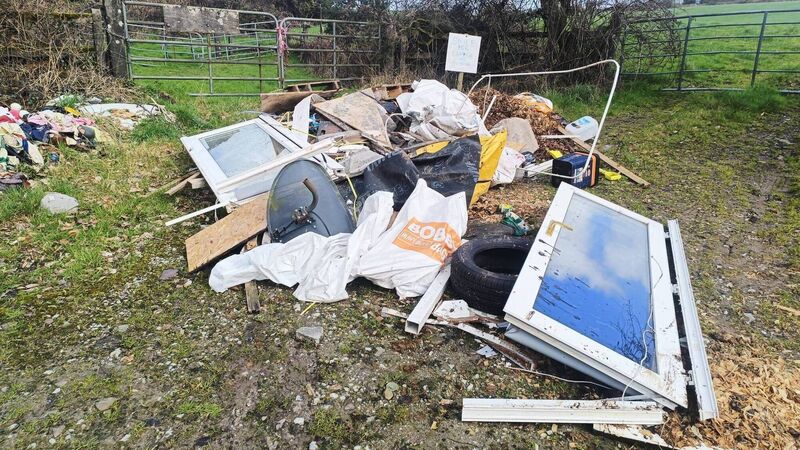
Fly-tipping is endemic, with motorists throwing almost everything and anything out of their vehicles, and not just on remote roads, council staff say.
It is costing Cork County Council “multiple millions of euro” each year to try and tackle illegal dumping that is now so widespread, people are even throwing their rubbish into graveyards.
Meanwhile, almost “industrial scale” clean-outs of household items — including fridges, freezers, and large sofas — have become commonplace. It is not just happening in traditionally hidden places, such as in remote forests, but just a few metres from main roads.
Fly-tipping is endemic, with motorists throwing almost everything and anything out of their vehicles, and not just on remote roads, council staff say. Dead calves and fridges full of rotting meat have also been dumped in beauty spots.
The battle to bring the culprits to court is being hampered because they’re “cute enough” that they don't leave any incriminating evidence (bills, post etc) in the rubbish they dump.
Putting covert cameras into so-called "hot spot" dumping areas has been stalled by issues over who will control the access to information under GDPR — is it local authorities or An Garda Síochána?
Read More
Illegal dumpers are getting so brazen that they’re throwing out household furniture just metres from the main Cork-Limerick (N20) road.
Less brazen ones are doing the same in remote forestry. More commonly, others are simply throwing coffee cups and any other rubbish they have in the vehicles out the window.
The latter alone accounts of many tonnes of waste picked up by a special council clean-up team every year.
Last year, Cork County Council investigated 920 illegal dumping complaints. The team assigned to clean up these sites removed 127.7 tonnes of waste. The team carried out jobs at 443 sites, which accounted for 106 days of work.
The Kanturk/Mallow municipal district had the highest illegal dumping of any of the eight municipal regions, accounting for 31% of all recorded incidents in the county.
In total, 80 incidents of illegal dumping were recorded in that district last year. The second highest was in East Cork (29), and the lowest was Bandon/Kinsale (10).
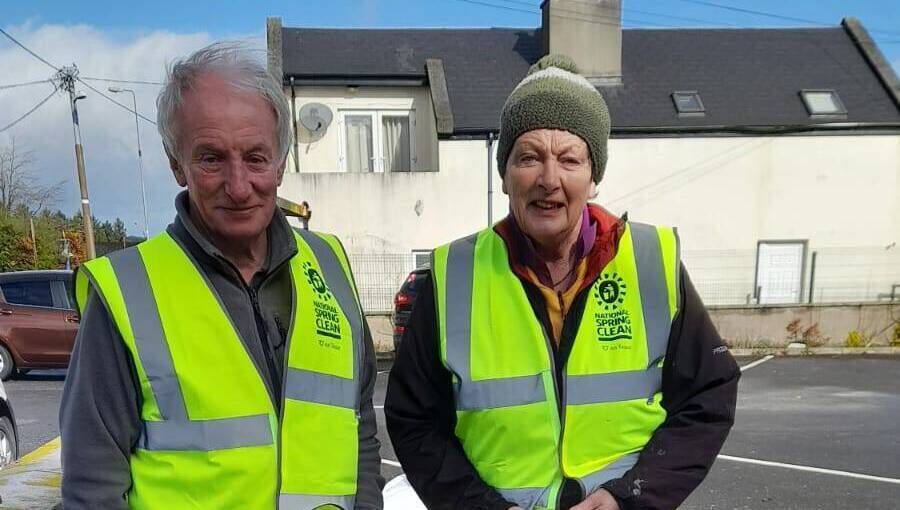
Liam Singleton, the council’s senior engineer in its waste department, said it’s costing the local authority multiple millions of euro each year to deal with illegal dumping.
Even some "chancers" have been discovered bringing old washing machines to civic amenity sites — free from any charge — with waste stuffed into their tumblers so as to avoid payment for that, which could be up to €10.
Mr Singleton said some of those paying a €4 entry fee at such sites are so lazy, they’ll dump everything they have, if they can, in one receptacle. Not separating such waste contaminates everything else in it. That is why staff at these sites need to constantly monitor what visitors are doing.
He said it’s “extremely difficult” to catch, fine, and convict fly-tippers.
Even before covert CCTV cameras were removed at hotspot areas due to GDPR issues, he said people would leave their cars away from the place they dumped rubbish and proceed on foot to offload it — usually wearing hoodies — which made it almost impossible to provide a chain of events to a court that would lead to a conviction by identifying them through footage and linking them to the vehicle they’d travelled in.
“Hopefully, the GDPR issues will be solved this year, and we can start targeting illegal dumping again,” Mr Singleton said.
He said people are so aware now that, if they get pizza home deliveries, they will rip their name off the box before throwing it away.
Mr Singleton said a lot of old and vulnerable people are getting caught by bogus waste removers because they are often younger people offering a cheap deal.
He said the older people can’t afford expensive waste disposal, and they often think that they are doing a favour by helping out younger people earn a few euro.
Mr Singleton admitted that, without the help of voluntary groups in communities across the region, such as Tidy Towns and GAA initiatives, the council would be in even worse trouble trying to tackle illegal dumping.
Michelle Green, the council’s environmental awareness officer, said charities are being overwhelmed by the amount of textile waste being generated, which is down to people being able to get “fast fashion” through the likes of Shein.
Many people can’t even be bothered to put them in the receptacles, leading charities to ask the council to help in clean-ups outside them or even close them down.
“Younger people get a ‘one wear’ out of these and don’t have the same value in the clothes (as older generations did), and they’re being discarded much quicker,” she said.
Ms Green said the council is running education programmes in schools to counter this.
She hints that, without the younger generation getting to grips with the principles of reuse and recycle, illegal dumping could get even worse.
“We’re a society that loves to consume, and the population is growing all the time,” Ms Green said.
Mr Singleton said that, in the Celtic Tiger years, the council could recoup up to €400 per tonne from recyclers for clothes. However, the bottom has fallen out of that market, and charities which used to make some income out of them at clothes banks are abandoning them.
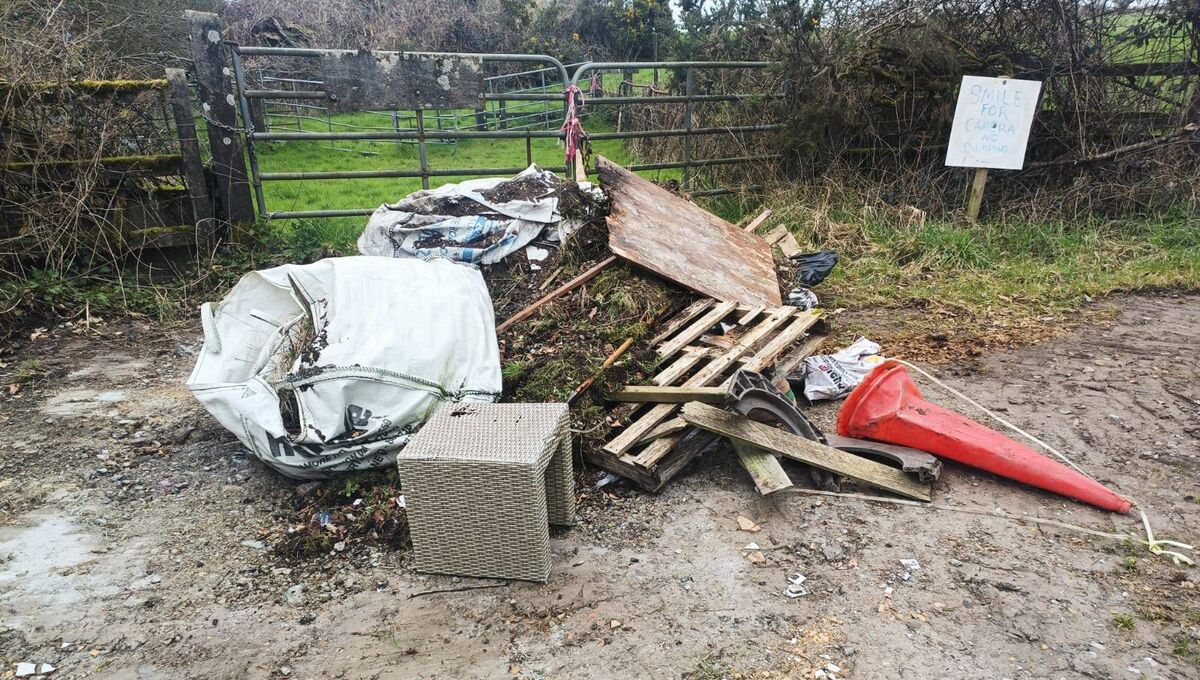
The council has six dedicated litter wardens and four enforcement officers. The latter are tasked with investigating the larger illegal dumps. Despite this, there have only been a handful of successful prosecutions in recent years.
County councillors have written to the Government asking it to introduce legislation similar to France, where motorists caught throwing rubbish out of their vehicles get penalty points on their license.
They’ve also asked the Department of Education to put "civic responsibilities" associated with illegal dumping in the school curriculum in an effort to make future generations aware of the environmental damage it’s causing.
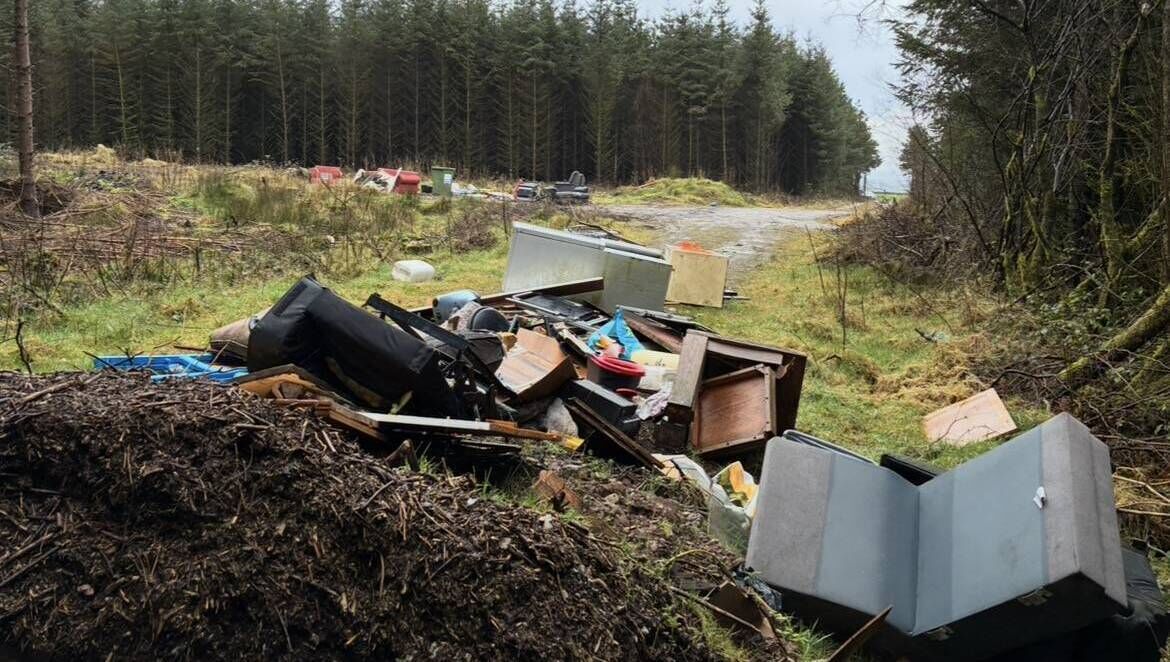
Aontú councillor Peter O’Donoghue highlighted the increasing problem, having identified major dumping of household furniture and appliances in rural woodlands at Araglin in North-East Cork. Fine Gael councillor Liam Madden said he encountered the same thing close to the main Cork-Limerick road (N20) at a site in Grenagh.
Mr O’Donoghue said the number of incidents of fly-tipping and large-scale illegal dumping seems to be increasing in the greater Fermoy and Mitchelstown areas.
“Recently, I’ve been alerted to dumping incidents in Ballynoe, Bartlemy, Glenville, and Araglen," Mr O'Donoghue said.
"All these incidents saw large quantities of rubbish dumped in remote locations. The waste involved consisted of everything from building rubble to household items such as cookers, fridges, and sofas.
"The quantities of waste being dumped at these sites seem to be increasing as well. The most recent fly-tipping discovery I have been involved in is in Araglen, very close to the scenic Blackwater Way walk. It includes several large van loads of rubbish.
"We have discovered strong evidence in this incident of where the rubbish has originated."
He said the first illegal dumping incident he reported as a councillor was in Kilworth in early 2025, where at least 100 bags of household rubbish had been dumped.
Mr O’Donoghue said the reintroduction of covert CCTV “is going to be a game-changer in the fight to keep our county clean".
He said Waterford City and County Council has only recently started reusing CCTV to identify offenders and, in the first six weeks, identified and issued fines to over 80 offenders.
“Illegal dumping is a scourge on society. It cannot be accepted or tolerated in any way, shape, or form," Mr O'Donoghue added.
"For too long, a blind eye has been turned towards those who dump in our countryside. Those who dump indiscriminately in our countryside must be made accountable for their actions.
Independent councillor Finbarr Harrington, who lives in the picturesque Beara Peninsula in West Cork, said illegal dumping and fly-tipping have become a persistent blight on the region, marring some of Ireland’s most scenic landscapes. This has included dumping dead calves on the side of a road and a fridge full of rotting meat near a coastal walk.
“From the winding roads of the Mizen Peninsula to the rugged beauty of the Beara Peninsula and the quiet charm of the Sheep's Head Peninsula, the problem is increasingly visible," he said.
"Even remote spots like Cousane Gap are not immune, with dumped bags, broken furniture, and construction waste appearing in lay-bys, ditches, and some forestry areas that have become persistent black spots for illegal dumping."
Mr Harrington said dumping at sea and directly into the water is also a major problem, creating yet more work for volunteers who dedicate their time to beach clean-ups and coastal protection.
“Plastics, old furniture, and even hazardous materials are being left along beaches or thrown into bays, damaging wildlife habitats and presenting safety risks to swimmers and visitors," he said.
"At its core, the issue is driven by a mix of rising disposal costs, limited access to waste facilities, and weak enforcement. This is even though there are sites and disposal options available across the region, including Schull, Castletownbere, and Bantry. For some, illegal dumping has become an easy shortcut — avoiding fees and inconvenience at the expense of the wider community."
Mr Harrington said that, while education and awareness campaigns are important, the reality is that some people will still engage in fly-tipping.
“That is why stronger enforcement and significantly higher fines are not optional, they are essential. Increased inspections, surveillance in known blackspots, and consistent prosecution must become the norm if the problem is to be taken seriously,” he said.
“A while back, one of the worst examples locally was the dumping of two dead calves at the side of a road. It was an incident that caused understandable outrage, and highlighted the complete disregard some offenders have for both the environment and basic decency.
"In another deeply disturbing case, a freezer full of meat was dumped and left to rot at Trá an Phéarla on the scenic route in Allihies, a beautiful and popular bathing spot used by locals and visitors alike. Incidents like these go beyond littering. They represent a serious abuse of shared public spaces. In a separate but dangerous case, someone just dumped two gas drums at the side of the road."
He said dumping harms wildlife, pollutes waterways, and poses health risks. It also threatens tourism — one of West Cork’s economic lifelines — by tarnishing the image of an otherwise unspoilt region.
Labour councillor Cathal Rasmussen, a member of the maintenance committee at St Colman’s Cemetery in Cobh, said the committee has noticed an increase in dumping in and around the graveyard.
“A lot of work is being done to try and improve the graveyard by many people, and dumping like this cannot and will not be tolerated,” he said.
Castlemagner Community Development Association in North Cork recently posted on social media: "It’s very disheartening to see our local graveyard, a place where our loved ones rest, being used as a dumping ground."
Volunteers picked up so much rubbish that it filled six very large plastic bags.
Fine Gael councillor Liam Madden said that, despite the huge effort being put in by Tidy Towns and other community and volunteer groups, the situation is not improving. The council has provided such groups with hundreds of free litter-pickers every year. They cost nearly €20 each.
“The effort volunteers put in weekly is enormous. What would happen if their service wasn’t available? Fly-tipping of rubbish is now a major concern, and the litter section in the council has seen an enormous increase in the same with very few convictions due to culprits being able to evade the law in so many different ways. The law needs to change in relation to fines, and also there’s a need for a name and shame policy,” Mr Madden said.
He provided this newspaper with pictures of illegal dumping in the Grenagh area, just metres from the N20, which is mostly house clear-outs and builders’ rubble.
“In some cases, this dumping is done on private property, which creates huge problems in relation to collection and disposal,” he said.
The council has come up with some initiatives it hopes will reduce dumping. One is a borrow, use, return scheme which will provide reusable party packs designed to help reduce single-use plastics and support more sustainable celebrations.
The council has begun distributing reusable party packs to groups across the county, including rugby, soccer and GAA clubs. Each party pack contains reusable cups, plates, cutlery, jugs and bowls.
Ms Green said she hopes this pilot will be successful and can be expanded in the years ahead.
CONNECT WITH US TODAY



Be the first to know the latest news and updates