Teething problems and tensions: Limerick’s first directly elected mayor battles to deliver change
After a seven‑hour meeting that left him unwell, accusations of 'hostility' from councillors, and a major setback to his flagship housing plan, John Moran reflects on the growing pains of being Ireland’s first directly elected mayor — and why he refuses to quit
Teething problems and tensions: Limerick’s first directly elected mayor battles to deliver change

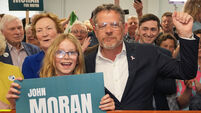
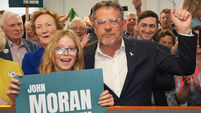
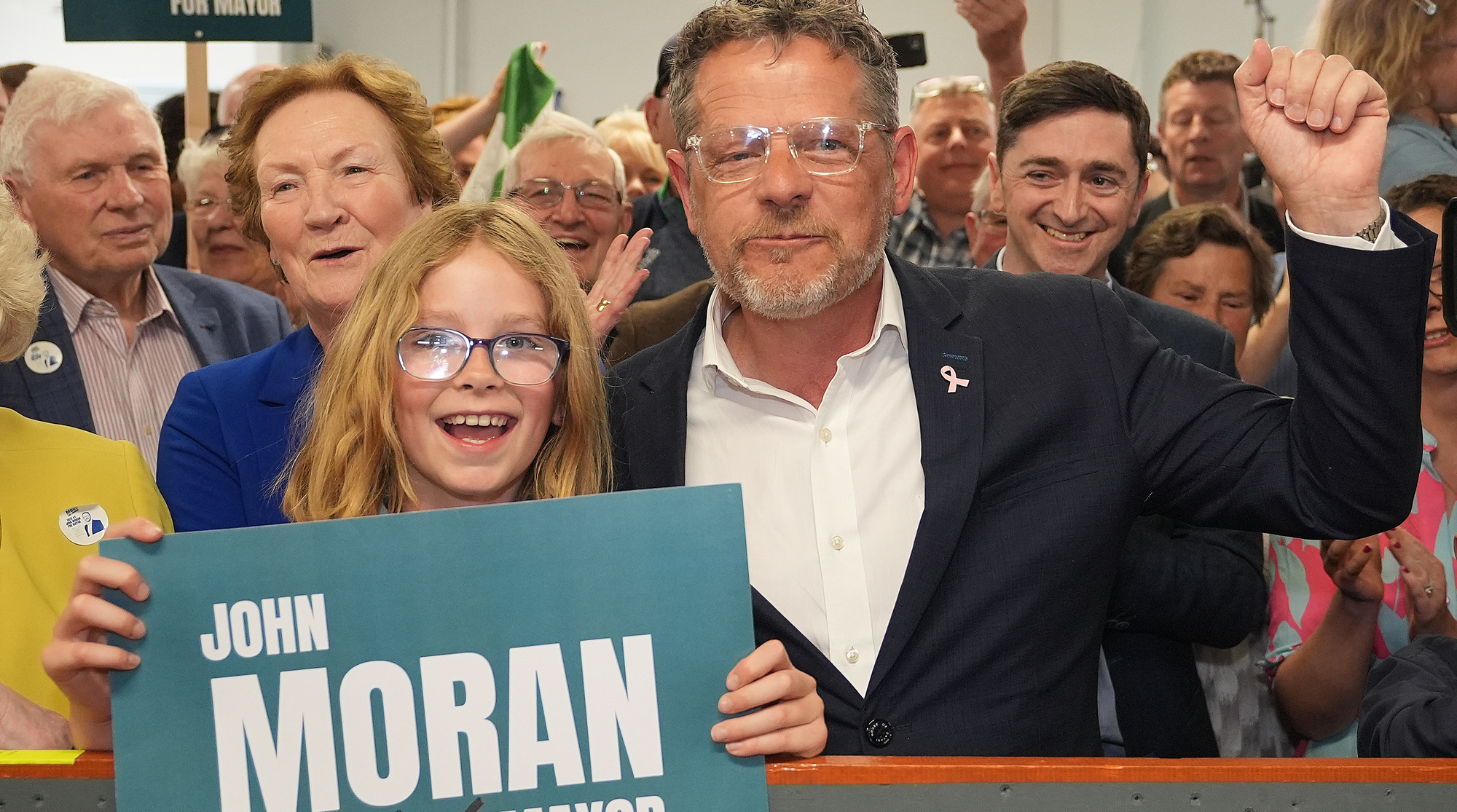
John Moran after his election as mayor of Limerick in June 2024. 

Limerick mayor John Moran expected there would be teething problems when he became the first directly elected mayor in the country. 

In February came what he described as the “lowest point” since his election. Mr Moran accused some councillors of being “hostile” towards him as he detailed what happened during a seven‑hour meeting, during which he became unwell. 

A corporate plan was ultimately passed in his absence — after already being delayed for 12 months due to internal disagreements in the council chamber.

Publishing the revelations on his website, Mr Moran brought a private meeting into the public eye, a move branded as “reflecting badly” on Limerick by arts minister Patrick O’Donovan, yet welcomed by others, such as junior minister Niall Collins.

“I'm a big fan of having public debate. I think that's one of the reasons why I was probably chosen, I'm not subjected to the whip of a party,” Mr Moran told the Irish Examiner.

Limerick is getting a huge amount of international attention, and we need to be able to capitalise on that. But there are, of course, going to be teething problems in any new change.

Mr Moran said holding debates in public was a sign of “maturity”, which is why he had pushed for council meetings to be recorded and made publicly available — even offering to have the mayoral fund cover the cost.

“At the end of the day, the public should be influencing what the outcome is,” he said.

Closed-door briefings

The "teething problems" had been growing prior to the corporate plan and mayor’s blogpost.

There had already been closed‑door briefings (including one where JP McManus addressed councillors amid the controversy surrounding the International Rugby Experience), marathon meetings that ran for hours before being adjourned, and accusations that spilled into local media.

Mayor of Limerick John Moran trying out the new VR headset tech for the Limerick Greenway in Dell, Limerick, last month. Picture: Kieran Ryan-Benson

For Mr Moran, there was no single flashpoint. Instead, he believes the tensions took root “from the beginning” — the moment an “independent” candidate won the mayoral election.

He described how a small minority of councillors from two “ruling” parties, Fianna Fáil and Fine Gael, have “consistently opposed almost every significant initiative” he has brought forward — and how a "strategy" was openly discussed on how to make his role "unbearable".

“Things were not going to be the same as before, and that was uncomfortable for a number of people, but inevitable. That’s actually what people voted for,” he said.

“I could disagree with somebody in any party. If I want to build smart homes and they don't want to, I believe we should have that debate in public.” 

Review urged

Meanwhile, the Government has been urged to initiate a review of Limerick’s directly elected mayoral legislation.

Under section 7 of the Local Government and Miscellaneous Provisions Act 2024, the Government has to review the effectiveness of the act no later than three years after its establishment.

Last December, private tensions were once again made public as plans for Limerick’s Christmas market highlighted disagreements between the mayor and the council’s director general, Pat Daly.

While Mr Moran’s focus is on proposing the council’s budget and plans from the mayoral programme, such as housing projects, he has to go through the local authority staff resources — with assignments made by Mr Daly.

 Limerick mayor John Moran at this year's St Patrick's Day parade with grand marshal, marathon champion Ava Crean. Picture: Karlis Dzjamko
Limerick mayor John Moran at this year's St Patrick's Day parade with grand marshal, marathon champion Ava Crean. Picture: Karlis Dzjamko

Mr Moran said functions such as planning enforcement actions should remain with someone who is “not politically elected”.

“That’s really important, otherwise, I could be giving planning permissions to all my supporters and refusing planning to those who didn't vote for me if I could find out who they are. The director general retains the responsibility for what I might call the HR function; they organised how the council is set up,” he said.

Mr Moran claimed the legislation detailing the mayoral function was “confusing”. “When the mayor wants more resources put onto some area and the director general is saying ‘I haven't got any because I'm using them in another area’, that is compounded then.” 

One of the “maddest things” that has happened since his election was an “unnecessary” two-hour conversation to send paperwork to Mr Moran's house when he was away.

“I said, ‘Well, can you just have them dropped at my house on the way home from one of the staff members who lives not that far away?’ They wouldn't do it.

“It took my adviser two hours to effectively negotiate a courier to go to the house and what the package would be. That’s just an unnecessary obstacle. We want to be building houses, we want to be building roads.” 

Housing plans

Nicknamed the "man with the housing plan" during his election campaign, Mr Moran aimed to have 2,000 modular units built in Limerick by the end of his term in 2029 — requiring funding of €700m.

However, those ambitions were slashed to just 150 units after the Department of Housing decided to reduce staffing, a move Mr Moran says “fundamentally jeopardises the delivery of the programme”.

In a letter obtained by the Irish Examiner,  Mr Moran says funding was urgently needed to “progress these sites in time for the Ryder Cup in 2027”. Eleven potential sites had been identified for the smart homes.

I was disappointed, I have to admit this. In the end, they kind of said, ‘We like the concept, but we only want to fund for 150 instead of 2,000’. I still think they'll change their mind and they'll be happy to get involved.

He claimed additional pressure will be put on an “already troubled market” by the time the Ryder Cup takes place in 2027.

“Big sporting events are always a great excuse to get stuff done in time, or faster,” Mr Moran said. 

“We’re getting the road done, the railway done, the train station in Adare. These wouldn't be happening if we weren't having a Ryder Cup.

“But also we know that when the Ryder Cup comes to town, there's going to be a significant increase in the number of people living in Limerick for several months before the Ryder Cup, and even a couple of weeks after.

“If we pushed really hard, it would've been possible to have actually delivered maybe 2,000 units by the time the Ryder Cup came into town.” 

He admits his housing plan “unfortunately hasn't moved as fast” as he would have liked.

As housing delivery has been “so far below” Limerick’s needs, he has announced he will be conducting a review, with cross-party collaboration, into what could be done to speed up delivery.

Hospital site

A 44‑acre site at Raheen has been selected for a new €14m hospital — Mr Moran believes hospital staff could be housed on adjoining land purchased by the HSE.

We’re not going to build all the hospital that we want for the future Limerick in one go. The HSE could say we're going to use half the land for housing and half the land for the hospital.

“It would be really helpful for employers to get encouraged to do that type of thing for their staff because it helps us as a State in terms of being able to raise money to build the units if we know that there's actually a long-term use of it. 

"It’s something that's done by some companies in Dublin.” 

Despite the myriad controversies, Mr Moran says he has no intentions of stepping down — even though he was “advised to walk away” amid tensions inside the council.

“Since the event, I've detected a real surge of strength. I'm conscious I made promises to deliver a lot of things. I want to make sure that I've done my best to do that and try as hard as I can.

“It’s like being in a match in a hurling team. When you know you have the supporters behind you, you feel enthused and able to do more.”

x

More in this section

Lunchtime News

Newsletter

Keep up with stories of the day with our lunchtime news wrap and important breaking news alerts.

Cookie Policy Privacy Policy Brand Safety FAQ Help Contact Us Terms and Conditions

© Examiner Echo Group Limited