Future Cork: Investing in Ireland’s second city will pay off in spades
Cork is set to do much of the heavy lifting for Ireland in the years ahead, writes Valerie O’Sullivan, chief executive of Cork City Council
Future Cork: Investing in Ireland’s second city will pay off in spades

National policy has positioned Cork as the vital counterbalance to Dublin, with the most ambitious growth targets in the country.

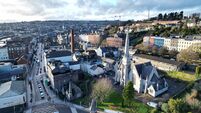
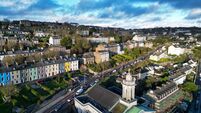
CORK is not just Ireland’s second city — it is the beating heart of the southern region and the engine of its economic future, playing the second greatest role for Ireland Inc. after the capital.

It is bigger and has more capacity than Waterford, Limerick, and Galway combined. A thriving university city, the student population of University College Cork alone is equal to or greater than that of Kilkenny on any given day.

National policy has positioned Cork as the vital counterbalance to Dublin, with the most ambitious growth targets in the country. The vision is bold: By 2040, Cork’s population will increase by 50%, making it the fastest-growing city in Ireland.

To achieve this, we must deliver 75,000 new jobs, build thousands of homes, and create world-class health, social, cultural, and transport infrastructure. But the ambition is bold too.

Work to realise the ambition is already well underway: There are about 3,000 social or affordable homes under construction in the city, either directly by Cork City Council or in collaboration with the Land Development Agency or approved housing bodies, representing an investment of over €1.2bn.

New parks have been built — Marina Park is the envy of the country.

New roads are being built in growth areas like Lehenaghmore and Ballyvolane, with plans for the Northern Distributor Road advancing. It will open up vast new areas across the northside and unlock opportunity for housing, jobs, investment and development.

Cork is poised to benefit from massive improvements in its commuter rail system, BusConnects is advancing, and we await further details on the proposed route of the Cork light rail project. After decades of under-investment in the second city, significant funding is being released and growth is happening.

But it must be pointed out every European nation worth its salt places a special focus and funding programme on its second city. Over-reliance on the capital, and categorisation of second cities as just another regional city makes no sense. 

So, Cork is ready to play its part for Ireland, as it has always done, but now it must be policy.

Just because major capital projects like those mentioned above are underway, and just because there have been some recent funding announcements, does not mean the Government has now fulfilled its requirement to fund the development of Cork City.

These are only the start of addressing decades of under-investment. Ireland has to focus on Cork. It has no choice, and it will pay off in spades.

Local government

Pace of delivery matters too because delays increase project costs. And this is one of the problems with having the most centralised form of local government in the OECD, second only to Greece.

Local government delivering on government policy is not enough — every agency must be instructed to do the same so that we are all working to the same priorities in the same sequence.

For example, we are still waiting for the delivery of the Lower Lee Flood Relief Scheme.

Policy and legislative change should be sense-checked with the practitioners closest to the consumer — local government. Imposition from on high without this has created many challenges and added to the lack of pace.

We need a whole-of-government approach. We need funding to follow policy. We need recognition that Cork is crucial to Ireland’s future. Don’t take my word for it — the data speaks for itself.

The Government — and government departments — must treat Cork accordingly. Dublin first, which is happening; Cork second, which is not.

We are the city of growth on this island for the next two decades. With the highest growth targets in population and in jobs, Cork will do much of the heavy lifting for Ireland in the years ahead. We want to do that and Cork City Council is happy to take the lead.

Signs of how we are already taking the lead are visible across the city:

  • The city council is involved, either directly or indirectly, in the construction of around 3,000 social or affordable homes, representing an investment of €1.2bn;
  • We are one of the leading local authorities in social and affordable housing delivery, with 2,600 homes delivered to date under Housing for All across social, affordable, and cost-rental programmes. If our targets were higher — and funded — we would deliver those too;
  • We will soon have the tallest residential building in Ireland. The city council granted Part 8 approval for the Railyard Apartments on Albert Quay, which will deliver 217 homes, in partnership with John Cleary Developments and Clúid Housing, at the gateway to the city’s docklands, setting a new national benchmark for social housing;
  • Hundreds of new apartments are under construction on the north docks on Horgan’s Quay and at Marina Depot near Páirc Uí Chaoimh, supported by the LDA;
  • The Creamfields residential scheme on Tramore Road will bring life back to underused lands and deliver hundreds of new homes people can afford;
  • Marina Promenade and Marina Park are transformational projects — breathing new life into the historic Marina area and creating new green public space, not just for the residents who will live in docklands but for the wider city. Stand there any day and you will see that this is an amenity as good as, or better, than any in Europe;
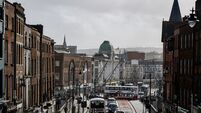
  • MacCurtain St has been rebalanced in favour of people and public transport, creating a new vibrant destination. We have similar plans for the historic city neighbourhoods around Douglas Street, and for Horgan’s Quay, where planning is in place for a new riverside park;
  • The Morrison’s Island Public Realm and Flood Defence Scheme is advancing to deliver flood protection for up to 400 city centre properties;
  • The regeneration of Cork’s medieval spine is advancing with Bishop Lucey Park reimagined, and South Main St reborn;
  • We have secured €7m in funding to transform the historic former Weighmaster’s House and butter market in Shandon to anchor the wider renewal of the area.
  • We are tackling dereliction, a national issue with legal and constitutional complexity, through engagement and incentives, and progress is being made, with 582 applications for the vacant property refurbishment grant, totalling some €33m. That has seen the number of vacant or derelict properties returned to use increasing from 57 in 2023, to 231 in 2024, to 301 in 2025. Nearly 80% of the homes were privately owned.
  • We are leading on climate action and biodiversity. Our EU Mission City status — the first in Ireland — underscores our commitment to innovation and sustainability. Cork is already a WHO Healthy City, a Unesco Learning City, a Rainbow City, and a City of Welcomes.

At the core of our vision for the future Cork is the city centre. Its revitalisation is not optional — it is essential. A vibrant, thriving city centre will be the cornerstone of the city’s future.

Our ambition is clear: give the city centre the same focus and quality as Cork Docklands, elevating Cork to a city of choice on the national and international stage. And to do that, we have established a dedicated city centre directorate to drive a range of initiatives.

Just before Christmas, we introduced a team of city centre community wardens. Their presence on the city’s streets, combined with the arrival just before Christmas of additional gardaí and the introduction of high-visibility policing, has created a more inviting and welcoming city centre.

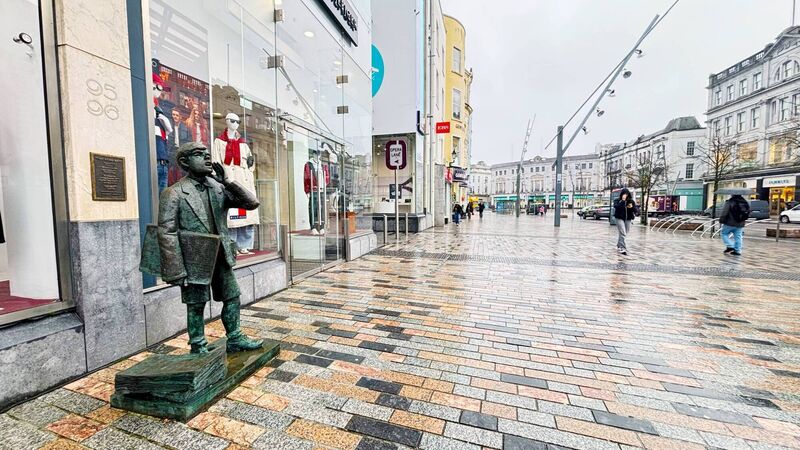
A €200,000 painting and façade improvement fund has been launched aimed at property owners on St Patrick’s Street — the city’s prime retail street.

A night-time economy advisor is working with stakeholders to increase and promote evening and night-time activity, through initiatives like the Leave a Light On and the Safe & Sound public safety campaigns, and activation initiatives like the Coffee House Lates and Night Markets.

There has been a lot of discussion about a “taskforce” for the city but this must build on the city plan already adopted in council, already shaping strategy and delivery. And so we welcome the Taoiseach’s recent announcement that a government decision on a group to drive that agenda forward is imminent.

We have also prepared business cases for more investment in streets, public spaces, and properties, including for a new event centre and for a new city library — key building blocks for the Cork of tomorrow.

But if every strategy and investment plan vanished tomorrow, we would still be here to deliver what matters most in people’s daily lives: presentation of the city; footpath repairs; traffic management; housing and disability grants; planting; community services; libraries; playgrounds; parks; swimming pools; helping children cross the road safely to school — and burying our dead in well-kept cemeteries.

Criticism

Being one of the largest local authorities in the country brings immense opportunity – and more than its fair share of criticism. That’s to be expected.

But much of the recent high-profile criticism has been ill-informed, it has been inaccurate, and some presented without context. Many of the criticisms are not unique to Cork — they are the result of national systemic or structural issues that impact on all local authorities.

Amplification of the negative and ignoring the positive does a disservice to the hard work of dedicated people, and is potentially damaging to the city’s reputation.

Perhaps the voices of these vocal critics would be far more productive if they joined us in making the case for Cork.

Local authorities like Cork City Council can pilot national policy locally and at pace — turning ambition into action faster than central government can on its own.

We can do more — and we will — if we are supported to do so.

Above all, we must believe in local democracy and in the people who serve it in Cork City. It’s not perfect, but it’s ours, and it’s a great city that we work to make better every single day.

  • Valerie O’Sullivan is chief executive, Cork City Council

Read More

x

Your home for the latest news, views, sports and business reporting from Cork.

More in this section

Lunchtime News

Newsletter

Keep up with stories of the day with our lunchtime news wrap and important breaking news alerts.

Cookie Policy Privacy Policy Brand Safety FAQ Help Contact Us Terms and Conditions

© Examiner Echo Group Limited