Delays, failures, and 'half-funded' plans put Ireland's security in jeopardy

Though a vague concept for many people to penetrate, hybrid activity is seen as a range of aggressive state activity short of actual war.
In the days after the Government published an updated plan to implement an agreed investment plan for the Defence Forces, a minister gave an interview saying it was likely that Ireland would be targeted by Russian hybrid attacks during the upcoming presidency of the EU.
But, in the updated implementation plan, two linked recommendations on developing structures to counter hybrid warfare, that were made in the Commission on the Defence Forces report four years ago, were kicked further down the road.
The first recommendation, number 12, said: “Increased civil-military engagement across Government on the development of appropriate structures and processes for countering hybrid warfare, learning from current international experience.”
The Government’s original implementation plan, published in November 2023, said this recommendation would be subject to “further evaluation”, to be completed by Q1 2025.
The new plan, called the , states that “further evaluation” of recommendation 28.1 will be completed by "the end of Q3 2026".
A second recommendation, 100, said: “The development of relevant military capabilities to counter hybrid activities where military capability is required and to contribute to national resilience.”
In the 2023 plan, "further evaluation" of this recommendation was due to be completed by Q3 2025; now it's down for August 2026.
The recommendations, and the timelines, must be seen in the context that they were made before Russia’s full-scale invasion of Ukraine — when everything changed for Europe.
Though a vague concept for many people to penetrate, hybrid activity is seen as a range of aggressive state activity short of actual war.
It can include — as seen in many EU states and Britain — cyberattacks, drone incursions shutting down airports, disinformation campaigns affecting elections or politics, sabotage attacks and disruptive naval activity, including over critical sub-sea infrastructure, in or near territorial waters and even attempted assassinations.
In his interview with on February 14, a couple of days after the was published, junior foreign affairs defence minister Thomas Byrne said the Government was extremely conscious of hybrid attacks across Europe.
“We look back to see what happened during the Danish presidency. Denmark has much greater military capabilities than us, yet their airport was closed on several occasions because of drone incursions.
“These events are happening across Europe, and everyone is trying to be as prepared and coordinated as possible.”
In relation to what to expect during Ireland’s presidency of the EU, he said: “Things are going to happen, I have no doubt about that. I think we can be as prepared as possible.”
Last October, Taoiseach Micheál Martin said pretty much the same.
He said Russia’s threat to the EU was “serious enough” and added: “Right across all areas, critical maritime security, subsea cables, cyber security, hybrid attacks, Russia presents a threat”.
Referencing the drone incursions that forced several airports in Denmark to close — in the week leading up to its holding of the EU presidency — the Taoiseach said these incidents had given the government here “food for thought”.
He said the presidency would see the largest political summit ever held in Ireland: “We have obligations obviously to protect the security of the meetings.”
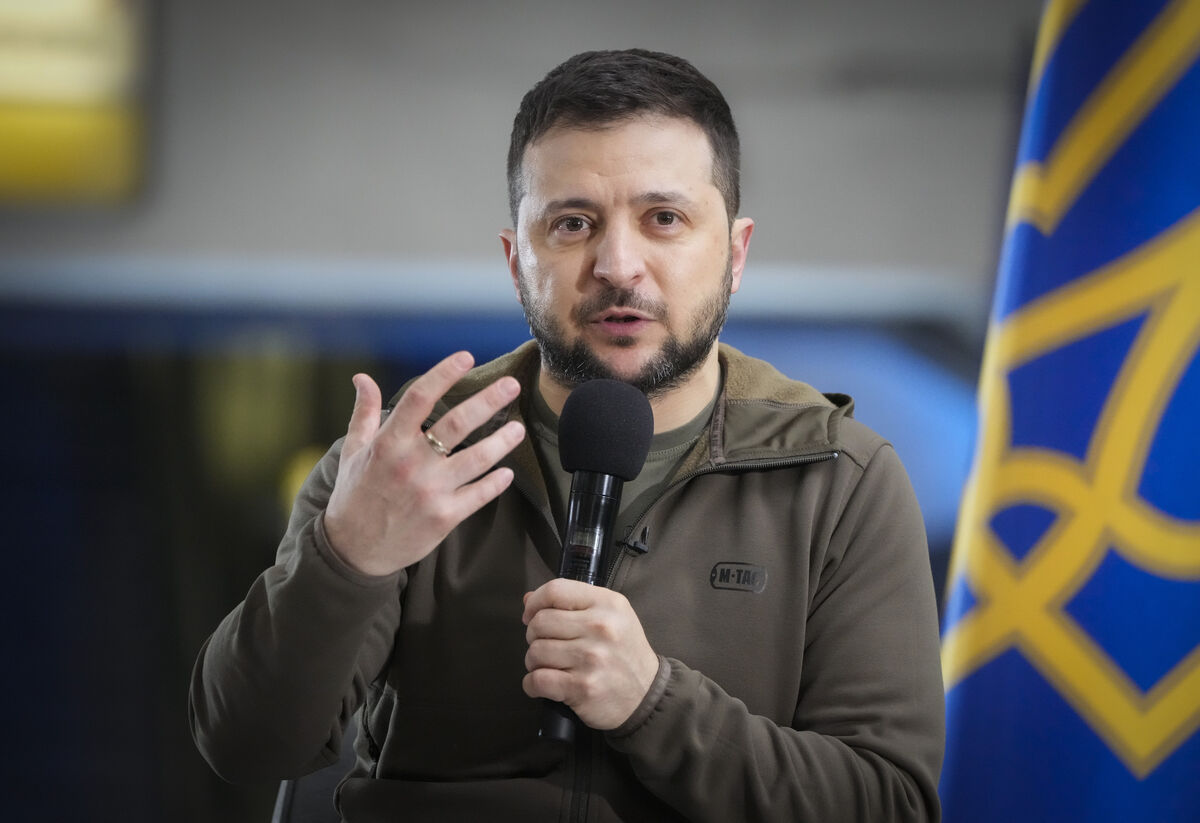
When military-grade drones were spotted last December by crew on the LÉ William Butler Yeats on the edge of Irish territorial waters, that went up after Ukraine's president Volodymyr Zelenskyy’s plane had passed and landed at Dublin Airport, the issue of hybrid attacks was sharply brought home.
The reported that an early assessment by Irish security services pointed to Russian intelligence or groups acting on their behalf as being responsible.
The incident was seen by intelligence agencies as one of signalling and messaging to Ireland and the EU.
One source said: “They were testing our defences, the purpose to sow seeds of doubt in the country — and they did that.
“They were saying ‘we are here and this is just the start, just wait until the [EU] presidency.”
Despite all the incidents and all the analysis and warnings, we don’t have an actual structure in Ireland to counter hybrid threats.
Hybrid structures cross many agencies and departments.
In addition to DF and gardaí, it also takes in the National Cyber Security Centre and a long list of departments, including Defence, Justice, Environment (gas pipelines and electricity connectors and offshore energy), Communications (digital cables) and Transport (ports, aviation and public and road transport).
Along with hybrid threats by Russian spy vessels to Ireland's critical subsea infrastructure — particularly gas pipelines and electricity connectors in the Irish sea — is the threats from drones, which can be launched from Russian-aligned shadow vessels transporting oil.
After the December drone incident, a range of Government leaders said the counter-drone technology was being “fast-tracked” and would be in Defence Forces hands by July, before the presidency.
However, the said the arrival of the equipment would be completed by “September 2026”.
This is not to mention the testing of the equipment and training of personnel in the equipment.
“The completion date for counter-drone technology is a farce, it’s now September,” former TD and ex-army ranger wing officer Cathal Berry.
“When we have been told all along, up to and including this week, that it would be in by July, before the presidency.”
He even doubts the September deadline: “I’d be sceptical we will even have it by September, or it may have arrived in a cardboard box. It takes time to be trained in it and years to be masters of it.”
Last December, on foot of doubts among security sources that the new system would be operational by July, the asked the Department of Defence if it was considering renting such equipment from fellow EU states, just in case.
But the department replied they were moving to acquire in an “accelerated manner” Ireland's own system, to have in place for Baldonnel for the presidency.
There has been some speculation of also having a mobile unit — like the gardaí have — but this is not clear.
Brendan Flynn, a lecturer in the School of Political Science at the University of Galway, and a specialist on maritime security, said: “The really urgent issue [from the delayed deadlines in the Detailed Implementation Plan] is counter-drone technologies.
“The incident with Zelenskyy’s visit last December shows how exposed we are. The relevant counter drone technologies are complex and not just any one piece of kit, but a range of systems that have to be blended together.”
He said: “For obvious reasons, there is huge demand for counter drone systems across Europe, especially the type we urgently need, which are those which are safe to use in civilian areas-the approach would be more about jamming, geofencing, capturing and disabling drones and finding the users on the ground if possible for legal prosecution.”
Mr Flynn added: “Admitting that Ireland will not have key counter-drone capabilities in place until September 2026 could be viewed as a 'green light' to hostile actors to have fun and play puck with the security arrangements around Dublin. Just as was done in December 2025.”
One naval source told the : “The navy, as of now, has no EW [electronic warfare] CUAS [counter-unmanned aircraft system] in use on board vessels.”
Tony Geraghty, former commander in the Naval Service, said the Commission on the Defence Forces urged investment in drones and said Ireland would want to “get its act together”.
He referenced reporting at the time of the December drone incident that gardaí were annoyed that the navy did not shoot them down.
But he pointed out that the Defence Forces were “not responsible” for security for the Zelenskyy visit — and that An Garda Síochána was.
The Garda Crime and Security Intelligence Service does have a counter-drone system, which it can operate on land. It is understood that it has a number of mobile units with the technology, which can jam and disable drones.
One of the issues reported is the risk posed by a drone falling from a height and the danger to people.
There are also concerns about newer generations of military drones equipped with AI technology to counter attempts to disable them.
Justice minister Jim O’Callaghan said last December that gardaí have “very good” anti-drone technology.
Gardaí have also been embedded with police forces in Europe as they hold the EU presidency, including Denmark, and have the knowledge gained from that.
Some of these forces will be present in Ireland to potentially assist gardaí if need be this year.
Mr Berry pointed out that antiquated rules of engagement denied the navy opening fire on the drones after Zelenskyy’s plane passed, and added the navy ships didn’t have the weapons to do so. He also referred to the danger of firing live rounds into commercial flight paths.
Garda sources did express annoyance afterwards at what they said was the lack of communication to them from the Defence Forces about the drone incident.
All of which underlines two issues: One, which body is the lead agency for what happens in our territorial skies and seas (both cases 12 nautical miles) and, second, are the communication structures between Ireland’s two security agencies up to standard.
Under the law, gardaí are the lead agency within territorial waters, despite the fact that it operates no vessels to effect this responsibility, and the navy and air corps act as an aid to the civil power.
This has led to suggestions that the Naval Service should be the lead agency in territorial waters. We will wait and see if the National Maritime Security Strategy (NMSS), due on Wednesday, will clarify this.
All of this was supposed to have been cleared up years ago by the National Security Analysis Centre (NSAC), set up in the Department of Taoiseach in 2019 on foot of urgent recommendations in the September 2018 report.
NSAC was charged with developing a National Security Strategy (NSS) and was supposed to delineate what areas of security were the responsibility of gardaí and the Defence Forces. It was also supposed to set out security and intelligence priorities and ensure the agencies didn’t cross over.
The two agencies were grateful that this was going to be done and that the Taoiseach’s department, as in many countries, was formally taking the lead on national security.
The Commission on the Defence Forces also made recommendations in this area, including the development of an “overarching legal and governance framework to ensure optimum coordination and collaboration between the Defence Forces and An Garda Síochána on intelligence matters”.
The Government’s 2023 implementation plan put this down to “further evaluation” to be completed by 2026.
In the Detailed Implementation Plan, it is now December 2027.
The also recommended that the role of Military Intelligence be “urgently clarified and underpinned” by legislation within a coherent national intelligence architecture.
The 2023 plan put this down for “further evaluation”, to be completed by “June 2024”.
In the new plan, it's down for completion in December 2027.
A related tactical recommendation urged that the respective roles of the special operations forces in the Defence Forces — the army ranger wing — and the gardaí — the ERU — be “clarified” with a “clear understanding” of how they would interact in a real operational environment.
The 2023 plan put implementation down for November 2024. The new plan says it will be in place by next month.
The lack of urgency with the Commission on the Defence Forces recommendations was reflected in the NSAC, which was never given the political, financial and administrative priority or capabilities to do its job.
To date, despite the worsening global security environment, no NSS has been published. NSAC has been downgraded to a secretariat in the department.
“I don’t understand how we are about to have a maritime security strategy before a national security strategy,” Mr Geraghty said.
Touching on this point, Kenneth McDonagh, assistant professor of International Relations at DCU said: “Of more concern, is the inability to meet targets that are entirely within our control, such as the development of the National Maritime Security Strategy and the National Aviation Security Strategy, not to mention the overarching framework of a National Security Strategy.
“While these documents can be high-level they are essential for a coherent whole of government approach to the complex security challenges Ireland faces and could serve as a vital framework to inform political discussions about the need to invest and plan more seriously for Ireland’s security and defence.”
This is played out in the Detailed Implementation Plan.
“The reason the timetables for many of the key recommendations are pushed back is money,” Mr Berry said. “The plan is only 50% funded. The Department of Defence can’t spend what it doesn’t have”.
Last August, reported that official documents showed that then defence minister, Tánaiste Simon Harris, sought capital funding of €3.4bn between 2026 and 2030 (average €680m per year) to implement the agreed plan.
But the Department of Public Expenditure refused and offered at most €230m per year.
The Department of Defence documents showed this amount was “simply not credible”.
It said the rest of Europe was “moving to 3.5% GDP defence spend, having consistently spent almost 2% GDP over the last decade — while Ireland’s defence spend languishes at 0.2% GDP.”
The Department of Public Expenditure increased the capital allocation to €1.7bn.
The Department of Defence this week told the that Ireland’s defence spend is still rooted (in 2024) at 0.2% of GDP.
When the profits of multinationals are excluded, it amounts to 0.4% of GNI.
But, regardless of which economic gauge is used, Ireland is still bottom of Europe in defence spending, behind even Malta.
“We have a €10bn surplus, and we have a half-funded defence plan,” Mr Berry said. “We can’t blame anyone else. There’s no urgency here.”
One navy source said: “The budget is just barely keeping the lights on. In reality, the naval base infrastructure would absorb about €100m per year for the next 10 years.
“The Department of Defence and Government have told us in no uncertain terms that there are no new ships until all the ones we have are crewed and put to sea. The department will force us to put €60m into upgrades on each of the 15 to 25-year-old ships. It's bonkers.”
The Naval Service has eight vessels, five described as operational. Two, at most, are out at sea at any one time, if specialist technicians are available.
The CoDF called for nine operational vessels, double crewed, by 2028. The updated plan says this will be “post 2028”.
The navy’s flagship, the LÉ Eithne, boasted serious equipment — sonar, radar and a helicopter pad — but that went when it was decommissioned in 2022.
Since 2015, there were plans to have a replacement multi-role vessel (MRV), at a purported cost, in 2024, of €300m, but these plans appear to have foundered, most recently as part of seemingly never-ending reviews and reassessments and business cases.
A new towed sonar system, at a cost of €60m, is due to arrive in 2027.
A second naval source told the : “The updated plan is typically vague and non-committal. The big issue we are trying to get clarification on is the future fleet and its capability.
"Work is progressing there, but there is a huge focus on our current HR situation, improving for recruitment, but very slow on retention, therefore the critical people we need for ships are still leaving.
"This has slowed, though compared to previous year,s thanks to the impact of doubling the PDA [patrol duty allowance].”
The picture in the Air Corps regarding air policing is equally not good, even worse, perhaps. This is despite major investment in two Airbus C-295 maritime surveillance aircraft (but not patrol aircraft with weapons) and, most recently, a C-295 tactical transport version as well as circa €60m on a new Government/State jet.
Kevin Phipps, retired air corps officer, said: “We are investing hundreds of millions of euro in a military radar, but what exactly are we going to do about the threats we identify when we switch it on? And once it’s on 24/7/365.
“While we can interdict threats at sea with our Naval Service, we are powerless in the air as our Air Force has no fighter jets to police our skies.
"We need to identify an affordable and quickly deliverable solution in this area. We spend €600m every 10 years on our fantastic helicopter search and rescue service, I don't think it’s a stretch to spend similar on an Air Policing Service, given we have 600,000 flights passing over Ireland every year.”
The ‘not-secret’ historic relationship with the British RAF has been well kicked around at this stage. As well as undermining Ireland’s policy of neutrality, there are also concerns it may provide a misleading comfort blanket given the demands on the British armed forces.
This is reflected in a recent article in the Atlantic Council, which said: “Ireland may not be able to count on this anymore, however, given the numerous pressing challenges identified in the UK’s new Strategic Defence Review, which did not mention the Republic of Ireland.”
Mr McDonagh said Ireland has known it was in a new world since 2022: “Russia’s full-scale invasion of Ukraine was a catalyst for Ireland to take defence more seriously, and we have seen a significant increase in investment in the area.
"However, the shifting timelines in the updated implementation plan highlight how much further we have to go. The real concern is that time is a luxury we may not have.”
In relation to delays in the Detailed Implementation Plan, the Department of Defence said: “The key actions that will be taken in the coming 12 months include strengthening our counter-UAS capability and investment in our military radar capability.
"A number of crucial HR initiatives, which will bolster the progress that has already been made in this area. Particular emphasis will be placed on enhanced career and talent management policies and practices, as well as revised access to promotion opportunities and a Work Force Plan.
“It should also be noted that, of the 130 recommendations contained in the Detailed Implementation Plan, 54 are now fully completed, with substantial progress underway on the majority of the remainder. This represents meaningful and tangible progress.”
What is focusing minds the most is how we are set up for the EU presidency, in terms of internal structures and assistance from neighbours.
In addition to the main summit, there will also be a meeting of the European Political Community, boasting 45 heads of state, including non-EU countries such as Britain, Norway, and Ukraine.
With Ukraine's continued existence and its roadmap to becoming an EU member sure to feature, expect another Zelenskyy visit and more Russian hybrid activity.
Mr Flynn expressed concern at how Irish security agencies are going to work, given the absence of the NSS or NSAC.
He said: “The counter drone example shows how and why strategy documents are pretty important because you need very good co-operation between the key agencies — An Garda Síochána, the Defence Forces, the National Cyber Security Centre — but also many other state and non-state actors.
“That type of close co-operation won't happen unless it is structured, planned, and rehearsed. It needs to be funded and incentivised.”
Mr McDonagh said: “The Defence Forces role will likely be under 'Aid to the Civil Power' with the gardaí taking primary responsibility for security operations related to the presidency.
"While cooperation between both agencies has worked well in the past, the recent drone incident during Zelenskyy's visit raised questions about the smoothness of communications and decision-making between the two in a heightened security situation.
“A formal task force would be desirable, and at an operational level, I would be surprised if there weren't already plans along these lines in place.”
Mr Berry said: “Gardai have their own comms [communication systems], the DF the same, the NCSC the same, but if you are physically shoulder to shoulder, you can talk to each other. How difficult is it to have reps from the agencies and departments together? You need a lead agency and lead decision maker.”
He pointed out that there was a National Emergency Operations Centre (Neoc), which often operated for severe weather events.
This centre is based in modern offices, has support staff and has tested comm systems — and is located in the city centre.
Mr Berry said: “This allows us to do a table-top exercise, do physical exercise, see what’s likely to occur.”
Mr Geraghty said the historic view was a “benign” threat environment in Ireland, so the country tended not to rehearse for events.
“Up to now, we just have table top exercises on sub-sea infrastructure in the Emergency Management Office [linked to Neoc], not actually moving assets around,” he said.
“It would be ideal to have joint forces command and have reps from other agencies.”
A number of those interviewed pointed out that the disruption to the Danish airports happened not during the summit itself but in the week beforehand — meaning hybrid incidents could happen when the threat is lower.
Mr Geraghty pointed out that gardaí and Defence Forces and other agencies have worked on complex drug interdiction operations, such as the military boarding of the MV Matthew cocaine ship.
“These operations are possible, but they are complex,” he said. “You can do it as a once-off, but sustaining it is the issue.”
He said the issue is again in the news with comments from defence minister Helen McEntee that the department and DF are “considering” the possibility of boarding a sanctioned Russian oil shadow fleet.
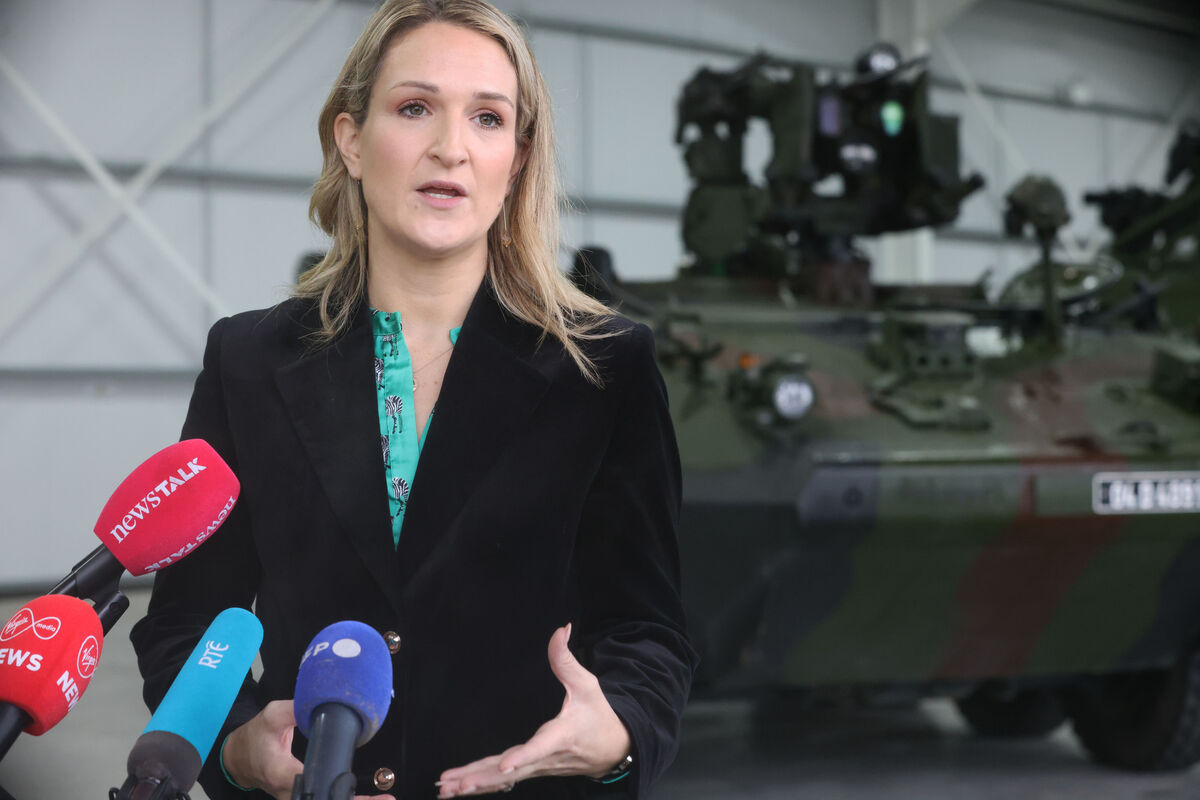
Mr Geraghty said any such boardings would be a “very significant undertaking” for the Defence Forces, which, again, would be “more than likely a once-off”.
Which brings in the issue being floated in the last while of military assistance from the likes of the French navy and the British navy and air force during key periods of the presidency.
The Taoiseach said earlier this month there has a lot of “noise” around European countries aiding each other on defence matters, adding it was “no big deal”.
Mr Geraghty said: “French-British assistance, in theory, could probably be done, though you might need some legal provision.
“Gardaí called in assistance from other European police forces regarding drones for Zelenskyy's visit, but any such military decision is purely a political one.”
One naval source said: “Militaries don’t operate without operational orders from Government, especially on something like this.”
We know there is close cooperation with the British navy. The former chief of staff, Lieu General Seán Clancy, said in March 2025 that Irish and British defence forces were moving towards “a collective security approach” to shared waters and airspace, particularly to protect critical underwater infrastructure and maritime security.
This coordinated action was seen when the Russian spy ship, Yantar, loitered over critical infrastructure in the Irish Sea in November 2024.
Also in March 2025, at the first UK-Irish Summit, the Taoiseach said the countries were going to strengthen co-operation on maritime security, with a particular focus on critical undersea infrastructure.
Mr Berry said: “Maybe you could see the French navy outside the 12 nautical miles [territorial waters], providing a kind of outer cordon and British air cover, and Irish navy providing the inner cordon.”
Mr Flynn of University of Galway said neighbours and EU partners could provide help: “France, for example, has considerable experience of providing a counter-drone screen for the Paris Olympics and the UK has some excellent systems and considerable know-how.”
He added: “Given the urgency of the threat, I don't see a corresponding salience in Irish government responses — although, perhaps I'm mistaken, and behind the scenes maybe there are a lot of things being done.”
Mr McDonagh of DCU said the security agencies were dependant on political direction: “Political leadership is required in the short term to put the necessary security supports in place and ensure they operate with as little friction as possible.”
One Defence Forces source is worried: “The attitude is ‘get on with it’ and muddle through it. But Ireland’s reputation internationally is on the line here.”

CONNECT WITH US TODAY



Be the first to know the latest news and updates