Bottlehill superdump: Indaver incinerator ash fears reignite over Cork County Council site
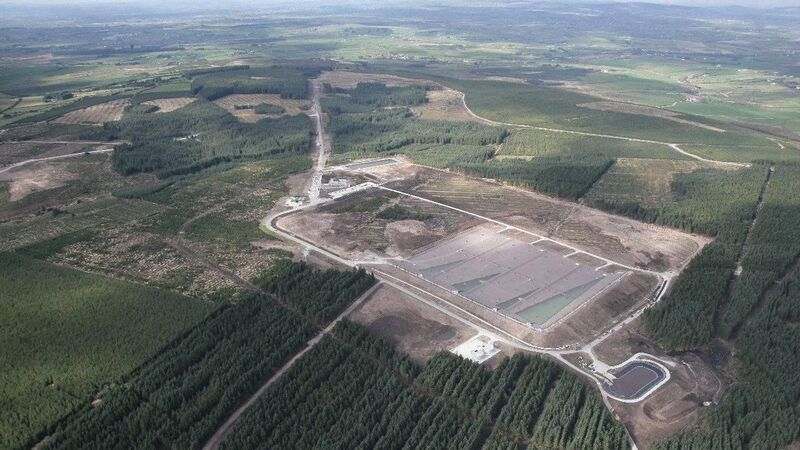
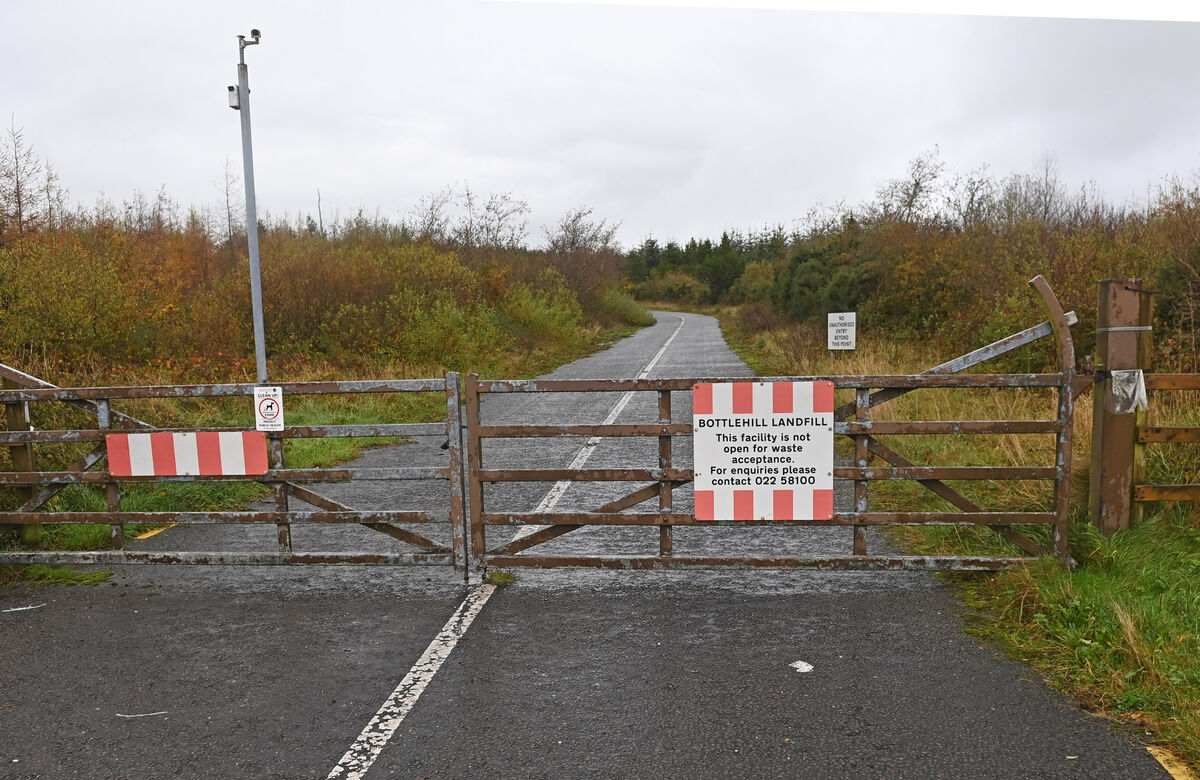
An aerial shot of the Bottlehill landfill site in Co Cork. Sources in the council have said that senior management is preparing to go public shortly to seek expressions of interest in acquiring all or part of the site.
The saga surrounding the white elephant superdump at Bottlehill dates back 24 years when the county council, which was then in the refuse collection business itself, decided it needed to open a major landfill to bury waste generated in the Cork region.
In 2002, the local authority looked at three potential sites, the others being in Grenagh and Watergrasshill, though both of those communities mounted significant opposition.
Bottlehill’s low population and proximity of slightly over 3km from the N20 (main Cork-Limerick road), are understood to have been factors in the council choosing it as the preferred site.
A new road layout was created to carry the big trucks arriving with waste.
Read More
There were large pits dug into the forest and lined to prevent pollutants leaking out.
Weigh bridges were also put into the site to charge private contractors per the tonnage/or per visit.
Built from 2004-2009, it was to take in 217,000 tonnes of waste per year over a 20-year lifespan.
Everything looked good to go, until in 2009 county manager Martin Riordan dropped a massive bombshell.
He shocked councillors when he told them it had become “commercially unviable” to open it.
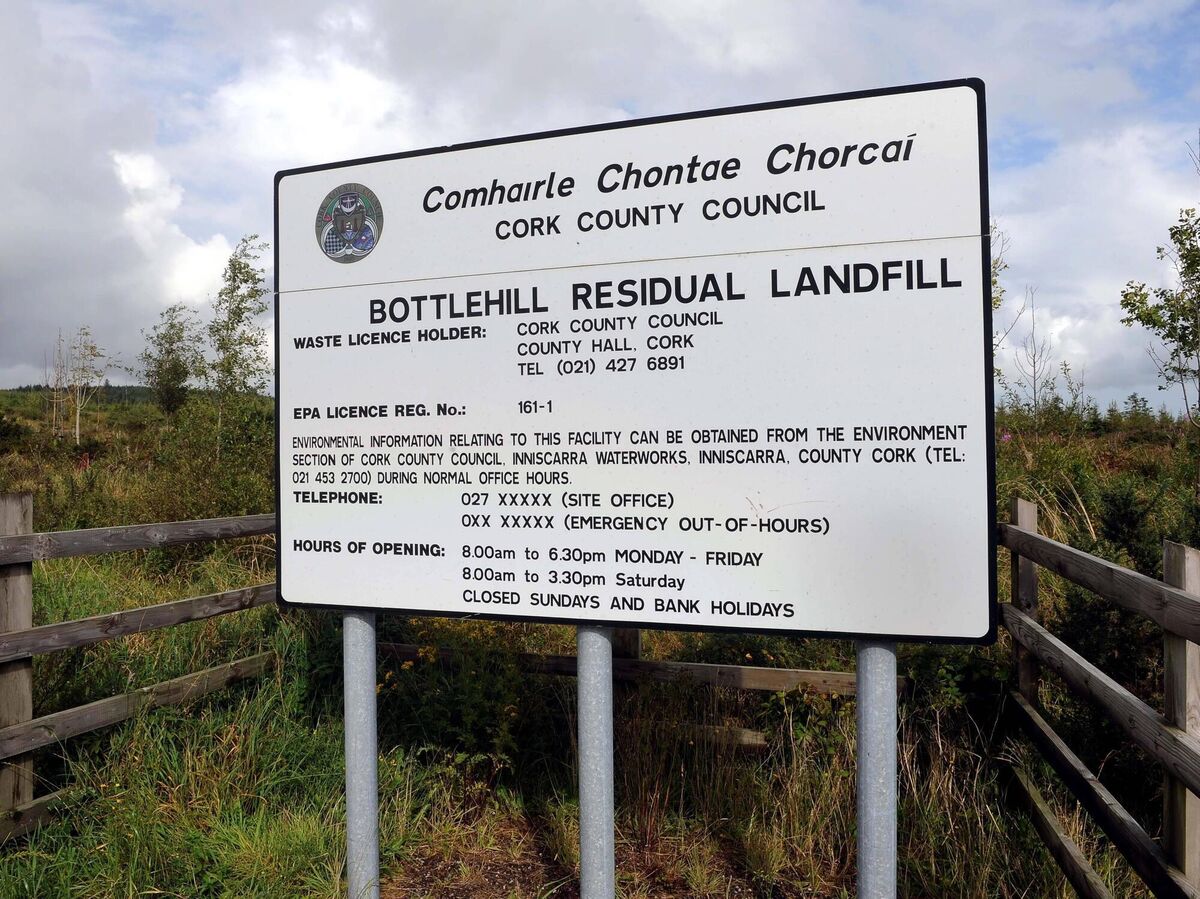
When planning it, Mr Riordan said the waste landscape was then in a different place with landfill being the key.
But since the original plans were drawn up justifiably at the time, he said, in the meantime the Government had set out new criteria promoting a diversion of waste burial to recycling and incineration.
In addition, other local authorities in Munster and South Leinster had taken a steal on Cork by opening their own large landfills and offering commercial operators far more favourable rates.
They were charging at the time between €20 to €30 per visit, regardless of tonnage.
Mr Riordan said to make Bottlehill financially viable and to recoup the outlay of nearly €50m to develop it, the council would have to take in a minimum of 150,000 tonnes annually and charge each truck €50 per visit.
Later Mr Riordan stated that the council could sell off or lease the site, but at the time readily admitted there was unlikely to be much demand from private sector waste operators.
He suggested it might have to remained mothballed for up to five years before it could become viable, primarily as other competing landfills may then be at capacity or getting near to it.
Sources in the council have said that senior management is preparing to go public shortly to seek expressions of interest in acquiring all or part of the site.
As it still has significant waste burial infrastructure it will be interesting to see if any of the major operators bite, but they will certainly be looking for a knockdown price if they do, which will leave the taxpayer significantly out of pocket.
However, this isn’t the first time the council has sought expressions of interest.
In 2016, it did so after senior officials in its environment directorate suggested a higher section of the site would be ideal for wind turbines and solar power.
At the time, council officials admitted that Indaver was in the mix as it would allow the company to bury incinerator ash there if it got planning permission for its proposed incinerator in Ringaskiddy.
This caused shockwaves in the Bottlehill community, as it became apparent that Indaver could be allowed to bury up to 40,000 tonnes of ash each year at the site.
In any case, Indaver did not get planning permission and nothing else was developed at the site in terms of wind or solar energy.
However, Indaver last year shocked many by resurrecting its Ringaskiddy plan and Bottlehill locals are concerned that, if eventually granted, the site will become a major dumping ground for the ash from its incinerators.
A local group formed in 2021 proposed that the site be turned into a major health and recreation centre.
The Nagle Natural Heritage & Health Promotion Group (NNHPG) sent a submission on this to the county council suggesting the land is ideally suited for such a project which could host health shops, riding stables, a farrier service, conference building, a restaurant, gymnasium, and children’s playground.
The council rejected that submission.
But times have changed and recreation and the possible creation of a greenway through part of the site might be more acceptable.
It became popular for walkers during covid.
Locals suggest it would be an ideal location for cyclists, walkers, and others, if properly developed and it is only a short drive from the big population centres in Cork City and Mallow.
It is also very rich in wildlife including hen harriers and sparrow hawks, and the streams and rivers running through it are said to contain the EU-listed endangered freshwater pearl mussel, various kinds of lamprey, some salmon, and otters.
NNHPG maintains it could be connected by amenity walkways to nearby villages and to the towns of Mallow, Blarney, and Fermoy.
Meanwhile, wind turbines have been built, or proposed to be constructed, in elevated land nearby at Glenville and Carrignavar, but to date nothing at the Bottlehill site.
It has also been suggested that the site might be used for the recycling of construction and demolition waste which could be used as core filling for roads.
Currently there is no facility in Co Cork to undertake such recycling, with the nearest site in Co Waterford.
Council-run civic amenity recycling sites in Co Cork have also stopped taking in timber because the bottom has fallen out of the market for big companies interested in buying the wood for repurposing. This could be another use for part of the site.
Senior officials in the council’s environment directorate recently told councillors they are hoping to provide good news on the reintroduction of timber recycling services.
Bottlehill Environmental Alliance (BEA) had repeatedly asked for a meeting with senior council officials to discuss the future use of this site, with the first request for this sent as far back as January 27, 2024.
Negative responses were received by BEA, but it has confirmed its representatives have been invited by the local authority to talk about the future use of the facility.
BEA spokesman Kevin Creedon said his association has, in recent years, sought to have the site turned into a large amenity centre, although they could see their way to accepting something like a Center Parcs venue, or even a data centre being developed there.
“We want to protect the future of the abundance of biodiversity in this part of Cork county.
"However, we are open to discuss options which could achieve this while making the site more beneficial to the taxpayer,” Mr Creedon said.
He added the facility could also house pitches which would support local sporting clubs.
BEA’s big concern remains that the council could sell the land off to a private waste contractor and/or open it up to burial of residual ash from the incinerators if Indaver eventually gets planning permission for its Ringaskiddy project.


CONNECT WITH US TODAY



Be the first to know the latest news and updates