Should Ireland follow Australia and ban under-16s from social media?
Australia’s under-16 social media ban is forcing Ireland to confront who should bear responsibility for protecting children online
Should Ireland follow Australia and ban under-16s from social media?

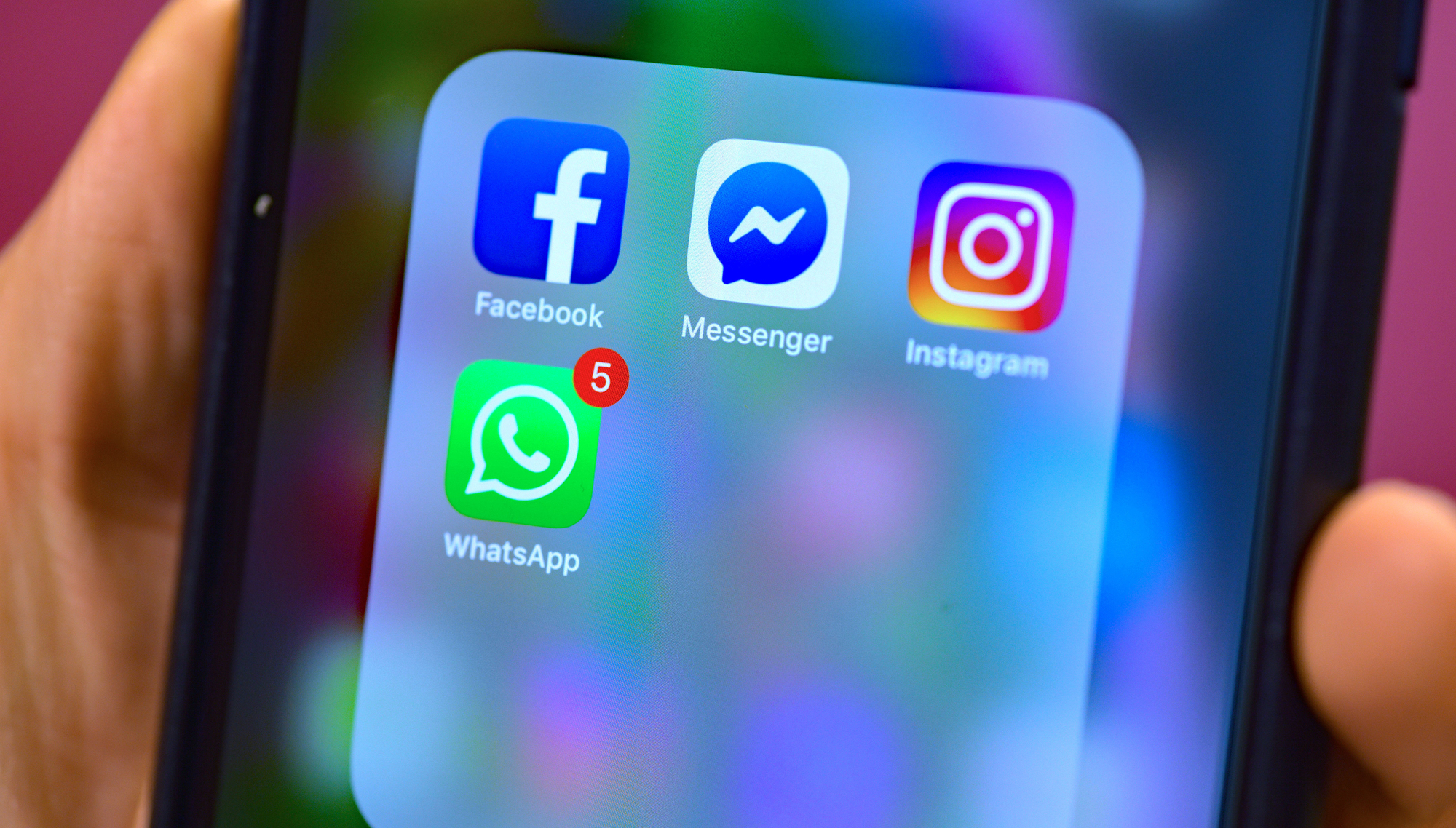
File photo dated 15/03/19 of a stock photo of Facebook, Messenger, Instagram and WhatsApp, social media app icons on a smart phone. People who post on social media overnight are more likely to have poor mental wellbeing, a new study suggests. Issue date: Friday October 10, 2025.

When Australia introduced the world’s first nationwide ban on under-16s accessing major social media platforms, it didn’t just trigger a domestic reckoning — it lit a fuse internationally.

Britain is now actively weighing a similar move. In Ireland, the debate is gathering pace.

At the heart of it lies a fundamental question: Is a ban a blunt instrument, or a long-overdue act of protection?

Australia’s ban places the legal burden not on parents or children but on platforms themselves.

Companies such as Meta, TikTok, Snapchat, and X are required to take “reasonable steps” to prevent children under 16 from holding accounts, backed by the threat of substantial financial penalties.

Oversight rests with the country’s e-safety commissioner, Julie Inman Grant. Ms Grant is a former senior executive at Microsoft, Twitter, and Adobe.

For Australian journalist and broadcaster Eliza Harvey, who is also the parent of a nine-year-old and a 12-year-old, the impact has already been felt at ground level.

“The social media ban has been an extremely positive thing, anecdotally, in terms of the school community. I’m the parent of a nine-year-old and a 12-year-old. We, as parents, are right in the firing line for dealing with this,” she says.

She says the parenting community has broadly welcomed the move because it reassigns responsibility.

In essence, it fundamentally puts the onus back on the Big Tech platforms to stop profiting off our kids but also help us as parents

The way the ban was announced also mattered down under. It was framed not just as domestic policy but as international leadership.

“It was seen as a very big victory politically when it was announced at the UN General Assembly that Australia was positioning itself as a global leader on something so important,” Ms Harvey says.

“Australia can often oscillate in how it wants to be seen globally, and this has definitely been covered as us being a global leader.”

Implementation has been uneven. Platforms have begun tightening age-verification systems and removing accounts believed to belong to minors, but compliance varies and enforcement remains complex.

“It’s also been quite clear that it’s been quite a patchy implementation of the ban, which is pretty understandable given the scale of the task,” Ms Harvey says.

Workarounds and privacy concerns

Critics warn that tech-savvy children will simply find workarounds, that age-verification raises privacy concerns, and that bans risk pushing young people into less-regulated online spaces.

Ms Harvey doesn’t dismiss those criticisms, but she argues that the law’s value lies in what it disrupts.

“Of course, there is a lot of debate as to what extent this legislation may be a toothless tiger. Kids being kids will find ways to get around anything. But, if nothing else, this law is a circuit breaker,” she says.

She points to the underlying architecture of platforms as the real target.

“These platforms have proven themselves to be built around algorithms that just feed you stuff,” she adds.

For her, the ban represents a shift in power.

It’s a chance for parents to ask aloud: Why would big tech companies have unfettered access to our kids? It shifts the power back to parents when it comes to protecting and raising their kids

In Britain, the political mood is hardening.

Although the Online Safety Act has already expanded regulators’ powers, calls for an Australian-style under-16s ban have intensified.

The ban has won support in the House of Lords, forcing the issue onto the government’s agenda.

Social media companies are resisting outright prohibition, arguing instead for improved age-assurance, algorithmic reform, and platform design changes.

They warn that bans could be ineffective, easily circumvented, and socially harmful. It is within this tension that a powerful joint intervention emerged from children’s safety organisations, experts, and bereaved families, all led by the Molly Rose Foundation.

The joint statement acknowledged parents’ fears, but concluded that “social media bans are the wrong solution”.

It warned that bans could create a false sense of safety, push children towards riskier online spaces, and expose them to a “dangerous cliff edge” at 16. Instead, it called for tougher enforcement of age limits, highly effective age-assurance, and a fundamental reset of what is expected of tech companies - moving away from addictive design and towards child-centred products.

The statement speaks to a deeper truth running through this debate: That parents are being asked to manage digital systems of immense complexity, opacity, and power — environments most “can’t come close to understanding”.

Most-connected cohort

Ireland has not proposed a ban, but the conditions fuelling the debate are firmly in place.

Irish children are among the most connected in Europe. Social media use is widespread, well below the official minimum age of 13.

Irish research and regulatory reporting have repeatedly highlighted links between heavy online engagement and anxiety, sleep disruption, self-esteem issues, online harassment and exposure to harmful content, even as experts continue to debate causality.

Responsibility for online regulation here sits with Coimisiún na Meán, which has begun enforcing new online safety codes, while government departments are exploring age-verification systems at EU level.

For Richard Hogan — family psychotherapist, author, and Irish Examiner columnist — this cautious approach is no longer defensible.

“If it were up to me, I would ban smartphones for children entirely,” he says.

“A smartphone has no business being in a kid’s hand. I absolutely welcome the notion of a similar ban being introduced in Ireland. It may be a blunt instrument, but it’s a finger in the dam that is long overdue.”

From his clinical perspective, Mr Hogan sees social media not as a neutral tool, but as something actively reshaping childhood.

Smartphones, and social media by extension, are responsible for the silencing of adolescence

“Kids thrive on connection, on the ability to make small talk and communicate with actual people. That’s how they build confidence and resilience. Social media strips them of all that. This notion put forward by my tech companies that our kids must be tech savvy is nonsense in the context of the harm that tech does,” he adds.

He rejects the idea that this is about nostalgia or resisting progress.

“This is not about wanting some 1980s version of childhood. It’s about putting children first, and supporting parents who — let’s face it — don’t have a clue what’s going on in a social media world they’re barely conversant in themselves.”

Mr Hogan believes Ireland’s reluctance has been cultural as much as political.

“Ireland has been too scared of big tech for too long to tackle this problem. Now that other countries are doing it, we might finally have the courage to follow suit.”

What Australia has done is force a confrontation.

Whether its ban becomes a global model or a cautionary tale remains to be seen, but it has already shifted the terms of debate.

Britain’s hesitation reflects a fear of unintended consequences. Ireland’s watch-and-wait approach reflects uncertainty about evidence, enforcement, and economic power.

What both Ms Harvey and Mr Hogan agree on is that the status quo is failing children and overwhelming parents.

Whether Ireland chooses prohibition, tighter regulation, or a hybrid path, one thing is clear: The question is no longer whether governments should intervene, but how far they are willing to go and who do they believe should carry the burden of protecting childhood in a digital age.

More in this section

Lunchtime News

Newsletter

Keep up with stories of the day with our lunchtime news wrap and important breaking news alerts.

Cookie Policy Privacy Policy Brand Safety FAQ Help Contact Us Terms and Conditions

© Examiner Echo Group Limited