Warships flank the elegant harbour in Mytilene on the Greek island of Lesvos, their matte grey bulk and large guns striking a discordant note against the softer rhythm of surrounding island life.
Cats laze by small blue boats docked nearby as fishermen clear their nets and chat to old men snapping prayer beads at port-side cafes in the morning sun.
Orange trees line the streets, the bright bulbous fruit a hopeful bounty through winter’s darkest months.
But the ships are a loud reminder of current geopolitical tensions. Of how the ramifications of global inequality and war and corruption on foreign soil can find their way to Lesvos, previously best known for beautiful beaches, charming villages, delicious food and Ouzo, a favourite holiday destination for many Irish tourists.
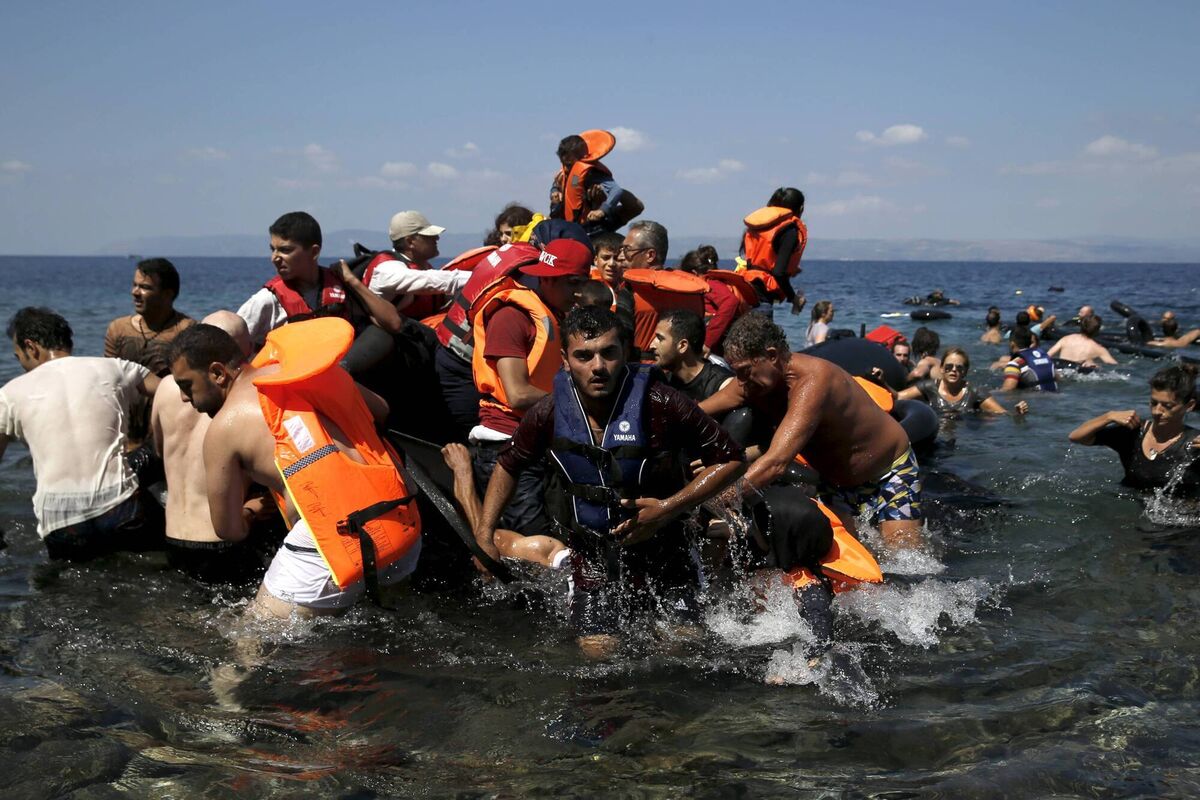
Located just 27km from Turkey, the island became uncomfortably synonymous for many with the refugee crisis of 2015, when some 1.3m people, many fleeing war in Syria and conflicts in other places sought asylum in Europe, with more than half-a million people arriving on the beaches of Lesvos in that year alone.
Although the numbers of people trying to land on the beaches has dropped since those years, people are still coming. As one of the closest Greek islands to Turkey, it is a major route to Europe for people fleeing war, poverty, and persecution in the Middle East and Africa.
The warships are part of the coastguard’s diverse fleet, used to patrol the Aegean sea and Greece’s maritime border.
Locals can still sometimes hear the screams at night from the sea, which they believe are boats of refugees and migrants being pushed back out of Greek territorial waters.
Although the Greek government denies that its coastguard is involved in pushbacks, multiple investigations have found it guilty of this illegal practice.
Pushbacks — in which people are forced out of EU territorial waters, often in highly unstable dinghies or rafts — have been condemned by the European Court of Human Rights and multiple human rights organizations. And they have resulted in deaths.
Some witnesses have even reported seeing the Greek coastguard throwing people overboard to their deaths, the BBC has reported.
Thousands of people, including children, have died while crossing the Mediterranean sea trying to reach Europe. Many have drowned. Some were crushed to death on overcrowded boats. Some suffered medical emergencies with no one there to help them.
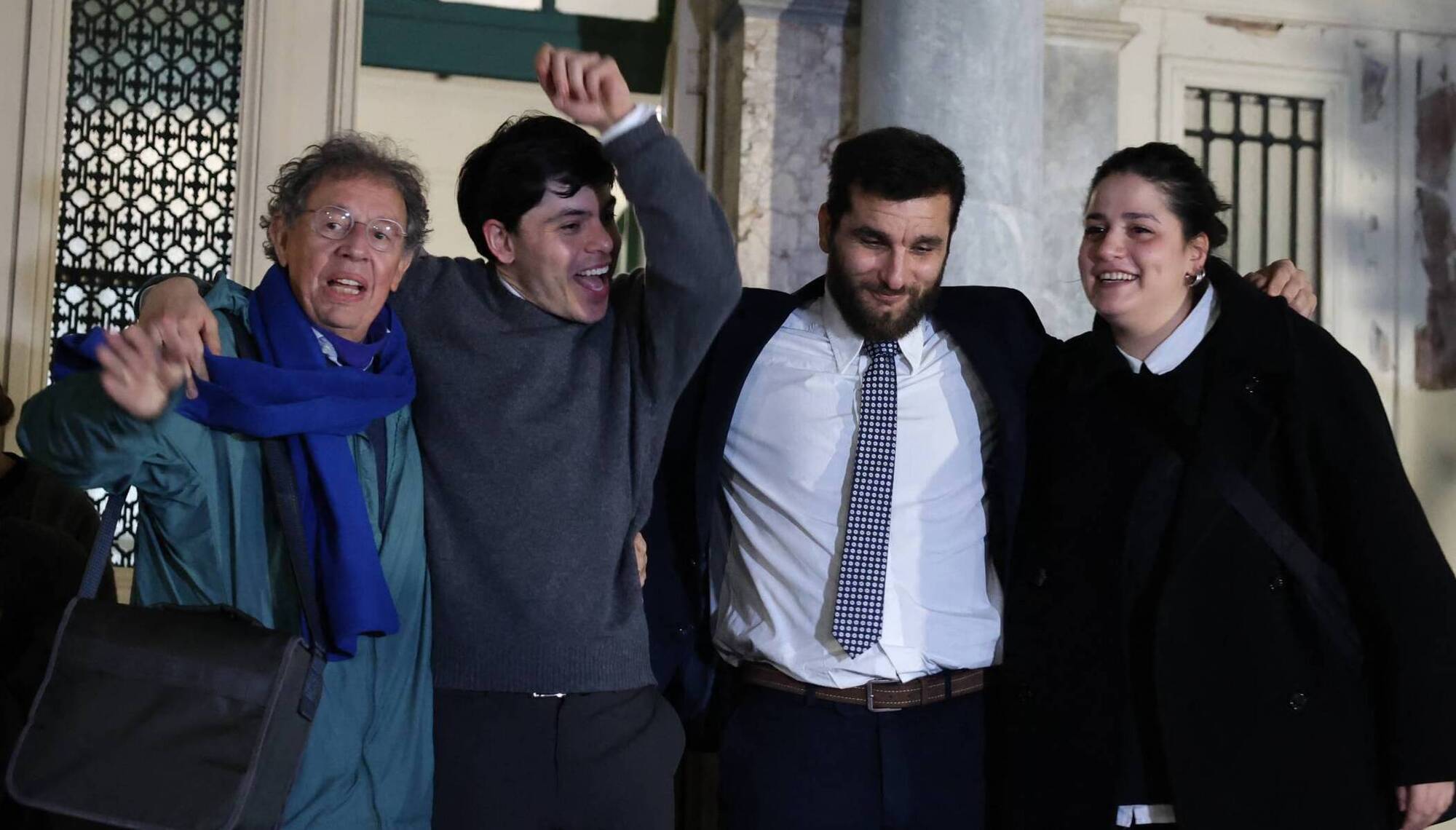
Kerry lawyer Sean Binder and 23 other humanitarians were in a court in Mytilene, the capital of Lesvos, last week accused of people smuggling, belonging to a criminal organisation, and money laundering after they tried to rescue people from drowning off the beaches of Lesvos in 2018.
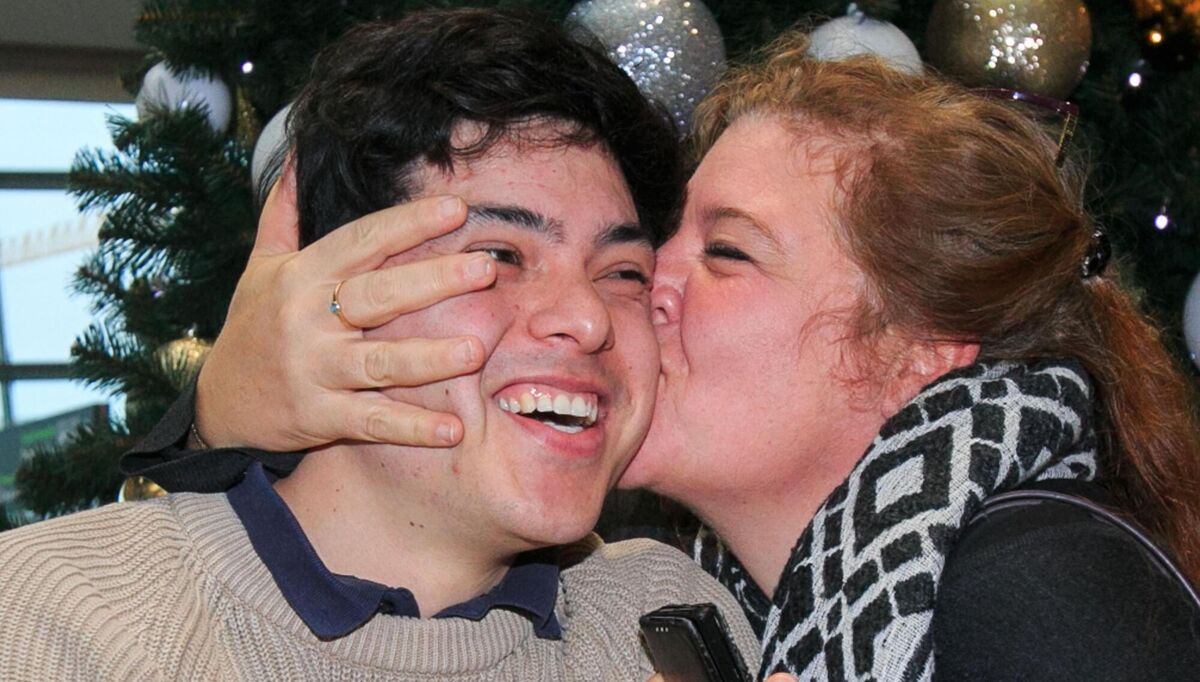
Although all 24 were acquitted on Thursday night, the prosecutions, and almost eight years of lawfare before the cases eventually got to trial, have halted humanitarian search and rescue operations there.
Mr Binder told the Irish Examiner that he hopes search and rescues can resume now that it has been confirmed by the Greek court of appeal that search and rescue is not a crime.
“But I’m not confident that it will. Because it will not stop the police from bringing these ridiculous, vapid, empty prosecutions against people. And that is already the problem. We have already spent tens of thousand of euros, we’ve already lost the organisation we worked for, we’ve already spent months in prison. All of that could happen again,” he said. “The damage has been done.”
A short few kilometres from the courthouse in Mytilene, barbed wire coils sharply around high concrete walls at the Kara Tepe refugee camp.
The camp was set up as a temporary measure after the infamous Moria refugee camp burned down on the island in September 2020.
Behind the high concrete walls, large tents that sleep 80 – 100 people and smaller, more solid structures that sleep about six stretch across the site which is under heavy security.
Private companies have thrived on EU funding for the camps, providing the ever increasing levels of security infrastructure.
A young woman held a child’s hand as they paddled in the sea which was gently lapping at the edge of the camp on a still January evening, just inside the robustly patrolled security gates.
But that sea can turn violent, with large waves flooding the camp and threatening lives during storms.
Parea - Europe Cares
While EU money pays for the barbed wire, concrete walls, and security cameras in Kara Tepe, charity is funding Parea, a refugee community centre which provides medical and psychological care, food, and legal supports to those in the camp.
Its brightly painted playgrounds and carefully tended gardens rise on the hill above the Kara Tepe camp, a beacon of hope and respite for those below.
Humanitarian organisation Europe Cares runs Parea, and has supported more than 214,000 displaced people there since it opened in 2022.
Nine other NGOs, including Medecins Sans Frontieres, also provide services in Parea.
Olive branches stretch over wooden benches there, lending welcome shade in summer.
It has become a place for Syrian and Palestinian farmers to share their tips for the olive harvest, yet to come.
Europe Cares co-ordinator Arno Tanner said that they paint the centre’s buildings, playgrounds, and signs in bright colours and they aim to create an open, welcoming space for visitors.
There are about 1,300 people in the Kara Tepe camp and 150 of them were at Parea on Friday, Mr Tanner said.
But when camp numbers had been at 6,000, up to 900 people would visit Parea per day.
Parea is a Greek word for being together, a circle of friends, Mr Tanner said.
The centre evolved in response to the needs in the Kara Tepe refugee camp below.
It is now the biggest centre of its kind in Europe, he said. Refugees, or people on the move, run many of the services there.
The centre saw almost 40,000 visitors last year. However some years, it has catered for some 70,000.
But vital projects like Parea depend on fundraising and on volunteers to donate their time, labour and emotional energy, Mr Tanner said.
Irish humanitarian and psychotherapist Caoimhe Butterly provides psychosocial workshops at the camp.
She has been coming to volunteer and provide supports on the island since 2015.
And without spaces like Parea, people in the camp would be “extraordinarily more vulnerable”, she said.
Not only in terms of psychosocial supports, medical supports, but with their vulnerability to human trafficking and sexual gender-based violence, with women and children particularly vulnerable to exploitation and abuse.
Without places like Parea, more people would fall victim to survival sex work and addiction, something now seen particularly among young male refugees alone in Athens, she said.
But Parea is a refuge from danger and place to breathe easy and take stock.
Ms Butterly met a mother from Gaza in Parea who lost 123 family members, all killed in airstrikes on the Jabalia refugee camp.
She survived with her four young children and fled. Her brother, now a double amputee, is the only surviving member of her family left in Gaza. “Her entire family has been wiped out,” Ms Butterly said.
“I saw her here and I greeted her in Arabic and I just saw her eyes light up.
“She talked about the struggle just to open her eyes every day and to remain functional and not to collapse under the weight of her grief in front of her young children.
“It was in the summer and they were wearing the clothes that they arrived in months earlier, very thick furry boots and clothes that were inappropriate for the temperatures.
“Of course it does not in any way minimize the horror that she woke up into every morning, psychologically and emotionally and spiritually, but to be able to take her around these different services where she could access clothes and nutrition and a woman’s space and psychological supports, even if it was just for a little glimpse of time pre her continuing her journey, it was something that reminded her of humanity, that her humanity was being seen and acknowledged.
“And it was such a reminder of the strength of this space.”
It is something the woman still speaks about, Ms Butterly said.
“No matter how hard the camp was, she remembers this space so fondly,” she said.
Because she was treated as a human, with respect and with an acknowledgement of the profound strength that it takes for somebody who is a survivor of multiple massacres and a caregiver for four young children to keep one foot in front of the other.
Refugee camps can be cold and sterile places, with a lack of humanity badly impacting some people’s psychological wellbeing, Ms Butterly said.
“But you see a shift in people when they come here. And when people feel safe, their creativity and skills can emerge,” she said.
“People come here who were teachers, doctors, artists, farmers, musicians. They bring so many skills.”
Mr Tanner said that there are major structural issues to be tackled within the asylum system.
When someone is granted asylum, they must leave the camp within 30 days. But with little money or contacts locally, it can be difficult to find accommodation and survive, he said.
Although they should be transferred to the Greek social security system, this does not always work.
People often stay for a few days on the streets of Lesvos and then move onto Athens, he said.
And while there are some supports like shelters there for families; men, even teenage men, often have nowhere to go there and end up in exploitative black labour or turning to crime to survive.
Women’s centre
A womens’ centre in Parea provides two female-only spaces. One is a hut where females go to rest, sleep or pray in silence, with mattresses on the ground.
The other is a female-community hub, where various events are held daily, including beauty days, where women and girls can play with makeup and hair tools, sewing days, where they can alter clothes, and ‘women’s circle’ where they can have talks on everything from female health to improving their language skills.
The room contains a small library, a children’s play area, comfortable seating, mirrors, and cupboards full of beauty products.
They are also working on producing a ‘Sisterhood Magazine’.
Tebyan, who volunteers at the women’s centre, was celebrating her 19th birthday on Friday.
She escaped a bloody civil war and famine in Sudan with her two children and has been in the camp for three months.
Almost 12m people have been forced to flee their homes in Sudan. In recent days, the World Food Programme warned that its life-saving operations are at risk there due to severe funding shortages while the world’s “largest hunger and displacement crisis shows no signs of abating”.
Despite her impossible difficulties, there was light in Tebyan’s brown eyes, genuine warmth in her smile and exuberance in her demeanour, a hopeful sign that war and her horrifying journey to reach Europe has not crushed her.
She was responding to a ‘hair emergency’, pressing straightening irons to another woman’s long brown hair in the women’s centre before going back to the camp where friends were organising a birthday party for her with what little they had.
“I really love Parea,” she said. “It’s a place I can relax. And the volunteers here assist and support people in a very caring and beautiful way.
“They don’t treat you as a statistic, they treat you like a human, with care and welcome. On every level, I feel more calm. You can drink tea or coffee, play sport.
“But in the [refugee] camp, the only thing you can do is sleep in small containers.” Volunteers like Tebyan from the camp are essential in running Paréa, providing everything from security to translation.
Hamed Khammar runs Makers Space, a group that fixes old bikes and repairs phones and other technology for visitors to Parea. It also has a carpentry project there which repairs and makes things for Parea’s various spaces and services.
When people are learning and focused on something, they are mentally more relaxed, Hamed said.
“If they are doing nothing, it is difficult,” he said. “But there is happiness in fixing things.”
Austrian humanitarian Doro Blancke was organising food bags to distribute to vulnerable people who have left the camp and are living in the town when the Irish Examiner visited on Friday.
The bags contained vegetables, pasta, rice, eggs, lentils, and oil. All food is sourced locally.
Even for those who have secured refugee status and left the nearby refugee camp, it can be a struggle financially with work often difficult to secure. In a bid to survive, some refugees work in exploitative situations, picking tomatoes and courgettes for €2 an hour across Greece, Ms Blancke said.
People in the camp are from some of the most dangerous and troubled places in the world: Afghanistan, Sudan, Syria, Yemen and Eritrea. Everyone who visits the camp has experienced at least one pushback — with their dinghy or raft forced out of EU waters by larger vessels, she said.
Some have been pushed back five times before making it to Lesvos.
Mental health supports are hugely important at the centre, with multiple NGOs providing such care, “because everyone comes here traumatised,” she said.
“If you’re on a boat and your child dies, and no one there cares, we want to be here to provide support, to show humanity,” she said.
Love has also bloomed at Paréa. Hattie Wilder from Massachusetts in the US and Mohammed Ayyash from Gaza met at Paréa almost three years ago and are now engaged.
Mohammed’s mother was injured in a bomb blast near their home in Gaza and 300 members of his wider family have been killed.
But he now runs the community garden at Paréa. Neat rows of fava beans and spinach are labelled with hand-painted signs in both English and Arabic.
Women from the camp pick herbs from the garden, where sage and rosemary grow enthusiastically throughout the winter.
This improves the taste of the bland, poor-quality food provided by private contractors in the refugee camp, volunteers said.
Irishman Brian MacMahon, a retired solicitor from Naas has been volunteering at Parea. He arrived in August, went home for Christmas, but returned to Paréa in early January.
With a long-term interest in humanitarian work, a former board member of Goal, and experience as an election observer internationally, when he retired from his legal practice he decided to volunteer.
He found the Europe Cares charity online, contacted them and came to volunteer on Lesvos.
“It’s been pretty extraordinary,” he told the Irish Examiner.
“You meet extraordinary people, amazingly resilient and cheerful. And from every kind of background you can think of. They’ve been through a lot to get here.
“Lesvos is the gateway to the EU for most of the Middle East and for most of Eastern Africa.
“So there’s a huge, huge pressure of people trying to come across to the EU and they generally come through Turkey to Lesvos, which is one of the closest spots just across the Aegean Strait there.
“There’s a lot of people trafficking. There are a lot of drownings.
“There’s a very contentious arrangement where the coast guard, the Greek coast guards and the Turkish coast guards monitor that strait very carefully. And this phenomenon called pushbacks, which is small boats being pushed back.
And in many cases, it’s difficult to prove or it’s difficult to establish, but in many cases there have been boats capsized or sunk, people drowned, people ending up in hospital, people gone missing.
“And you hear these stories often from the refugees themselves.”
If they get to Lesvos, they’re taken by the authorities and put in the refugee camp, pending their application for asylum, he said.
“And that can take months. There are people who’ve been coming here for over a year, but they still haven’t got their decisions. And it’s a tortuous process that they have to go through, interviews and difficult criteria for them to meet.
“And the criteria seems to change quite a lot. The policy seems to change both at camp level and with the Greek government and their attitude to refugees, the EU similarly. So there’s a lot of shifting regulation.”
But Paréa manages to create an important refuge for people on the move, he said.
“It’s a chance for people to draw their breath. They’ve come out of one pretty awful situation and they’re not sure what the next chapter is going to bring for them.
“They’re worried about their families, their kids. Some of the stories are heartbreaking — you hear about deaths, parents separated from kids, from spouses.
“They sacrifice so much to get here. And no one wants to be here.
If things were peaceful and calm in their home countries, they would not have come.
According to the latest figures from the UN refugee agency, the UNHCR, there were 117.3m forcibly displaced people as of the end of June, 2025.
“The only way I can see of addressing this huge problem that the world has is perhaps for Europe or the US to see refugees as not as a problem or a crisis, but as an opportunity,” Mr MacMahon said.
The energy, drive, and the interest that people seeking asylum at Parea have is inspiring, he said.
“You see the potential that’s there,” he said.
“Europe needs workers in all sorts of areas. Ireland needs workers.
“How do we reframe this whole thing as an opportunity? I know just opening the doors and letting everybody in, that’s not going to work either, but I think equally we could be strategic about it and say, ‘well we need skilled labor in certain areas, let’s start there’.
“Even from a self-interest point of view. It can be a mutually beneficial thing.”
CONNECT WITH US TODAY



Be the first to know the latest news and updates