Mick Clifford: Why did Margaret Loftus wait 13 years for justice after a brutal assault?
Margaret Loftus’s 13-year struggle exposes how institutional delay compounds the trauma of domestic violence victims
Mick Clifford: Why did Margaret Loftus wait 13 years for justice after a brutal assault?

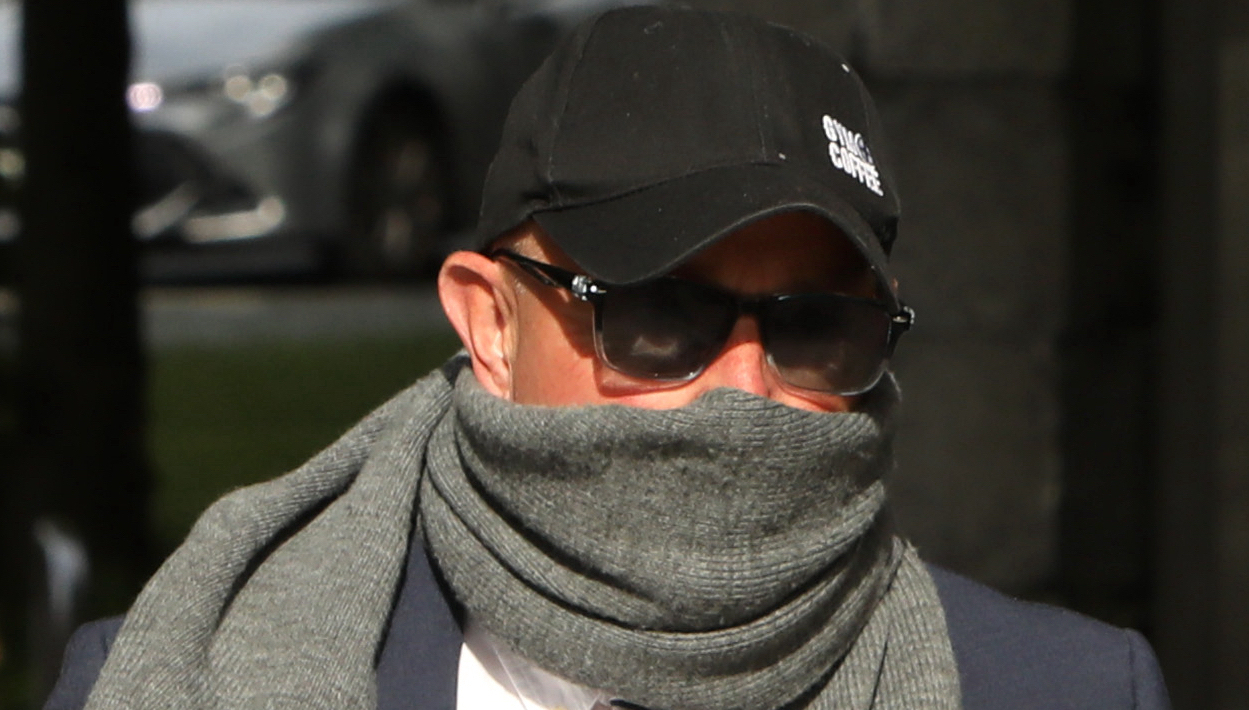
Despite his conviction for assaulting his wife Trevor Bolger remains a member of An Garda Síochána, suspended on full pay. File photo: Collins Courts

The assault in question took place on October 25, 2012, when garda Margaret Loftus was viciously attacked by her husband, garda Trevor Bolger. 

It occurred in Margaret’s childhood bedroom in Co Mayo when the couple and their two children were visiting for a family occasion.

More than 13 years later, Bolger was sentenced to three months' imprisonment, to be suspended for three months, for assaulting his wife. 

Domestic violence, it is now accepted, is far more prevalent than ever before officially recorded. It is also the case that An Garda Síochána now treat the crime with a seriousness that was rarely applied up until recent years. 

But why did Ms Loftus have to wait so long for justice? The case was, she stated outside the Criminal Courts of Justice building on Friday, before the courts on 58 occasions. Why did a woman have to live in suspension all that time before she could be allowed to effect closure and put it all behind her?

One reason may well be that the perpetrator was, and continues to be, a member of An Garda Síochána. On the morning after the assault, Margaret Loftus crept downstairs in the family home and asked her father to stand beside her when she confronted her husband.

“I felt if I didn’t end the marriage, my life would be at risk,” she said. “With the support and strength of my father, I told Trevor our marriage was over, and I would never allow him assault me ever again.” 

Margaret Loftus's dealings with An Garda Síochána

Within months, back in Dublin where they were both based, she had obtained a barring order. Such a procedure is held in camera, but the process usually requires the presence of a garda. Yet, outside the in camera court appearance, nobody in the organisation appeared to be aware, or at the very least to care, that a female member had been assaulted.

“I told all these people in positions of power that this was going on and I was made to feel there was nothing wrong with this behaviour, that it was normal,” she told the Irish Examiner.

“Nobody said, ‘can I help you, this fellow should be investigated'. I told them absolutely everything, and they decided to do nothing. This wasn’t a case of me refusing to make a statement.” 

She applied for a transfer to her home county, to be near her parents and to attempt to start anew after the breakdown of her marriage. Far from assisting her, it appears that officialdom in An Garda Síochána made it difficult for her. 

The transfer she thought she had was revoked at the last minute. She had to wait further before getting a transfer, and even then, it was to Sligo rather than Mayo.

Margaret Loftus (second from right) and family members, arriving at the Criminal Courts of Justice for the sentence hearing of Trevor Bolger. Picture: IrishPhotoDesk.ie

Her fortunes within An Garda Síochána changed in 2018 when she wrote personally to assistant commissioner Pat Leahy about her plight. Within days, members of the Protection Service in the force contacted her and began an investigation. 

In her victim impact statement last June, Ms Loftus addressed the members who were involved.

“If every other member of An Garda Síochána did their job like you have, this country would have one of the best police forces in the world,” she said.

Bolger was interviewed over the assault, but even after that, he was still promoted and restored to a position where he had possession of a firearm. That was revoked when it was reported in the media.

The criminal justice system

In 2019, he was charged with a number of offences related to the assault. What happened thereafter is an indictment of the criminal justice system. There were up to two dozen appearances before the matter was finally scheduled for trial early last year.

It is a well-trod legal strategy in some instances to delay a trial as long as possible. Lawyers are obliged to act in their clients’ best interests, and sometimes that is in their best interests. 

But the system has to have a role to play here. What is in the victim’s best interests? Surely it is to get the thing over and done with in light of what occurred and what is at issue.

Yet here, the system ensured that the matter did not come to trial for six years. Then there was a change of plea. 

Ms Loftus, finally of the belief that justice was going to be done in a trial, was told at the last minute that her ex-husband would now be pleading to one charge, while others were going to be dropped.

Prosecutors are obliged to put forward the case they believe is most likely to succeed. Yet again, in this case, the victim of an assault was left out of the loop until the last moment.

After the guilty plea, the sentencing hearing took place later in the year. Ms Loftus read a moving victim impact statement with her elderly father seated beside her in the witness box for support. 

Further adjournment was granted for the defendant’s suitability for a non-custodial sentence to be assessed. He remains a member of An Garda Síochána, suspended on full pay.

Important changes

There have been changes to how An Garda Síochána deals with domestic abuse, whether it occurs in the general populace or whether a member is involved. It is unlikely, but still possible, that Ms Loftus' painful journey would have to be endured by a woman were she assaulted today.

However, while changes have occurred, there are still shortcomings. A garda who is the subject of a barring order is obliged to inform his superior officer about it. Failure to do so can result in disciplinary action.

A Garda Inspectorate report published last March showed that one in two victims of domestic violence surveyed were unhappy with how the gardaí dealt with the case.

Chief inspector of the Inspectorate, Mark Toland, noted in the publication that important changes had come about.

“These include a pro-arrest policy, the introduction of a structured process to identify risk to victims, investment in training for personnel and the creation of a number of new roles to enhance the organisation’s response to domestic abuse,” he said.

“However, further improvements are required to ensure that all victims receive a trauma-informed service that is of a consistently high standard.” 

Those improvements require urgency if other women are not to be subjected to the protracted ordeal which Margaret Loftus had to endure over the last 13 years.

- If you are affected by any of the issues raised in this article, please click here for a list of support services.

More in this section

Lunchtime News

Newsletter

Keep up with stories of the day with our lunchtime news wrap and important breaking news alerts.

Cookie Policy Privacy Policy Brand Safety FAQ Help Contact Us Terms and Conditions

© Examiner Echo Group Limited