Inside Dublin’s Museum of Curiosities as conjoined lambs and historic royal cake go on display
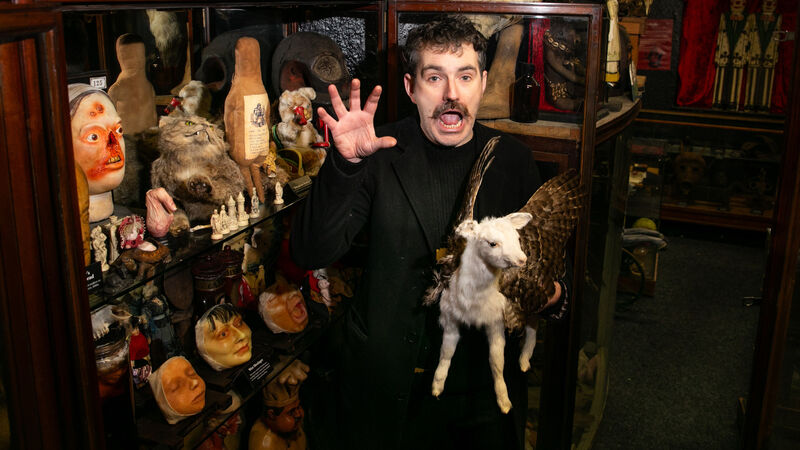
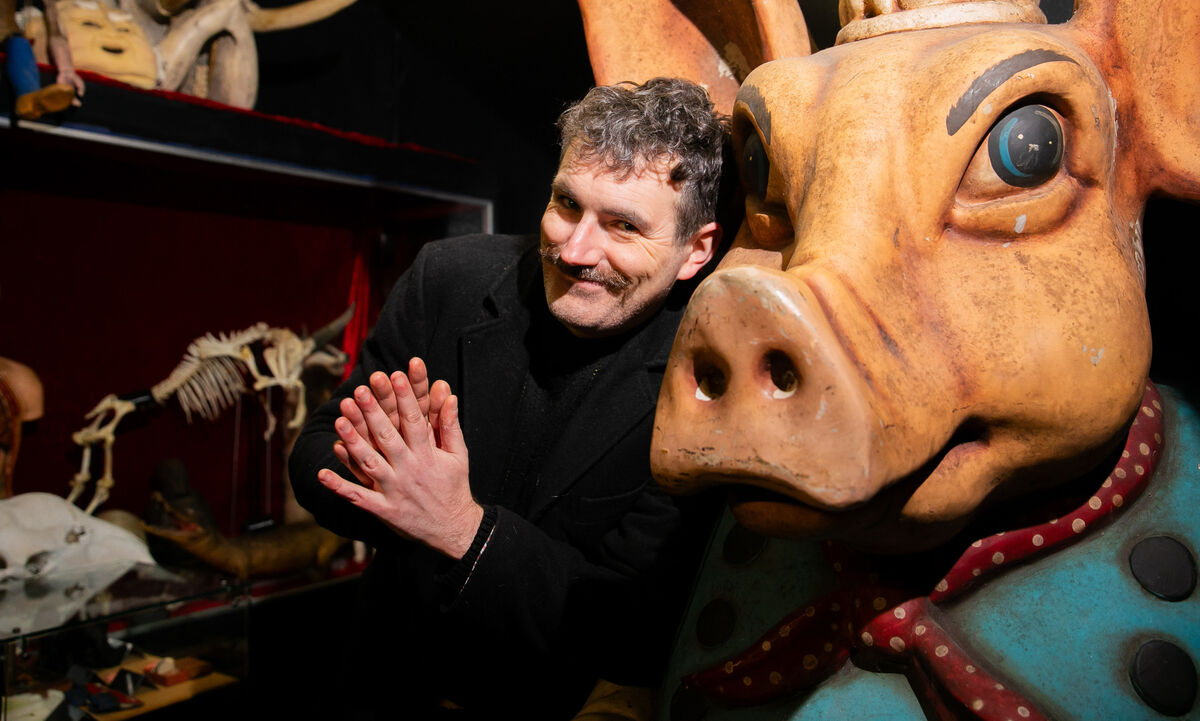
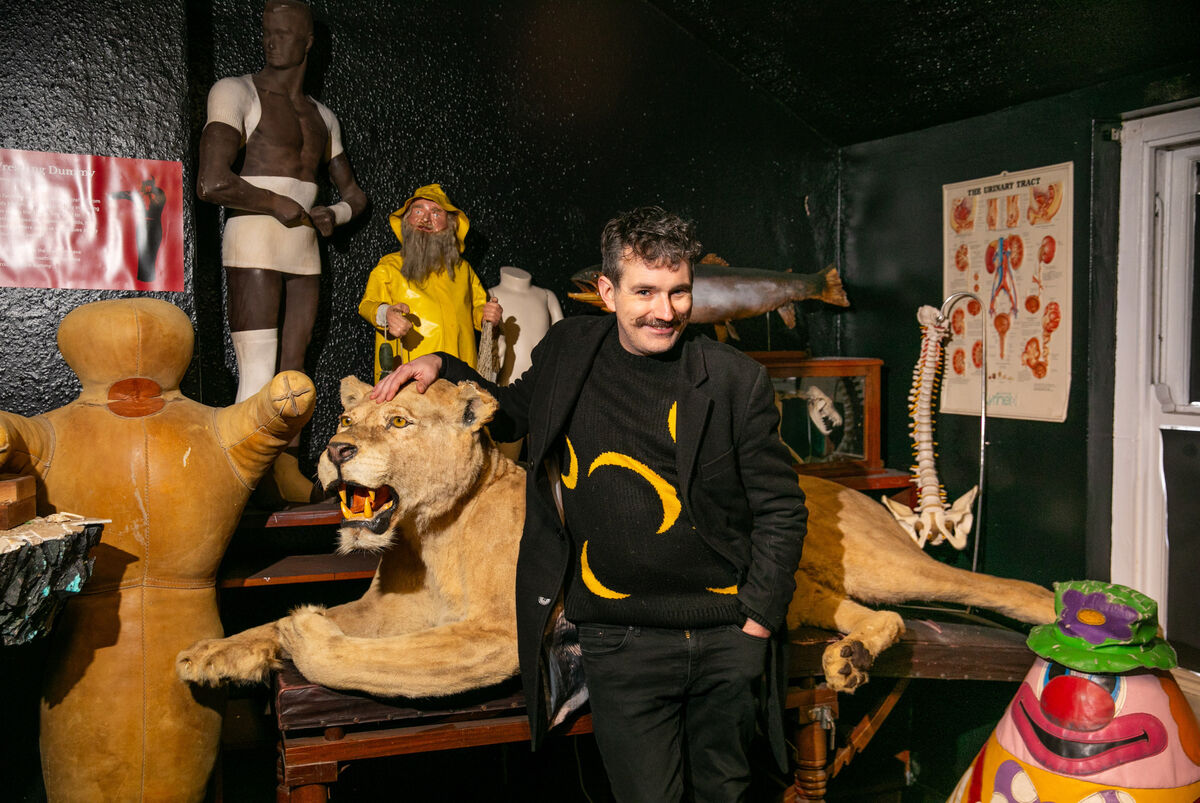
Paul Mangan at the Museum of Curiosities which he curates in Pembrooke St Lower, Dublin. Picture: Gareth Chaney
Conjoined twin lambs and 209-year-old royal wedding cake are among the macabre exhibits set to make their debut at one of Ireland’s quirkiest museums.
Paul Mangan, who runs Dublin’s Museum of Curiosities, is bracing himself for the arrival of several new additions which will be unveiled in a soon to be opened wing of the Pembroke St facility.
Housed in a Georgian-style building, the museum — which began as a Twitter account featuring bizarre images from old books and archives — is home to hundreds of unsettling items including mummified remains and Victorian relics.
Museum curator Paul, who is known as Ireland’s answer to 18th-century showman PT Barnum, has spent months preparing for his new arrivals.
He has welcomed some bizarre exhibits since the attraction opened in March of last year. However, he reckons that some recent purchases might be his most macabre yet.
One of the items includes some leftover wedding cake from the wedding of Princess Charlotte, who died from childbirth complications in 1817 after delivering a stillborn baby.
Then 21, the princess was the only legitimate child of George, prince of Wales — later George IV — and an heiress presumptive to the British throne.
Her death was considered a national tragedy at the time which was only compounded by the suicide of her obstetrician, Richard Croft.
“It was about £400 which is a lot to pay for a slice of cake,” Paul told the . “I was thinking about it a lot and asking people I work with in the museum and those close to me what they thought. It’s a small fragment of the cake so it was difficult to decide if it was worth it, but eventually I just bit the bullet and went and got it. It was the dark history behind it that interested me. Princess Charlotte died very young but I can safely say it wasn’t the cake that killed her.”
The artefact is currently with Paul’s brother in London for safekeeping.
“I’m just hoping it didn’t accidentally get mixed in with all the goodies over Christmas,” he laughed.
“The cake sounds like an extortionate amount of money but it’s actually all verifiably connected to the royal family so this escalated its value a lot. I’m sure there will be lots of people who think I faked this one but it’s 100% real.”
The conjoined twin lambs are equally fascinating:
“I love things that are both creepy and cute at the same time. This kind of deformed animal taxidermy can be quite hard to come across. A lot of the time I’m spending hours browsing online on sites like eBay. In this case it was through an antique shop in the Netherlands. I’ve bought from that guy before and there’s a few things in the museum that belong to him.
“He sells things like skulls, taxidermy, among other items. These taxidermised Siamese twin lambs popped up on the page and I couldn’t resist. I just had to have them. There are a lot of sideshow gaffes out there. I previously bid on a taxidermised two-headed cow. I had a bid on three, one of which belonged to the hypnotist Derren Brown, but I lost all of them.
“I also tried to buy one up in North Belfast but it turned out to be fake in the sense that it was two heads from separate cows that were stitched together. The one I ended up with came from the States.
"The farmer had it taxidermised to preserve it as he had never seen one live so long before. He had lasted a few weeks before passing away. Years later, it ended up in an oddities shop which later closed down. I had it sent over to Ireland but I had a lot of explaining to do after it was seized by customs.
"They were more confused than amused but were grand once I explained the situation and showed them all the paperwork.”
He recalled how even the packaging aroused curiosity: “The delivery guy isn’t supposed to know what are in the boxes he is dealing with but I can guarantee you he did by the funny look he gave me. To this day, I still get eBay alerts informing me about two-headed cows that have popped up for sale.”
The curator is known for his tongue-in-cheek exhibits.
“I have a few theatrical pieces. There’s nothing that is claiming to be historical that actually isn’t but there are the few bits I have mixed in for fun,” he said.
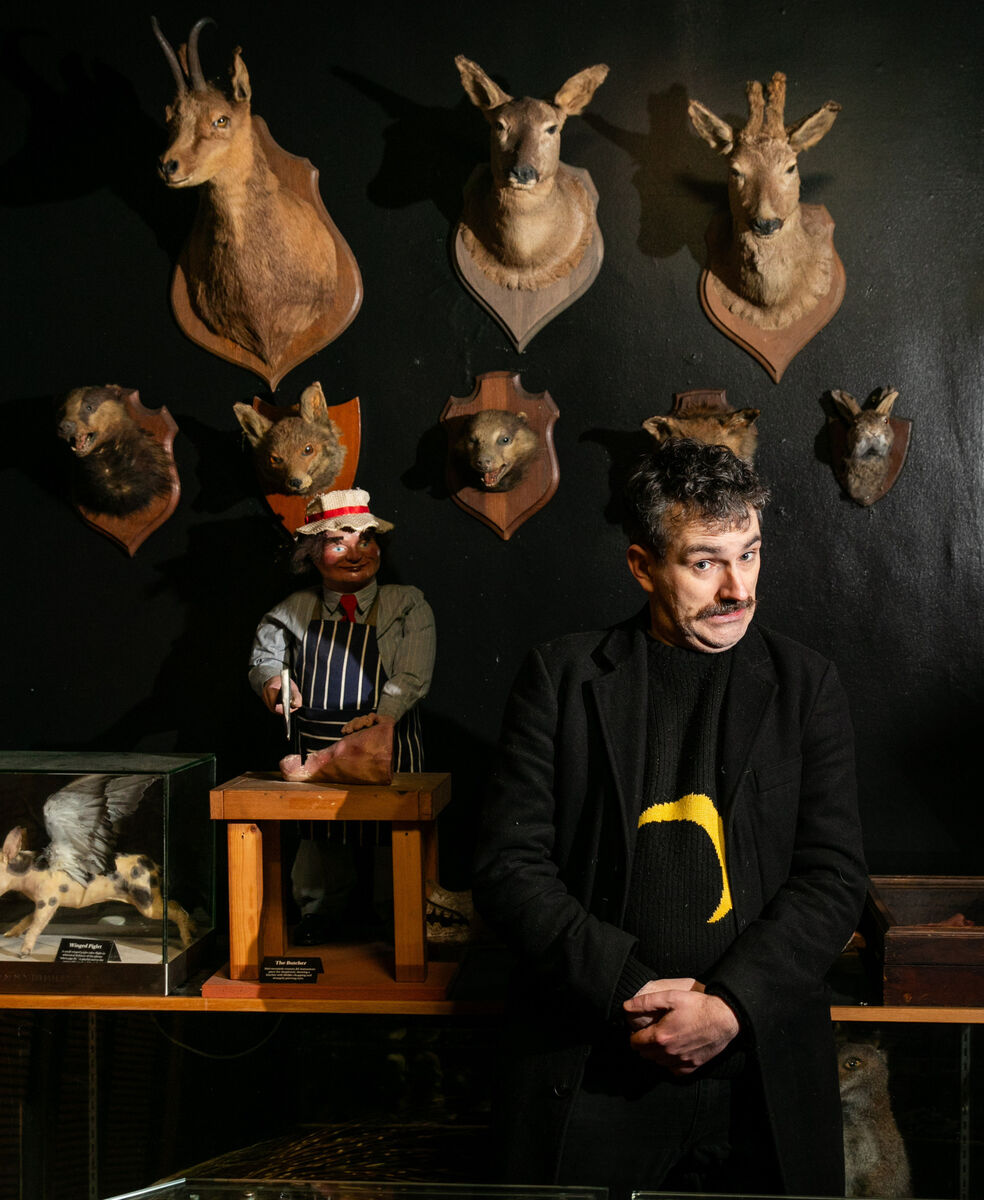
“The Siamese lambs for example were born like that. The two-headed cow was genuinely born with two heads. The pig with wings on the other hand was not born with wings.
“There are some people who believe that everything is real, even the pig with wings. I’m not totally against fakes as long as people are made aware they aren’t real.”
There are certain pieces that are close to Paul’s heart:
“You have your fancy dolls, you have the fancy French dolls and all that kind of thing. However, my favourite thing in the museum is what is known as the bedpost doll. You basically take the top of the bedpost off and put some eyes on it. These dolls were for the children of families who didn’t have money at the time to buy a real doll.
“They just made dolls out of whatever they had around the house. Through modern eyes, they look quite eerie but a child in the 19th century probably once love it very much.”
He listed the positive aspects of his work: “By collecting this kind of stuff, you start collecting weird characters as well. Some of the sellers are very eccentric as you would expect in this field.
“I still work to some degree as a digital marketer so it’s kind of like a double life in that respect.”
Paul’s family are supportive of his passion: “My mum was storing the two-headed cow in her house for ages so I’m sure she was glad to see the back of it.
“My family are all very supportive which might have something to do with the fact that we are all very creative. Dad is a musician and my mum is also a very interesting character. I think they always knew I was a bit of an oddball. My girlfriend works behind the counter sometimes so she’s a great support too.”


CONNECT WITH US TODAY



Be the first to know the latest news and updates