Irish now: Gaeilge through games rather than grammar
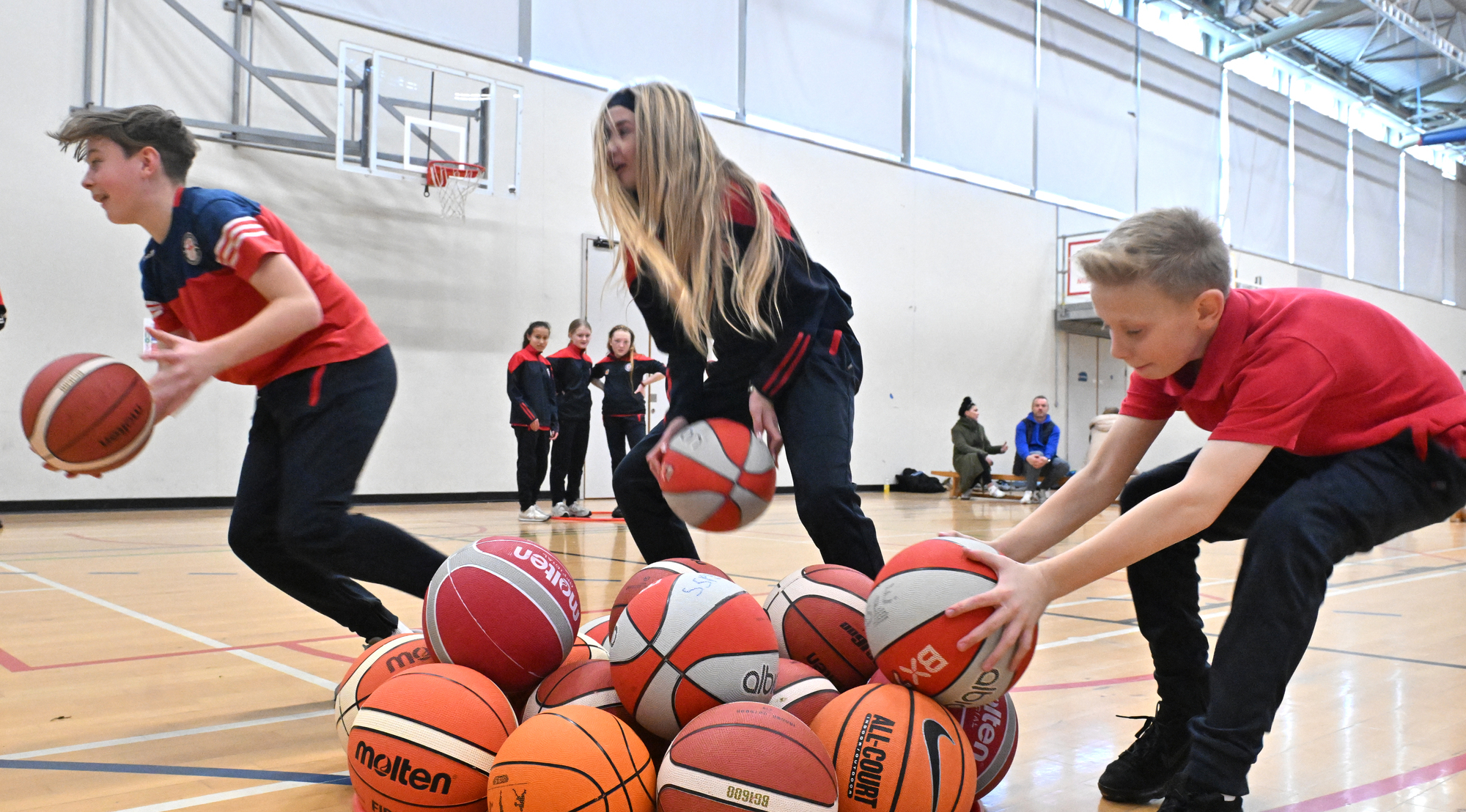
Pupils of Scoil Padre Pio in Churchfield ag imirt dodgeball at the Mardyke Arena in Cork as part of the 'Barr na gCnoc' programme. Picture: Dan Linehan
In the Mardyke arena, sixth-class students from Scoil Padre Pio, a national school in Churchfield, Cork City, are locked in a battle of dodgeball.
“Anseo, anseo, anseo,” one student calls as they charge across the hall.
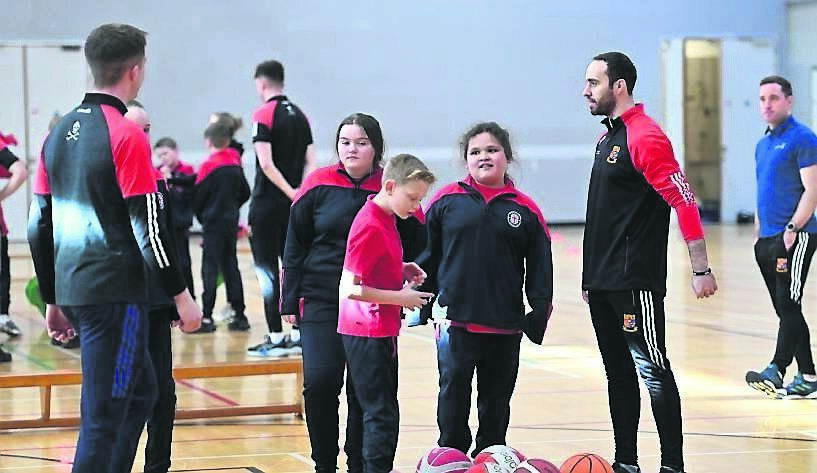
The group is one of three DEIS primary schools working with the School of Education at University College Cork (UCC) swapping the classroom for the sports hall, and their books for cluichí liathróide, to learn Irish through PE.
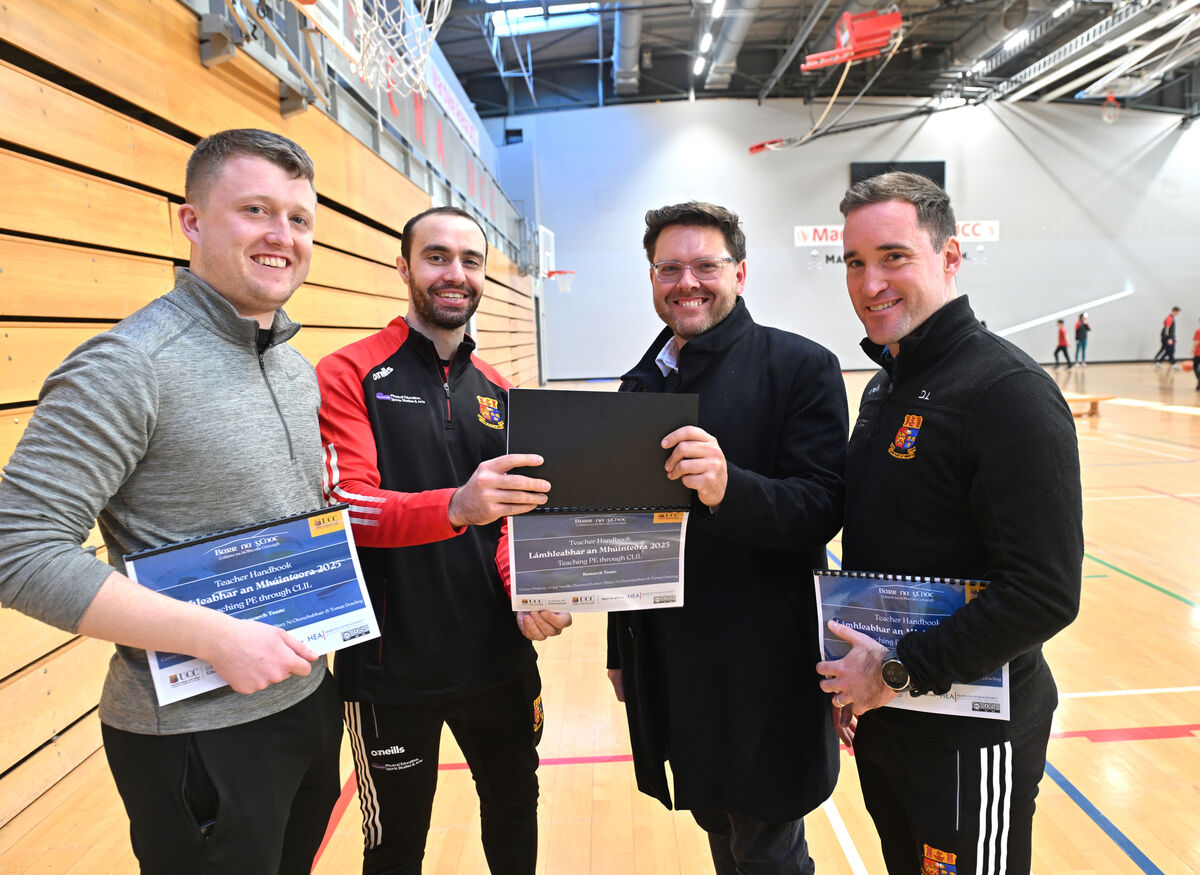
UCC’s Craig Neville, Conor Philpott, Diarmuid Lester, and Tomás Dowling are examining how Irish can be used as a medium for learning another subject, as well as in its own right.
The project is a branch of UCC’s Barr na gCnoc initiative, a community partnership led by Ionad na Gaeilge Labhartha.
Mr Neville is a lecturer in education, specialising in language teaching and multilingualism.
He speaks French, Spanish, and Catalan. “I’m a linguist through and through,” Mr Neville told the .
He started learning Irish before coming to Ireland, through lessons in the Camden Irish Centre in London.
As an Englishman, his connection to Ireland is through his wife, who has an Irish family.
“I knew if I was coming to Ireland and my children would be learning Irish that I would need to learn Irish too. We had a teacher called Eimear from Donegal, and she was fab. She was really, really good,” he said.
“The majority of students were second generation Irish diaspora, trying to tap into their heritage by learning the language.
"I remember learning it, then coming here [to Cork] and trying to speak it, and because I’d learnt Donegal Irish, I was thinking ‘oh, this is completely different’,” he laughed.
Now, Mr Neville works with teachers here.
“One of the things I like about it is that I have an objective view [of the language] because I don’t have the same attachment as other Gaeilgeoirí do. I have a very different approach to it, and I hope it contributes to is, as an outsiders’ perspective.”
Learning the language has not been easy, he added.
“It is difficult. I will always say Irish was designed for English people not to be able to speak it.
“It was the ultimate anti-colonial act. English is easy for everyone, but Irish is hard graft.”
The idea of combining PE and Irish is based on a popular educational approach.
Europe has a “long history” with Content and Language Integrated Learning (CLIL), Mr Neville explained, with CLIL essentially boiling down to teaching different subjects through English.
“Ireland obviously has a very long history of learning like this, except it hasn’t been called CLIL,” he added.
“It’s been called things like ‘immersion’ and Ireland has been doing this since the mid-50s. We have a long tradition of it, but we don’t realise it.”
A key barrier when it comes to learning another language is that students struggle to see the relevance of it in their daily lives.
“They might think ‘I’m learning this here, but when I go outside I’m not going to use it, so what’s the point?’.
"The idea is that by learning it through another subject, it gives the language a purpose.”
Research also suggests that by combining PE with the learning of another language, girls are more likely to participate, he added.
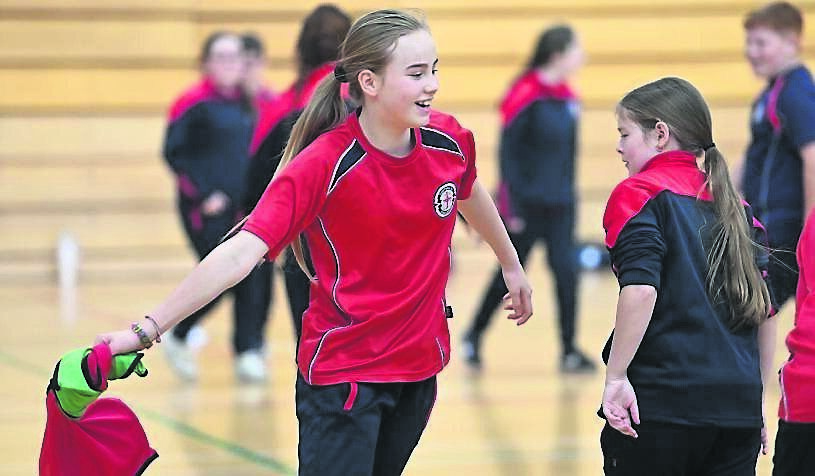
“Girls start to excel. You also have accelerated movement, because students are motivated, and it tends to make them want to move more. Generally, there are higher levels of positivity towards PE.”
For teachers Jennifer Buckley and William Casey, the approach has been a success.
“I find students tend to be very reluctant [with Irish] in September when they come in” Ms Buckley said.
“They doubt themselves, and they don't have great confidence, most of them. What worked well for our crew is that they are a really lively bunch anyway.
"In the classroom, things like bingo work really well, so anything active, where they are using the language, they find it beneficial. There definitely is a bit of a negative stigma,” Mr Casey added.
“They just don’t really like it but that is changing. They ask to play the Irish games every day.
"We also have kids who are exempt from Irish, who are taking part in this as well. They want to be involved, just because it's a game.”
Read More
CONNECT WITH US TODAY



Be the first to know the latest news and updates