State Papers: Haughey’s concern over British patrols in Carlingford Lough
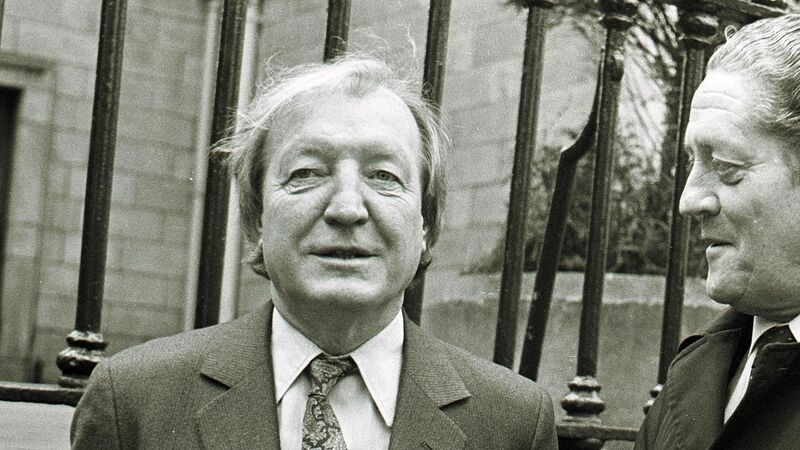
Former taoiseach Charles Haughey wrote to the sailor to say the Irish government would be making representations on his behalf. Picture: Eamonn Farrell/Photocall Ireland
Taoiseach Charles Haughey was unhappy after a British marine allegedly put a gun to the neck of a Dubliner while he was sailing on Carlingford Lough in 1991.
There were several instances where leisure boats on the disputed territory of Carlingford Lough had been approached by British patrols in the 1990s.
This included two British naval officers with submachine guns boarding the yacht of Mr Haughey in July 1990, who was not on board at the time.
The incidents on the inlet, located between Co Louth and Co Down, prompted Irish officials to seek the British government policy underpinning the boardings.
41766431;41766395;41766668[/reamdore]One particular incident, where a marine allegedly put a gun to a Dublin sailor's neck and took the safety off, saw Mr Haughey write to the sailor to say the Irish government would be making representations on his behalf.
"I was very disturbed to learn of the incident involving your boat in Carlingford Lough and I immediately conveyed my concern to the British authorities through the Anglo-Irish Secretariat who based their approach on your detailed report of the incident," Mr Haughey wrote on June 17.
As part of the annual release of National Archive files in Dublin, several pieces of correspondence detail the incident with the sailor, Henry Barnwell from Glenageary, and his yacht 'the Lady Jane' on June 1, 1991.
This includes a Garda file on the incident in which it recounts the statement from Barnwell, his wife Joy, who it said were "visibly shaken", and a Swiss friend who was on board the yacht with them.
The Garda file stated that as Mr Barnwell was passing by the Greenore side of the shore, he was approached by two dinghies and "two soldiers requested permission to board".
He refused and demanded identification from them, which was refused and they boarded the yacht.
"He continued to refuse them permission and one of them said they were arresting him and taking him to Northern Ireland," the statement said.
The statement said Mr Barnwell heard someone say over the soldiers' radios "they have you in the Republic", after which they left the Lady Jane.
The statement noted that two senior gardaí inspected the damage done to the yacht and said the tiller socket was "definitely strained", the plug for the automatic pilot was "ripped from its socket" and "boot marks were visible on deck".
Mr Barnwell later said that when he resisted the soldiers attempting to wrestle the tiller from him, one of them "put a gun to his neck and clocked off the safety catch", according to an official from the Department of Foreign Affairs.
The official urged that the issue be raised "in strong terms" with British authorities and requested a full report on the incident, particularly as the yacht was "so close to the Greenore side of the shore" and was proceeding to an Irish port.
"The aggressive manner in which the boarding was carried out also gives rise to serious concern," a civil servant said.
Irish civil servants also noted similarities to an incident the previous month, where the 'Lady Irene' yacht was boarded by British marines and in which a woman was struck on the forehead by the boom as they tried to steer it towards Warrenpoint.
They said they wanted assurances that such incidents "would not become the norm".
Civil servants also said it was "entirely unsatisfactory" that Mr Barnwell's wife Joy was being investigated by the Northern Ireland Coast Guard for "improper" use of the mayday frequency — an investigation which was later dropped.
A note to the Taoiseach's department remarked that the British marines had claimed the Lady Jane incident took place to the north of the lough and there was no forcible boarding.
They also said that British authorities' responses on the issue were "far from reassuring" and said the initial response had attempted to characterise Mr Barnwell's reluctance to be boarded by armed marines as "suspicious behaviour which justified the actions of the soldiers".
But, in a note sent to the Taoiseach's department on September 27, it was noted that an investigation into the incident by British authorities was "problematic" as Mr Barnwell would not make a formal statement to the RUC about the incident as "he does not recognise their jurisdiction in the matter".
"There the matter rests," the note said.
Mr Barnwell had written to Mr Haughey on June 5 about the incident, stating that he, his wife and friend "continued to shake with fear and trepidation for the remainder of the day".
"I have had several conversations with the British, whom I fear will concoct some denial to pervert the course of justice, which seems to have become as much a tradition of British culture as their reputation for piracy."
He added: "...the vibes I have picked up indicate that they are claiming the right to patrol the entire lough and I fear there will be a fatality."


CONNECT WITH US TODAY



Be the first to know the latest news and updates