State Papers: Media ‘ready to exploit slightest weakness’ of Mary Robinson visits
Former president was criticised for shaking hands with former Chilean dictator Augusto Pinochet during her trip to Chile, as well as for her overall itinerary and its cost
State Papers: Media ‘ready to exploit slightest weakness’ of Mary Robinson visits

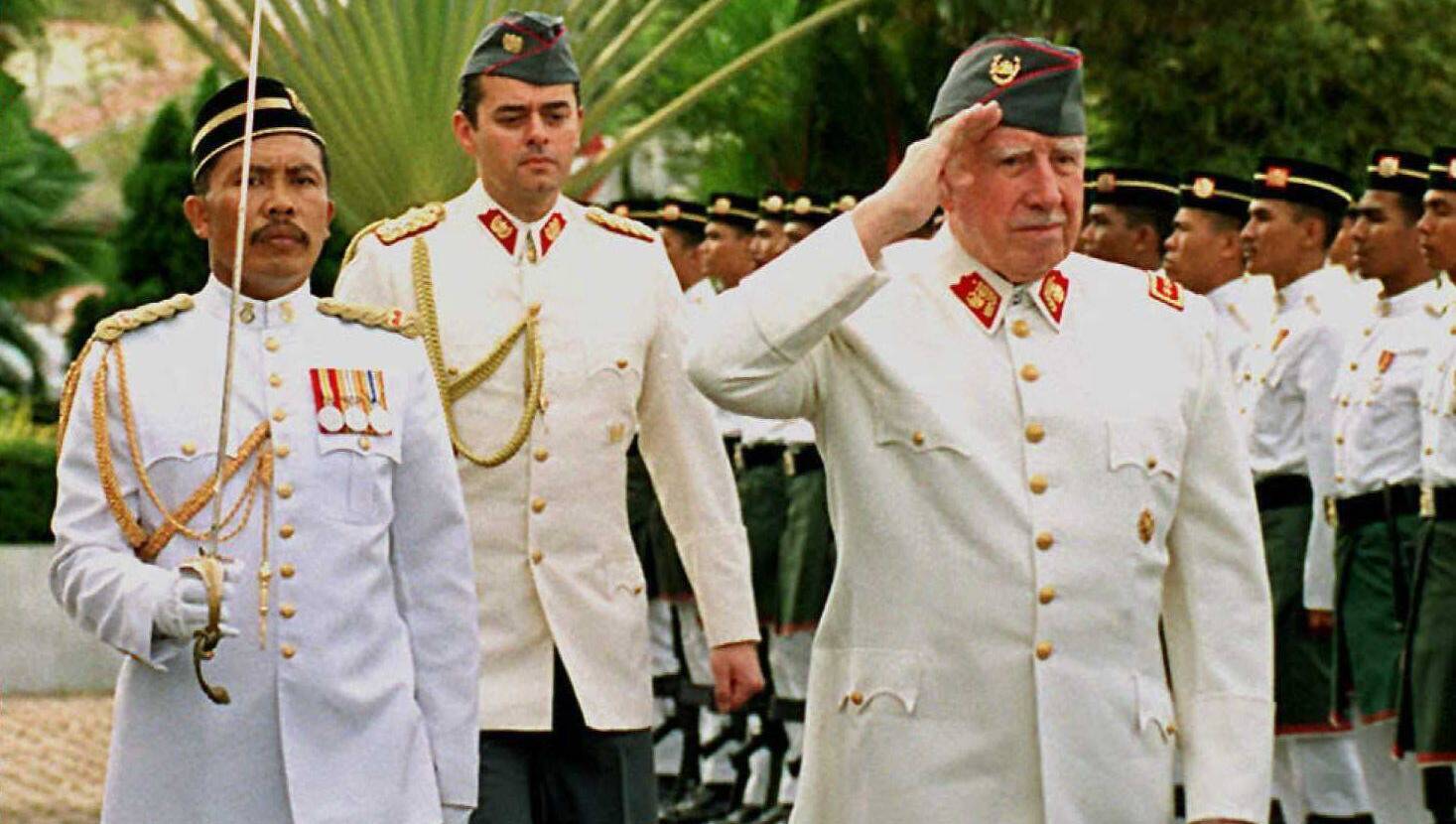
Then Irish president Mary Robinson was criticised in 1995 for shaking hands with Chilean dictator Augusto Pinochet, right. Picture: Francis Silvan/AFP via Getty

A civil servant warned that some media commentators were “ready to exploit the slightest weakness” of state visits by then president Mary Robinson, after criticism of her visit to South America in 1995, but was hopeful that RTÉ could be kept “on side”.

State papers, released under the 30-year rule by the National Archives, reveal concerns within the Department of Foreign Affairs that Irish media was becoming increasingly critical of Mrs Robinson's overseas trips, based on coverage of her visits to Chile, Argentina, and Brazil in March 1995.

Mrs Robinson was criticised for shaking hands with former Chilean dictator Augusto Pinochet during her trip to Chile, as well as for her overall itinerary and its cost.

Pinochet, who died in 2006, led a military junta that seized power, with the support of the US government, in 1973 from the democratically elected president, Salvador Allende. 

During Pinochet’s time as president and military ruler of Chile, up to 1990, several thousand opponents of his regime were tortured and killed.

Mrs Robinson later complained in an interview on RTÉ in April 1995 that she had no expectation that she was going to meet Pinochet, and it was with “great dismay” that she became aware he was attending a dinner in her honour. 

“I did not show any pleasure in meeting him,” she said.

In a briefing note dated April 4, 1995, an official in the Department of Foreign Affairs, Joe Hayes, said media coverage of Mrs Robinson’s visit to South America “suggests that the Irish media are no longer content with bland, uncritical coverage of the ceremonial of state visits abroad”. 

Mr Hayes continued: “The several lengthy (and occasionally hostile) conversations which I had with journalists over the duration of the South American visit persuade me that, when it comes to the President and her visits abroad, there are now some singularly ill-disposed media commentators, who are ready to exploit the slightest weakness.”

He advised that officials needed to be prepared for critical media focus on the cost of such state visits, their purpose, and itineraries.

At the same time, he observed that both Arás an Uachtaráin and the Department of Foreign Affairs were fortunate that Mrs Robinson’s trip to South America had not generated “ever-more extensive and negative coverage”.

Mr Hayes noted that phone-in programmes on RTÉ, including The Gay Byrne Show, The Pat Kenny Show, and Liveline had all received a significant number of calls criticising the visits and their planning.

The calls were also being mirrored on local radio stations, Mr Hayes said.

“Despite the considerable significance of The Irish Times as the paper of record, it is RTÉ’s coverage which will ultimately determine popular perceptions of an event like a State visit,” Mr Hayes remarked.”

He added: “If RTÉ can be kept on side, whatever may be written in The Irish Times can be heavily counterbalanced by the packages on the main evening RTÉ news bulletins and the reports on Morning Ireland.”

Mr Hayes claimed it was reports by RTÉ journalist Eileen Whelan, “particularly her damaging Morning Ireland interview from Sao Paulo, which ultimately turned the tide of opinion very decisively”.

He continued: “Up until then, it was possible to respond to the negative publicity from Argentina and Chile. The Morning Ireland interview, however, prompted the attentions of The Pat Kenny Show and from there on we were, to put it mildly, attempting to bolt the doors on a decidedly vacant stable.”

This article is based on documents contained in the files labelled 2025/123/50 in the National Archives of Ireland.

More in this section

Lunchtime News

Newsletter

Keep up with stories of the day with our lunchtime news wrap and important breaking news alerts.

Cookie Policy Privacy Policy Brand Safety FAQ Help Contact Us Terms and Conditions

© Examiner Echo Group Limited