Colin Sheridan: From culture to politics, the 10 Irish names to watch in 2026
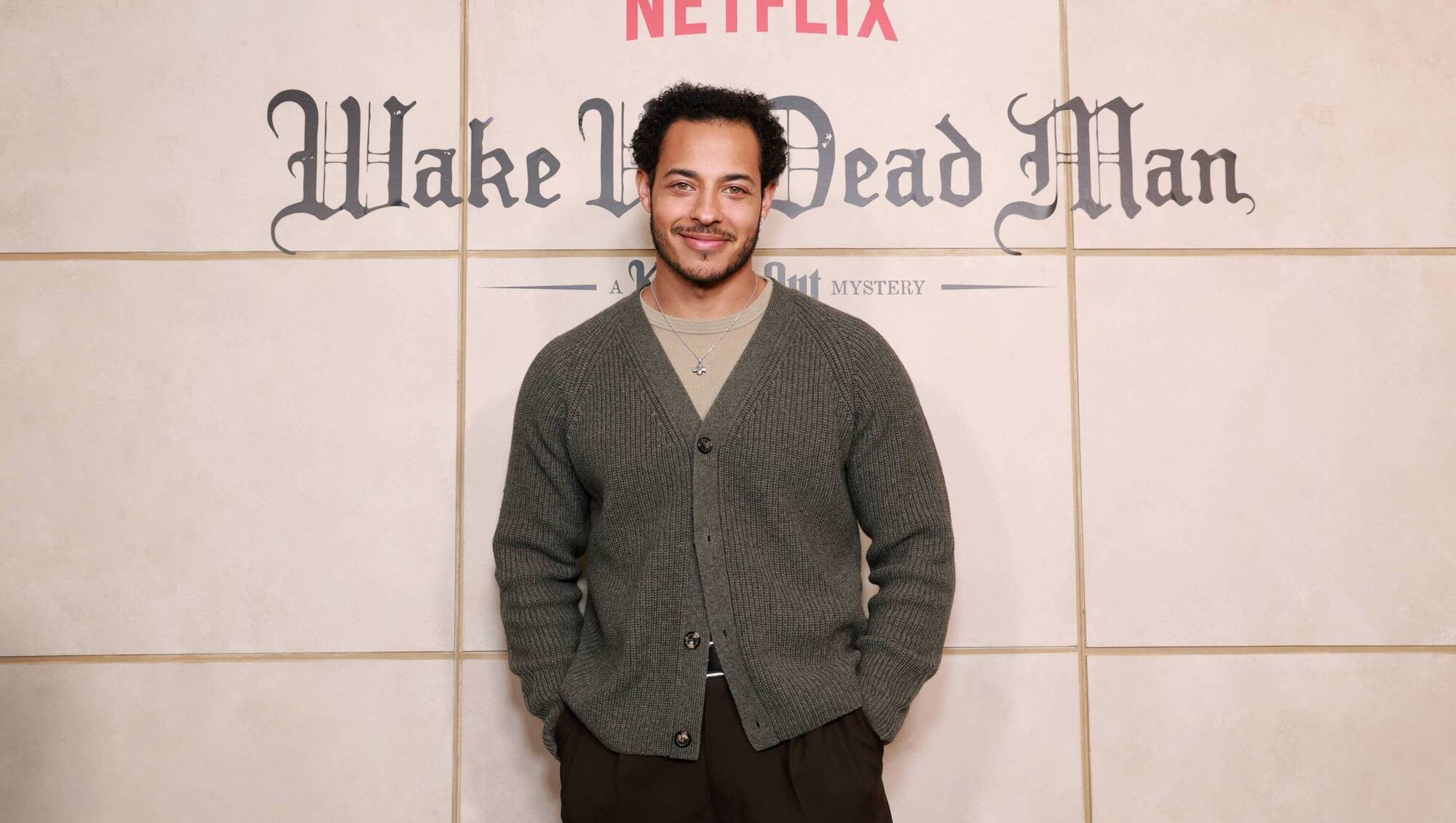
Daryl McCormack attends Netflix's 'Wake Up Dead Man' in New York last month. Picture: Jason Mendez/Getty Images
The business of prediction rarely ages well. Irish public life has a habit of rewarding the unexpected and humbling the apparently inevitable. And yet, every so often, patterns begin to form â not certainties, but currents.Â
As Ireland approaches 2026, there is a sense of accumulation rather than rupture. The economy remains outward facing, the cultural confidence hard-won rather than brash, and politics caught between generational impatience and institutional inertia.Â
The figures worth watching now are not necessarily the loudest, nor even the newest, but those whose next moves feel timely â aligned with questions Ireland is already asking itself.Â
What follows is not a ranking, nor a promise of greatness. It is simply an attempt to notice 10 Irish presences â people, ideas, symbols â whose trajectories suggest 2026 may be a year where influence arrives quietly, but meaningfully.
For someone who spends much of his time in galleries wondering whether the fire extinguisher is part of the exhibition, encountering SiobhĂĄn McNuttâs work is a small relief. Her art doesnât demand genuflection. It whispers for attention â bodily, unforced, and slightly slower than weâre used to giving.Â

Based in Galway, McNutt moves between drawing, painting and printmaking with a confidence shaped by long experience rather than theory alone.Â
A graduate of Central Saint Martins and the Limerick School of Art & Design, she spent over a decade working internationally in design before returning to studio practice â a background that shows in her comfort with materials and refusal of fuss.Â
Her abstract work is intuitive and responsive, alive to what paint and paper want to do rather than what they can be made to submit to. Gesture matters. Repetition matters. So does restraint.Â
Underneath it all lies a quiet resistance to control â environmental, cultural, internal â and a belief that attention, properly cultivated, is itself a form of ethics. McNuttâs work doesnât shout. It listens. And in 2026, that may be exactly why it lasts.
By 2026, Daryl McCormack will have quietly assembled something rare: a genuinely international filmography without having surrendered his sense of scale.Â
Following his acclaimed performances in , , and , McCormack has lined up a slate of projects that continue to resist obvious careerism, including a lead role in a psychological thriller shot in Ireland, and a supporting turn in a US prestige drama expected to premiere during awards season.Â
What distinguishes McCormack is not range â many actors have that â but judgement. He gravitates toward characters whose authority is unstable: men navigating power without certainty. There is restraint in his performances that feels increasingly out of step with an industry addicted to maximalism.Â
For Irish audiences, his appeal lies in recognisability without exhibitionism. He still sounds local. Still chooses small over loud. If 2026 confirms him as a leading man, it will do so on his terms â and that feels noteworthy.
Florence Road are emerging at a moment when Irish guitar music is being quietly re-evaluated. Their early singles â dense, melodic, built for live spaces rather than headphones â have earned them a growing reputation on the Irish and UK circuit, with festival slots pencilled in for summer 2026 and a debut EP expected early in the year.Â

What sets Florence Road apart is conviction rather than novelty. They are uninterested in pastiche or irony. Their sound draws from post-punk and classic rock traditions without apology, delivered with a seriousness that might once have felt unfashionable but now feels refreshing.Â
Their real test in 2026 will be pacing. Irish bands have often been rushed outward too quickly. Florence Road seem, so far, to be doing things in sequence: tightening live sets, writing carefully, letting word-of-mouth build. If they arrive properly next year, it will be because they waited.
Nicola Coughlanâs ascent has been the kind you canât quite call unexpected. Anyone who watched her pinball through with weaponised sincerity knew she was operating at a slightly different voltage.Â
made her a global presence; confirmed she could pivot from comedy to something rawer without dropping so much as a cadence.Â
Across it all, Coughlan has shown an actorâs instinct rather than a celebrityâs â an appetite for roles that stretch feeling rather than feed profile.Â

But what defines her just as strongly is her willingness to speak. Coughlan has been consistently, sometimes uncomfortably brave in her activism â whether challenging misogyny, pushing back on body shaming, or using her platform to advocate for queer rights, reproductive rights, Palestinian freedom, and social justice causes that are easier left unmentioned in her industry.Â
She does it without the choreography that usually accompanies Hollywood âstatementsâ. Itâs bravery without the branding exercise, which is increasingly rare.Â
In 2026, weâll see her return to at the centre of the story rather than fluttering at its edges. A new Irish feature, trading bonnets for something contemporary and bitey, will give her room to explore more grounded emotional terrain.Â
There are whispers too of writing and producing â the natural next step for someone who seems less interested in being cast than in creating. Coughlan remains a fascinating figure not because she is famous, but because she appears determined to use fame for something more than self-expansion.Â
She treats visibility as both responsibility and opportunity â and somehow manages to do so with wit intact.Â
If 2026 turns into her defining year, it wonât be because she courted it. It will be because she kept doing what she has always done: choosing good work, telling the truth loudly, and trusting that the audience can handle complexity.
Irish fashion has always had a complicated relationship with tradition. We celebrate it rhetorically, then rush to modernise it out of recognisability.Â

Colin Burkeâs work sits in a more patient space between the two. An award-winning designer of handmade knitwear, Burke combines Irish traditional motifs with modern structure and silhouettes â not as costume or revivalism, but as something lived-in and contemporary.Â
What distinguishes his work is discipline. Each piece is considered, tactile, shaped by an understanding that knitwear is as much about engineering as it is about heritage. Aran references appear, but they are stretched, pared back, re-balanced. Nothing feels nostalgic.Â
In an industry fixated on speed, Burkeâs practice is deliberately slow. His clothes invite repeat wear rather than first impressions, longevity rather than spectacle. As sustainability becomes less of a slogan in 2026, his approach â handmade, thoughtful, restrained â feels less like an aesthetic choice than a position.Â
If Irish fashion is to have a future that respects its past without being trapped by it, Burke offers a quietly persuasive model.
Farrellyâs growing reputation rests on a deceptively simple idea: that Irish-language cinema can operate comfortably within genre, without explanation or translation.Â
His breakout success with â an Irish language horror film that travelled internationally â has led to funding and interest for follow-up projects, including a second feature currently in development and a television collaboration with an Irish-language broadcaster.Â

Farrellyâs films treat language as atmosphere rather than statement. The Irish he uses is lived-in, unsettling, poetic and so particularly suited to horror, where suggestion matters more than exposition.
As global audiences grow increasingly receptive to subtitled genre cinema, 2026 may be the year Farrellyâs work crosses from cultural curiosity into something more durable. His success would matter not symbolically, but structurally: proof that Irish-language film need not justify itself to be ambitious.
In 2026, Ireland will hold the presidency of the Council of the European Union â and General SeĂĄn Clancy will sit at the centre of conversations the country has long preferred to approach obliquely. As chair of the EU Military Committee, Clancy occupies a role that demands credibility abroad and reassurance at home.Â
The neutrality debate will sharpen next year, driven by global instability and Irelandâs evolving responsibilities within Europe. Clancyâs influence lies not in advocacy, but articulation: explaining Irelandâs position in language that travels.Â
What makes him worth watching is what his presence comes to represent for an Ireland internally unsure of itself, and externally in need of direction.
Jesse Buckley has spent the past few years assembling a body of work that rewards close attention rather than loud applause.Â
From to , from to , she has become one of the rare performers whose name signals not genre but depth â the promise of a character whose inner life wonât be handed to you neatly.Â
In 2026, that pattern looks set to continue. She will appear in , the quietly unsettling sci-fi romance already building an afterlife on the festival circuit, and â more significantly â in , the long-awaited adaptation of Maggie OâFarrellâs novel.Â

Early whispers from those in the room suggest Buckley may be doing the kind of work that attracts Oscar voters, even if neither she nor we would dare say that out loud just yet.Â
What makes Buckley compelling is not ambition but calibration. She chooses roles that require listening, withholding, shaping. Performances that donât demand attention so much as accumulate it.Â
In an industry that often mistakes noise for substance, Buckleyâs seriousness â her refusal to coast â remains quietly radical. Watch her in 2026. Something is gathering.
Returning from maternity leave, Holly Cairns enters 2026 at a moment where promise must translate into structure. Her early appeal was built on clarity and empathy; her task now is durability.Â

Cairns has demonstrated an ability to communicate complex ideas without jargon. What she must now develop is the capacity to absorb compromise without erosion. Opposition politics rewards both. If she succeeds, she could help reshape what opposition leadership looks like in Ireland. If not, the danger is stagnation. 2026 will be clarifying.
Now that Catherine Connolly has formally taken up residence in Ăras an UachtarĂĄin, the conversation has shifted from whether she could be president to how she will inhabit the role â and, already, she has unsettled the expectations of both admirers and sceptics, albeit in opposite directions.Â

For someone long caricatured as too sharp or too principled for the soft-focus demands of the office, Connolly has begun her term with a steadiness that feels neither ornamental nor oppositional, but quietly authoritative. Her challenges for 2026 are considerable.Â
At home, Connolly inherits a country marked by rising frustration with political drift and a weary public discourse in which certainty is too often mistaken for substance. She will be expected to acknowledge that unease without violating the constitutional delicacies of the presidency â a line she has walked deftly so far.Â
Her early statements have been measured and unhurried, offering neither lofty abstraction nor forced geniality. Instead, she has spoken of dignity, solidarity, and the value of listening, with a clarity that feels earned rather than rehearsed.Â
Internationally, her role is no less demanding. Ireland holds the presidency of the Council of the European Union, placing Connolly in the foreground of conversations about neutrality, European security, and the nature of collective responsibility in a newly fragile world. She will not shape policy, but her moral authority â calm, precise, untheatrical â will matter.Â
Critics who imagined she might use the presidency as a pulpit have found instead a president intent on grounding, not grandstanding. What may have surprised some of her critics in these early days is her tone: confident without being declarative, warm without theatricality.Â
Connolly seems determined to restore a sense of constitutional seriousness, to treat the office not as a performance space but as a site of attentiveness â the kind that invites a country to breathe rather than brace.Â
If the presidency tests her in 2026, and it will, she seems prepared to meet those tests without spectacle. In a political age defined by noise, a president who speaks softly â and only when it matters â may prove to be exactly what Ireland didnât realise it was waiting for.