Colin Sheridan: How I found the real magic of running on the streets of Vienna
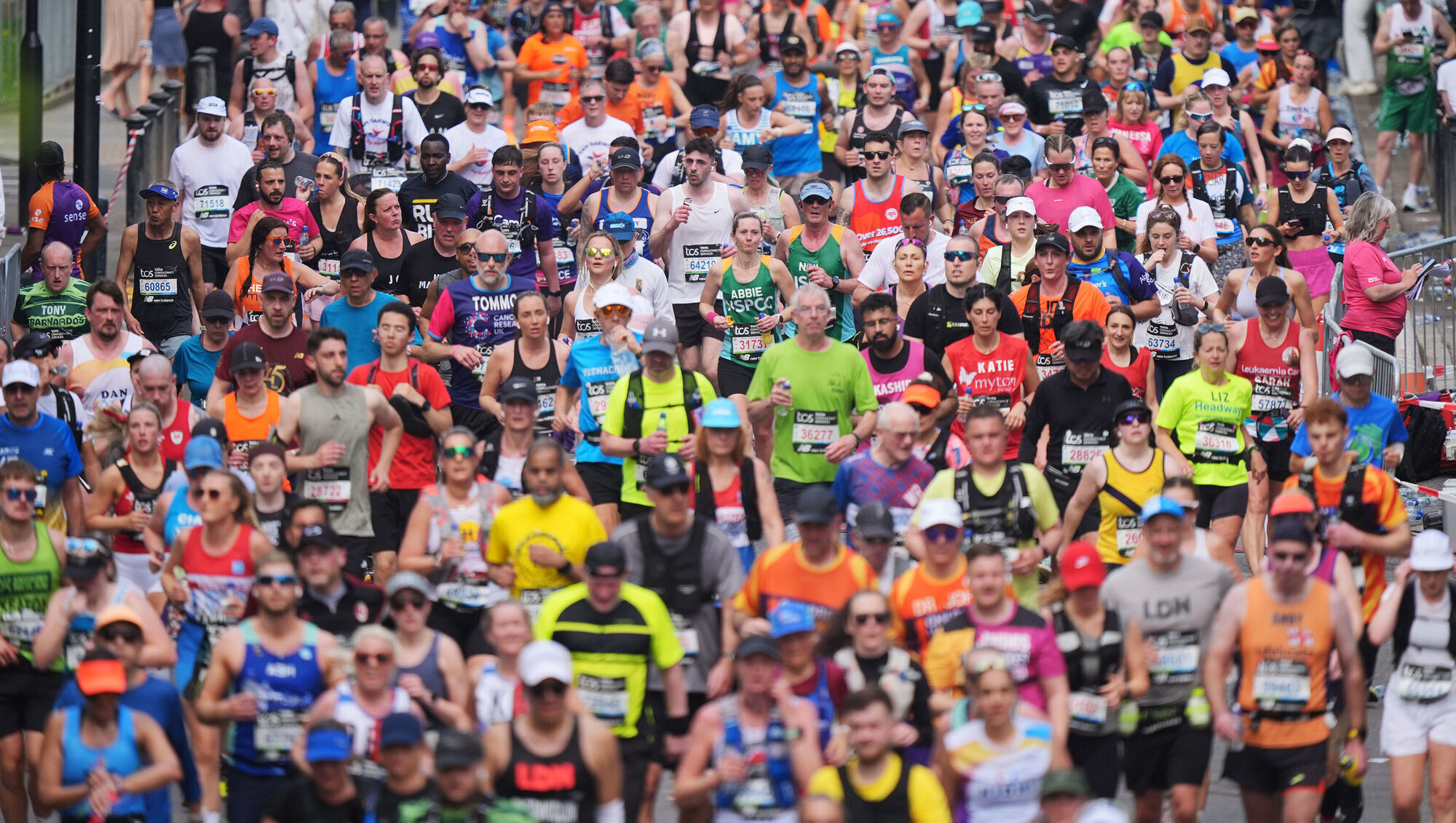
Last month, a world record 55,000 people took part in the London city marathon. And this coming weekend, the Cork City Marathon will be upon us. Around the world, road running has never been more popular. In April, Colin Sheridan travelled to Austria to hit his very own wall and try to find an elusive runner's high along the way
Colin Sheridan: How I found the real magic of running on the streets of Vienna

In April, a record 55,000 took part in the London Marathon. Picture: Yui Mok/PA Wire

About 10km from the end of the Vienna marathon I reached a sort of athletic Elysium. I’d fallen into step with a man I assumed to be a Spaniard. For over an hour, the two of us ran in symbiotic silence, our feet hitting the road in perfect unison. He was much shorter than I, but judging by his gait and weather-beaten face, I was confident he would carry me home. 

I don’t fully understand what running cadence is, but I guessed my new hermano had mucho of it. We were running around four minutes 23 seconds per kilometre (about seven minutes per mile) and had over three-quarters of the race run. If you took me back to January 1, when I was significantly less healthy and found five miles a struggle. I would never have believed this moment possible.

As the pair of us ran in step, I imagined what my new friend Santiago’s life was like. I decided he was born and raised in Seville, had attended university in Madrid before working in finance in London and New York. 

Aiden Kelly and Colin Sheridan before the Vienna Marathon in March.

An epiphany in his mid-30s saw him pivot into sustainable agriculture and rural development, designing an app with his childhood friend, Alejandro, that helps farmers predict rain on the arid plains of the Sierra Nevada. 

He now lives on a hill above Cadiz with his wife, Martha, and their dog, Poncho. They chose never to have children. This was his 12th marathon, and because of this fictional narrative I invented running along the cold and windy streets of Vienna, I trusted this stranger with my life.

An overactive imagination, while ordinarily a curse, is — I think — a gift for an amateur long-distance runner. When the mind wanders, as it invariably does on long and lonely runs, it’s better to let it go places of little or no consequence rather than have it perpetually ruminate on your own personal wellbeing. How are my legs? My lungs? Do I feel sick? Am I running in the right direction? Is that a poop brewing?

A colder, more analytical mind may have been too cynical to surrender themselves to such folly, but not me. Not today. This man, whom I did not know, had become my spiritual sherpa. 

At one stage, he glanced over his shoulder and gave me a thumbs up. It was enough for me to understand he was happy I was there. I reciprocated, moving past him a stride to break the wind. There was, after all, considerably more of me than there was of him. 

Six miles to go, and we were passing more people than were passing us. OK, I’ll say it — We were friggen cruising. Crossing the Danube for the final time, I thought about how I’d break it to my eldest brother that Santiago would be replacing him as my daughter's godfather.

“This is what you trained for,” I told myself, “And this feels good.” 

A close friend had signed me up for the Vienna marathon last December. I had run marathons before and had gone through phases of running which largely depended upon being around friends who ran. I was what you might call a “consensus runner” in that I am usually indiscriminate about distance or pace and just go with the flow. 

I am not an athlete, but a relatively athletic 44-year-old man who had rarely been injured, and so always felt compelled to run mostly because so many of my peers — due to broken bodies and brittle bones — no longer could. “Run because you can,” I told myself, and so I did. The problem was most of that running was at best sociable, and at worst, utterly aimless.

I understand talking about weight is a little insensitive, but for me to paint an exact picture of what type of "non-athlete athlete” I really am, I think it’s best to disclose specifics. 

Niamh O’Mahony, winner of the women’s 10km category of the 2024 Cork City Marathon surrounded by men on the starting line. Picture: Chani Anderson

A few weeks before Christmas I weighed 96kg (15 stone). I am 6ft 5in, so, according to most metrics, that’s a healthy (ish) weight. The truth is always in the margins, however, and though I may be tall, I am not broad, and while others may carry any extra pounds on broad shoulders and muscular chests, I have neither a chest nor a pair of shoulders. Ergo, any excess fat I have rests on my hips and tummy.

I mention this because 15 stone is a fair bit of timber to haul around any distance, never mind 26 miles. I know my body and figured once I had a programme tailored to my unique physique and abilities, I’d reach a more appropriate number. There was no reason to panic, I just had to follow the plan.

Which brings us to the plan. I had a target time: under three hours and 15 minutes. Based on past performance, injury profile and my bandwidth to train, I figured this was an attainable goal. My buddy who signed me up had run Barcelona last year using a tool called RunwithHal, a subscription-based adaptive training app designed by writer and runner Hal Higdon, that builds a personalised program based on all the details you’d expect — height, weight, lifestyle, previous performance etc. 

With neither of us members of running clubs, we figured if it worked once for my friend, it should work a second time for both of us. The key was accountability and consistency. Given the tempo of both our lives — five kids and two busy jobs between us — we understood we would do very little running together (in three months we ran three times), so the accountability factor was huge. You could easily lie to Hal, we told ourselves, but lying to each other was treason.

And so, like Richard Harris facing inevitable sobriety, we enjoyed Christmas and began our training on New Years Day, 95 days before the marathon, with an ugly and forgettable 8km run somewhere in Mayo. I’d love to say this was Ground Zero — the absolute worst I felt for three months — but I can assure you there were many of these days. So, so many. Some of the shortest, easiest runs were the worst. I am that kind of runner.

While our target times were similar, our programmes were different. We checked in with each other every day, and as the miles increased, so did my passion for the project. I began to feel healthier. I was drinking less alcohol, though I did not cut it out completely. I stayed away from the high stool as much as possible. 

On the wettest, most miserable February evenings, as the mirth and mischief spilled forth from giddy Galway pubs, I smugly ran past them, a tad judgmental perhaps, but increasingly content in my choices.

Winner of last year's Cork City Marathon Pawel Kosek with second place winner David Mansfield, Clonmel AC. Picture: Darragh Kane

My friend gave me two straightforward mantras I repeated to myself every day — “Progress, not perfection”, and “The magic is in the work”. 

I am a sometimes-cynical person, but these words mattered to me for very simple, yet personal reasons. I could not win this marathon. I could never achieve perfection in my preparation for it, and so personal progress was the goal, and — for once — I was the only arbiter of that. 

As for the magic? Well, I write for a living. It is a lonely, solitary endeavour. Inevitably, the most popular stuff you write is nowhere near your best. Your best work happens in the dark and quiet and will likely never be read by anybody. 

But — and it’s a beautiful but — when you hit upon it, when you think a thought and it finds itself alive upon a page even more exquisite than it was in your mind, well, you know that’s the fucking magic, and every painful mile run in your tortured head was worth it. 

The marathon felt the exact same. It was never about the day. Never about Vienna. Never about a personal best. It was about The Work. I will be forever thankful to my friend for holding me accountable. There were days when I knew he was more excited for me than he was for himself. Such friendship is rare among adults otherwise consumed in the understandably selfish pursuit of happiness.

I finished each session with the dreaded San Nicholas steps in Gemmayzee. All 199 of them, each one a penance.

About a month before the marathon, I travelled to Beirut for work. The trip came at a time when I was suffering from plantar fasciitis — a painful inflammation on the sole of your foot — which was severe enough to make me miss a few runs. 

The negative psychological impact was so pronounced it led me to a tipping point: if I ran and ran well in Beirut, I would go to Vienna with confidence. If the injury worsened and I missed more scheduled sessions, then, I quietly resolved that yes, of course I would travel and even tog out so not to let down my friend, but privately, my race would already be run. 

Over a busy week, a certain closing of the circle occurred. Beirut may not seem like an obvious running city — its dearth of public parks and perennial proximity to oblivion mean servicing the needs of its amateur athletes is never a priority — but it was in Beirut five years ago I fell in love with running. The reasons for that are many but suffice to say being back there while the country bled from another brutal violation of its being, put my own troubles in perspective.

Each morning, as the city stirred from its slumber, I’d run the corniche, the waterfront and its storied streets. As if understanding the insignificance of one runner's physical discomfort against the backdrop of people crippled by acute existential anxiety, the plantar fasciitis all but disappeared. 

I finished each session with the dreaded San Nicholas steps in Gemmayzee. All 199 of them, each one a penance. I’m not sure what aerobic benefit was garnered from this act of self-flagellation — but I'm certain the pilgrimage provided me with enough introspection to get over myself.

Three weeks later in Vienna, with two miles to go, I turned to look for Santiago, but he was gone. So too was whatever euphoria I felt from that elusive runner's high, which was replaced with a swift and devastating sense of emptiness. 

I had nothing left emotionally, and less than nothing physically. The streets suddenly seemed deserted. My body — which felt so strong for so long — felt like it was covered in shingles. I’m guessing none of this is news to anybody who has ever run a marathon. People talk about it, but, honestly, nothing prepares you for it. When the end came there was no joy, no kissing of the ground, and no sign of Santiago. In the moment I’m not sure what there was only an overwhelming sense of relief that it was all over. 

I reluctantly took my medal, wandering like a newborn foal through the various gates corralling finishers towards an eventual exit. From there, I decided against the overcrowded tram back toward my hotel, and, without a phone, money or as much as a blanket to cover my frozen body, got lost for the guts of an hour.

The following morning, I listened back to the voice note I sent myself 24 hours before, just before the race started as I warmed up alone on the street listening to Explosions in the Sky. That moment will be the moment I remember most about the race. Not the finish line. Not the rock band on mile 22. And not the girl holding the sign that said “KEEP RUNNING IF YOU THINK IM HOT” on mile 10. 

In it, I told myself that, regardless of what followed during the race, I had kept up my end of the bargain. I sought progress, not perfection, and I found it. That the magic was in the work, and, let me tell you, it absolutely was.

More in this section

Lunchtime News

Newsletter

Keep up with stories of the day with our lunchtime news wrap and important breaking news alerts.

Cookie Policy Privacy Policy Brand Safety FAQ Help Contact Us Terms and Conditions

© Examiner Echo Group Limited