From criminal to canine trainer: Meet the lifers who trained Ireland's first Parkinson's support dog
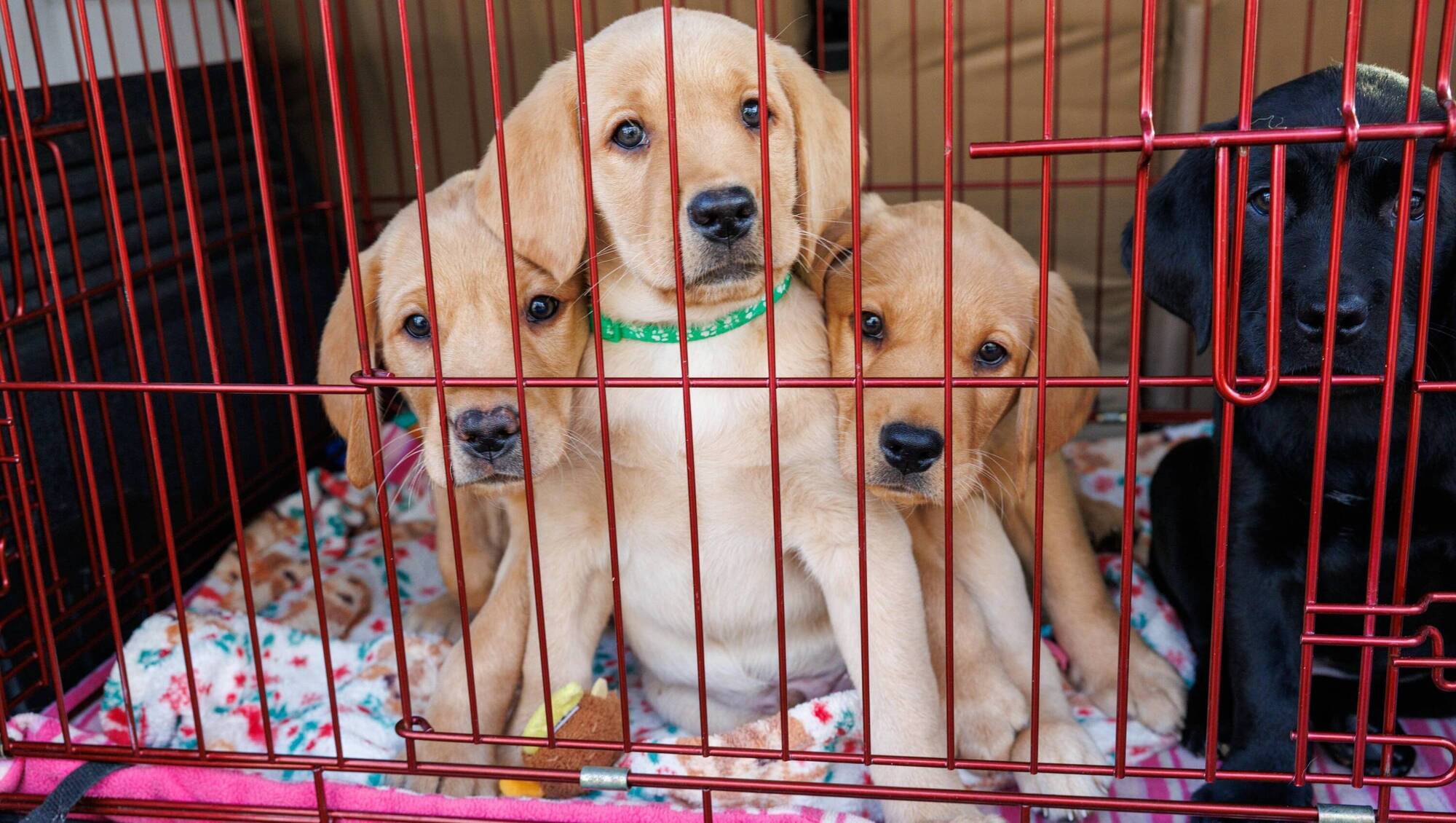
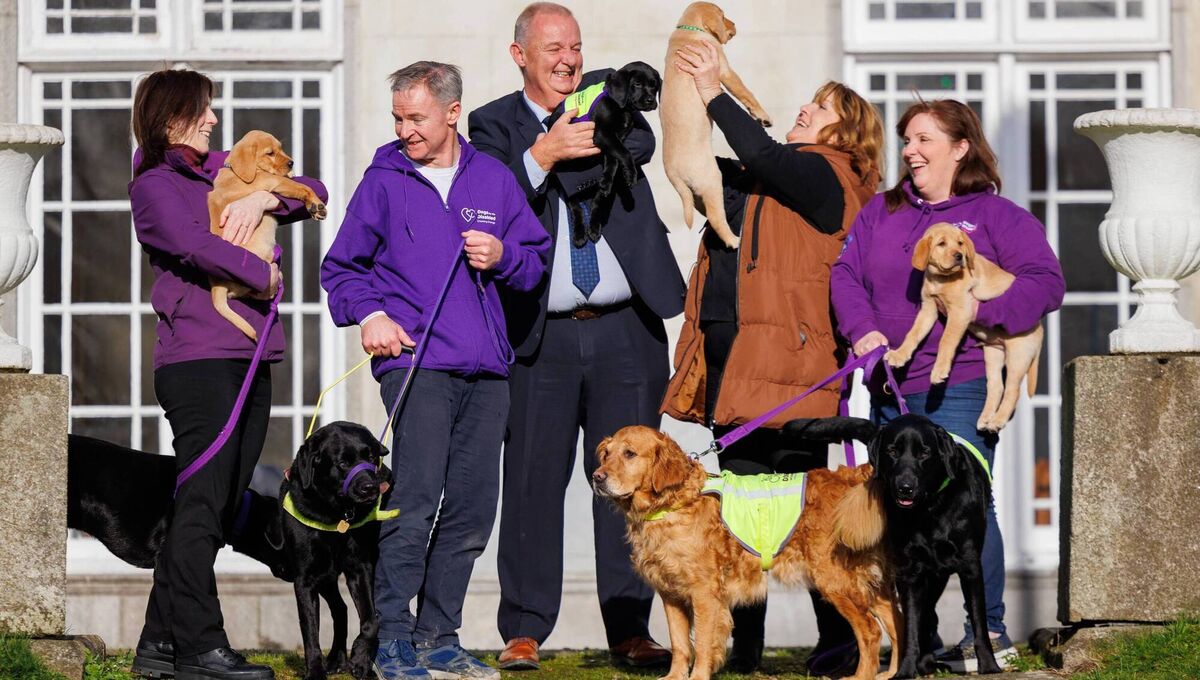
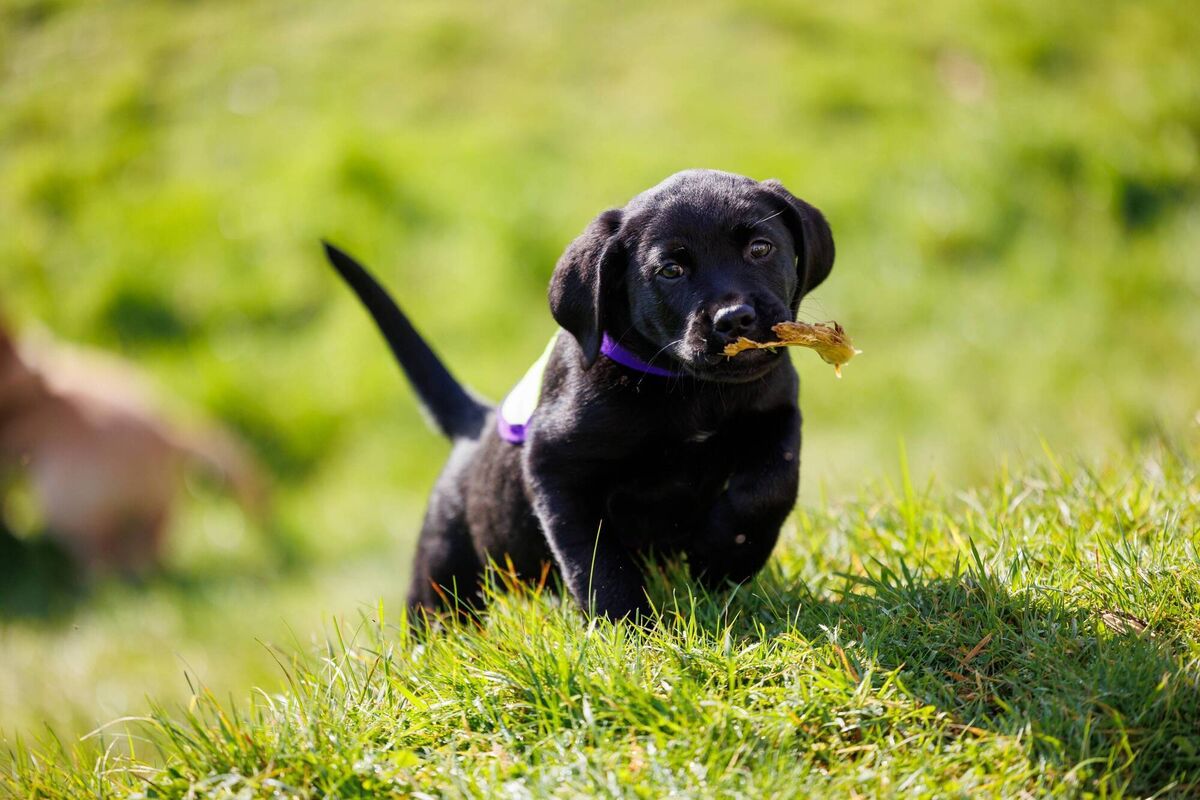
Dogs for the Disabled start training pups when they are in the litter. Picture: Jeff Harvey
Standing in the middle of the canteen at Shelton Abbey prison, tears welled up in John’s eyes as he saw the fruits of his unlikely journey from criminal to dog trainer finally come to pass.
Next to him was his fellow inmate Tom, who had also helped him train Leon — a magnificent two-year-old black Labrador — to become Ireland’s first Parkinson's support dog.
Leon spent much of the morning showcasing his skills alongside his owner Duncan Hughes, as his proud trainers watched on. Mr Hughes has Parkinson's and struggles to walk as a result. Leon has been trained to assist him.
While Leon's skill is remarkable in itself, what is even more extraordinary is the unlikely story of how two men who are serving life sentences managed to become experts in the highly specialised field of dog training.
It is the result of a successful collaboration between Shelton Abbey Open Centre along with the Irish Prison Service (IPS) and the Cork-based charity Dogs for the Disabled.
“I can’t really believe it,” said John as he follows Leon with his eyes around the canteen. “You hear the dogs are doing great because you always ask after them, but to see it before your eyes, that’s the first time I’ve seen this in real life, god there’s tears in my eyes, I’m delighted.”
“Me too, I’m welling up,” said Tom as he turned to wipe away a tear.
This successful partnership, which began in 2007, has seen up to 35 dogs trained every year for adults and children in the community with special needs.
John and Tom, who took part in an interview with the , were described as life sentence prisoners and we had agreed not to ask them about their convictions.
The reason so called ‘Lifers’ such as John and Tom are asked to work with the dogs, is because continuity and time is important for the animal.
“I get up with them at around 7am,” said John. “I let them out and they get a run and then I’ve to go to work in the stores and Tom takes over.
“I’m back then at 11am to take over and it goes from there, but they are with us 24 hours a day and sleep in the room with us.
“They never leave our side while they are here."
Tom added:
“It is great motivation, there are no days off, you’re all in, it helps you learn patience as well, especially when the dog first comes and they are not used to you and you are not used to them.”
“I came here two-and-a-half years ago, so we have had six dogs so far and Leon was one of them. We love these dogs so much, my first dog in here was Ollie and now to see Leon coming back with all his skills, it’s come full circle,” said John.
The dogs remain with Tom and John for up to eight weeks (depending on the dog) before returning to Cork where they are matched with a client, and both inmates are immediately given a new dog to start work with.
As both men sat together with their new canine trainees, Romeo and Sawyer — “as in Tom Sawyer,” said John — they described how the dogs “do more for us” during the process of training.
“It has taught us a lot about life skills, we have been here a long time,” said John. “We were only responsible for ourselves until then, but now you’ve to think about another living being.
“You are learning to put other people’s needs ahead of your own when you become a dog trainer, the dogs are being trained for the clients, and we are learning huge life lessons.
“The programme works really well, and it works both ways, it’s good for everyone.
“I always loved dogs, we had dogs at home, I wanted to get into this, before we were here (in a closed prison) I was given a day out and I saw the routine and the programme and I said 'can I do that?'.
“I hope in the future that I can work with dogs now that I have this training,” he said.
Tom said how he was doing a course before he went into prison and hoped to return to that course in the future “but I’ve been thinking lately that I would change that and do something with animals”.
As Leon came over to say hello, his owner Duncan Hughes described the value of the training his dog has received.
Mr Hughes has Parkinson’s disease and Dyskinesia, which is involuntary movements that can include twitches, jerks, twisting or writhing movements.
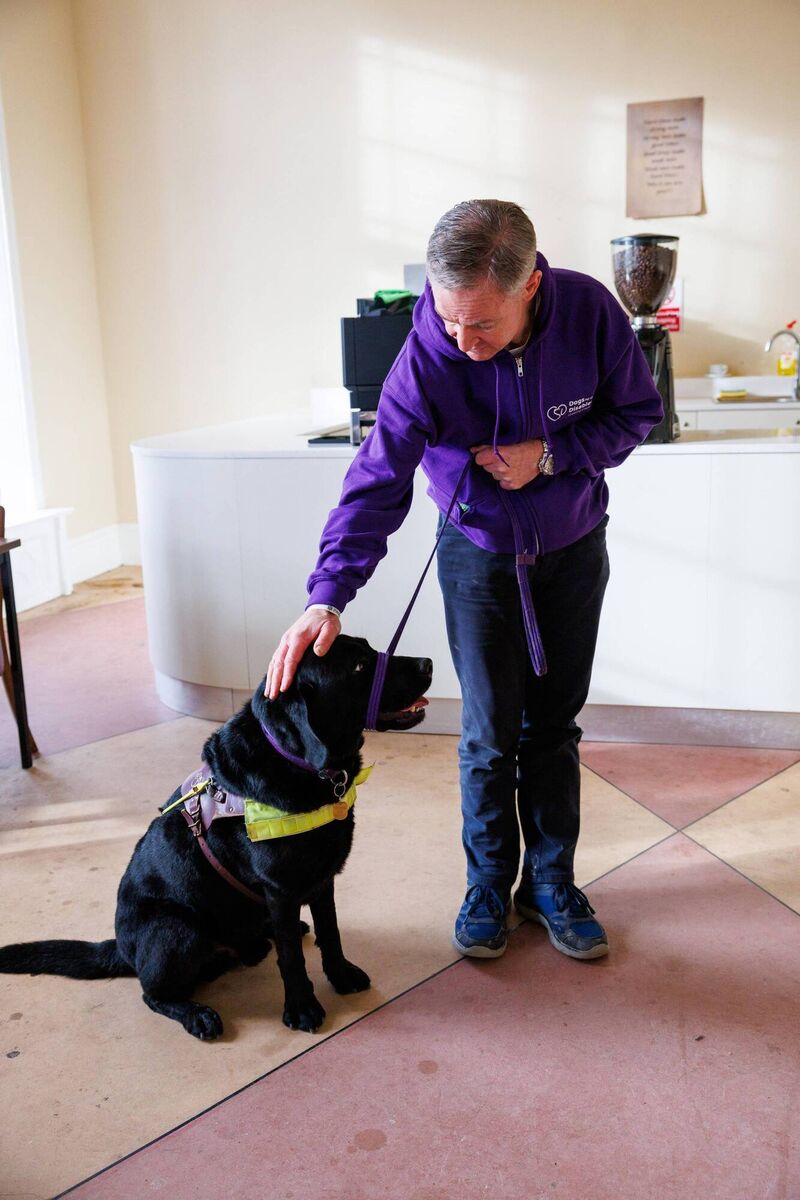
He demonstrated how when his legs freeze, Leon will come to his aid which helped him continue walking again. “So as you can see, he helps me, we have a routine” he said.
“Leon anchors me, so I am able to walk again. I walk up to 10.5km a day with Leon, and he helps me in other ways too that I wasn’t aware of.
“People wouldn’t look at me before he came, they presumed I was drunk or on drugs, now they look at us and smile because Leon is by my side.
“So he is fantastic for me, I can go out in public and manage my fitness as well.”
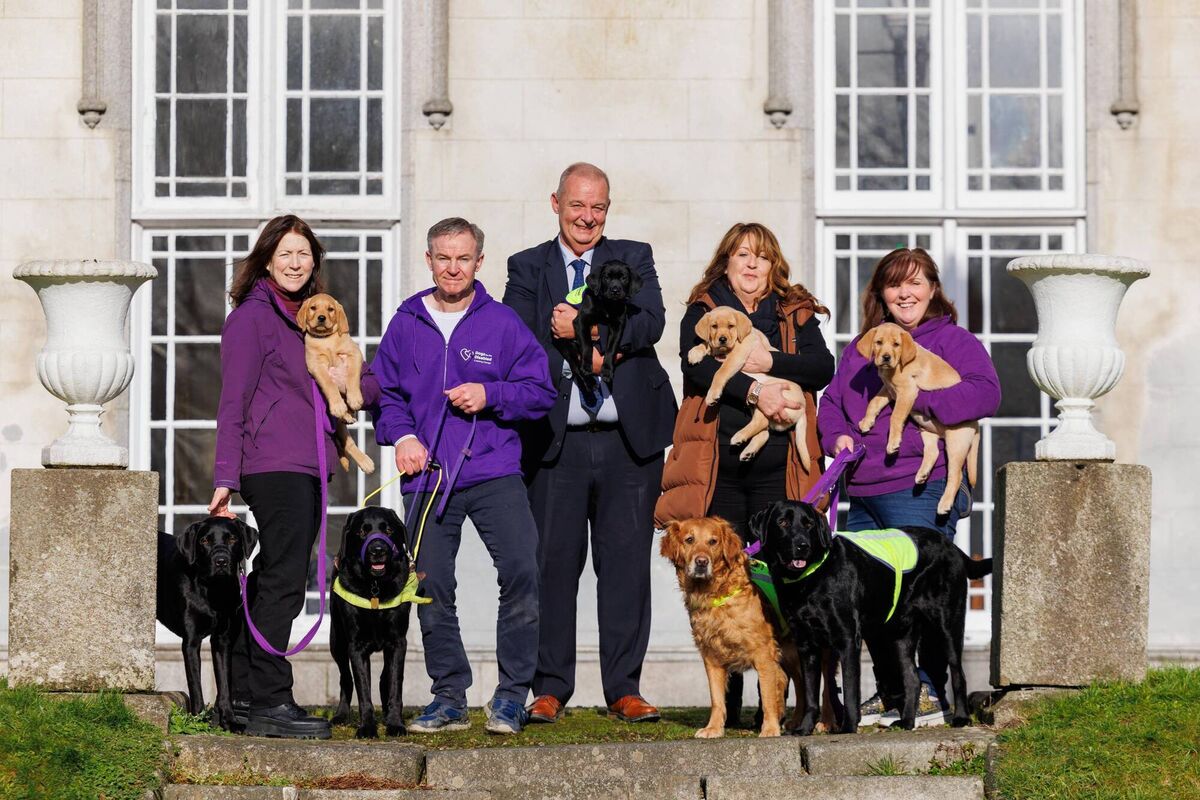
Earlier in the day, dog trainer with Dogs for the Disabled, Cathy Matthews, arrived with new Labrador pups and described how the process of their work begins.
“We mostly have repeat handlers,” she said. “That is why this system in Shelton Abbey works.
“They are in charge of the dogs 24 hours a day, seven days a week, and they provide welfare care and exercising and training and we have some super handlers.
“We start training them when they are in the litter. We start working with them at three days old, up to 10 weeks.
“They go to homes in Cork where they learned to socialize, and then at 18 months they come here if they need extra support because we do have some dogs who are a little immature and need extra care.
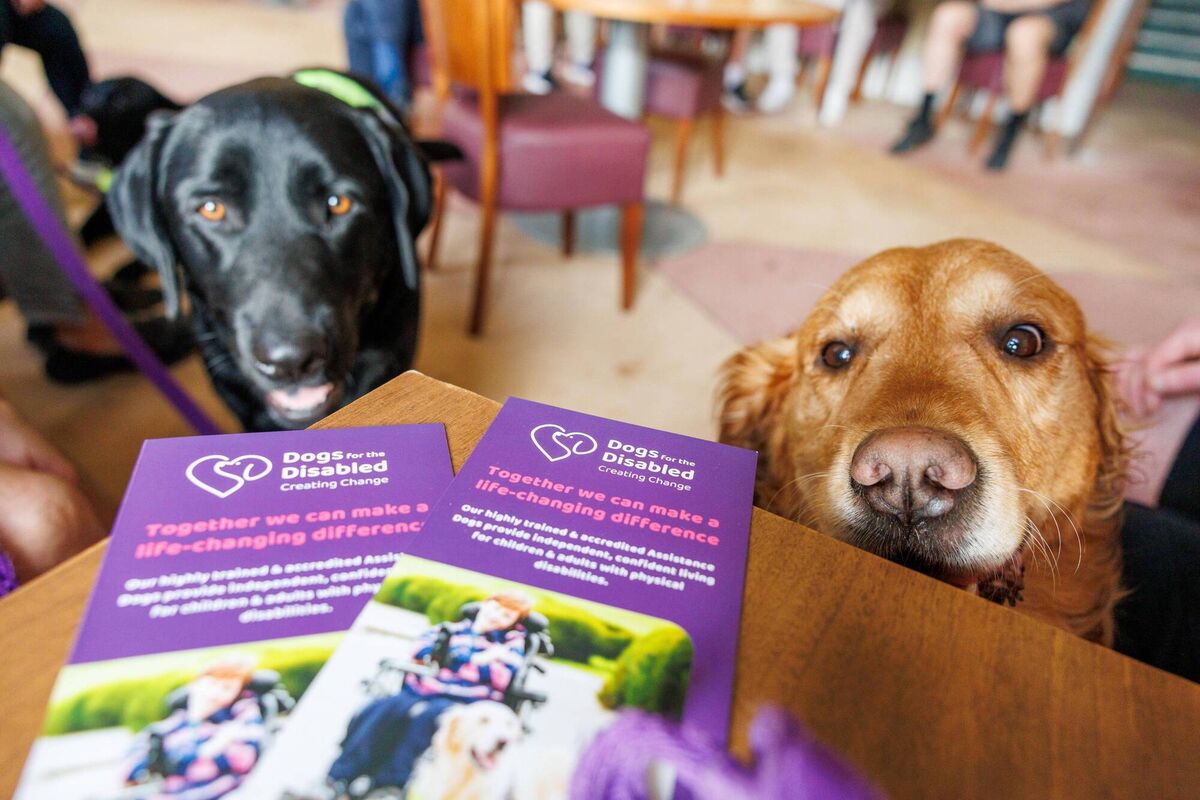
“We have a waiting list of around 100 people, and we are placing between 35 to 40 dogs with families every year. We are very successful at what we do.
“The handlers here help them get to the end of their journey and become incredible assistance dogs, it’s a win-win situation for us.
"It’s a one-to-one relationship and that’s why it works."
The charity started in Cork in 2007 with the aim of training specially bred dogs to assist disabled children and adults to live independent lives. Their dogs include Golden Retrievers, Labradors, and Standard Poodles for specific physical disabilities.
The volunteers also work in hospitals and community facilities and where their dogs don’t graduate to assistance dogs, they are trained as therapy dogs and for canine assisted intervention facility programmes.
Jennifer Dowley, CEO for Dogs for the Disabled, said their charity was approached by a previous governor at Shelton Abbey about the programme.
“It worked out really well,” she said. “It’s about the lads settling the dogs and helping them to mature and to teach obedience and basic tasks, so they can carry on being the assistance dogs they are destined to be.
“We have up to six prisoners working with dogs, and they have between three and six dogs.
“We are really trying to educate the dogs but also, it shows how your own behaviour imprints on the dog’s behaviour. So, we are all conscious of our behavior and we grow together.
“For Duncan having the dog walking straight, this regulates any sway in his body. Children with Cerebral Palsy it’s a slow steady pace, the dog helps get into the next step, to make them safer and less likely to fall.
“We match the dog with the needs of the client and as you can see it’s a long process but it works.”
However, all good things come to an end and when it comes to the time when the dogs have to leave Shelton Abbey, both prisoners said “it’s like losing a best friend”.
“You’re not yourself when they leave,” said John. “It’s like losing your best friend. They are there with you all the time, 24 hours a day and then they go.
“You can feel so lost. But that also teaches you to deal with your emotions and loss and grief. It’s a good thing because you have to deal with that."
Tom added: “The good thing is, when it comes to the dogs leaving, you get a new dog on that day.
“So, you immediately start again and Cathy who comes in once a week to help advance the training, she will always tell you how the dogs you had are doing.
“That’s why it’s great to see Leon today, we know how well it’s working, we knew anyway but now we have seen it for the first time."
With the number of abandoned dogs at an all-time high in the country at the moment, and litters of puppies being dumped, both John and Tom said that it is “breaking their hearts”.
“We stay in tune with what is going on outside, and all the dogs being mistreated.
“The officers here are brilliant, loads of them have rescue dogs. And look at the grounds here, it is a perfect place to train dogs and have animals, we have the farm here too.
“To hear about the mistreatment of dogs, that absolutely breaks my heart, I cannot believe how anyone would mistreat a dog, I can’t understand it, I love dogs."
Tom said: “They give you 100% no matter what way you’re feeling, the dog gives you everything they have.
“It opens your mind to so much. We didn’t have a clue how to train dogs, we are trained dog handlers. We will do a certified course in this and will qualify and be in a better place.
"There is loads of work outside with animals and that’s what we learned here. And all you have to do is look at Leon today and Duncan, its full circle and so worth it.”
CONNECT WITH US TODAY



Be the first to know the latest news and updates