'It was pure chaos and hell': Lebanese orphanage staff describe Israeli bombing
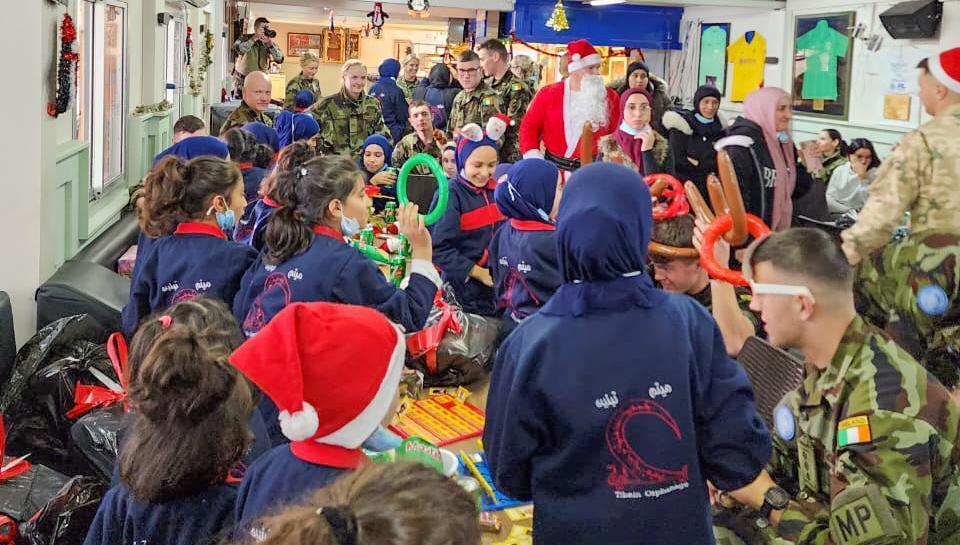
Girls from Tibnine orphanage attend a Christmas party in 2022 hosted by members of the Defence Forces. They are now being housed in a hotel in central Beirut after Israeli airstrikes in the area.
Picture: Ali Saad/Tibnine Orphanage
"It was pure chaos and hell — like a scene from a war movie."
These are the words of one of the members of staff of Tibnine Orphanage, Ali Saad, to describe what they and 40 children saw before their hasty evacuation from the southern Lebanon town earlier this week.
The former bank manager who worked as a humanitarian worker throughout decades of on-off conflict between Israel and his beloved Lebanon, told the over a barely audible phone line: “The children were absolutely terrified and were screaming and crying as bombs went off around the orphanage.”
The first anybody knew about the attacks that started in Tibnine on September 23 was at 10.30am. The sound of the engines of Israeli fighter jets suddenly roaring overhead were very quickly followed by the ear-splitting thundering crash bang of bombs exploding around the town.
In a very short space of time, houses were being blown up, and shards of shrapnel and other debris were raining down on surrounding streets and into neighbouring houses.
Along with this deadly debris, glass from the windows of houses in and around those bombed was flying in all directions, crippling anybody caught in or near the blasts.
“It was pure chaos and hell and it was terrifying,” Ali said. “Bombs were exploding all over the place, and there was debris flying, and huge plumes of smoke.
“We had no time to pack anything, and we all just left with the clothes we had on, and maybe a few personal belongings. There was no delay. We just left.”
As people left Tibnine, along with the bus containing the orphans, most set their animals free. One resident said, for example, that they keep pigeons and chickens.
"I had to set them free because I would not be around to look after them," they said. Others let also set free their horses, their donkeys and — if they had any — the few sheep they might have had.
Of the long bus trip to Beirut, which should have taken about two hours but lasted 17 hours, they added: “There were bombs going off all along the route, and thanks be to God that we were not hit.
“The sights that we saw along the way will stay with all of us forever. Luckily none of the convoys heading north along the main road were hit."
As well as the hundreds of thousands of people fleeing the area at the same time, there were also thousands of sheep and cattle also heading in the same direction. “All the shepherds could not just hop in a bus or car and drive away,” Ali said.
Ali, who has since found out that his home in Tibnine has suffered bomb damage, said: “They walked with their sheep and cattle all the way from the south to the north. They walked along the streets, heading to safer places with their animals.”
A journey that would normally take someone about eight hours to walk from the areas in and around At Atiri — near the Irish peacekeeping camp — to Tyre on the coast was taking three days.
The orphans' 105km journey took them past a junction off the motorway to Beirut that is near a coastal village where Private Sean Rooney was shot and killed in December 2022.
Pte Rooney and his colleagues, who were all serving with the United Nations Interim Force in Lebanon (UNIFIL) were just four minutes from the main highway into Beirut when their vehicle was fired on in the southern Lebanon village of Al-Aqibiya.
Trooper Shane Kearney, from Killeagh in Cork, sustained a serious head injury when the vehicle he was travelling in crashed and he is still undergoing ongoing medical treatment.
Pte Rooney was the first Irish peacekeeper to die in the line of fire since Private William “Billy” Kedian was killed by Israeli-backed militia on May 31, 1999.
Tibnine itself, and its orphanage in particular, has always held its place in the hearts of anybody who has served in Lebanon since the 1980s. Although the orphanage was built with the help and support of peacekeepers from the Netherlands in 1979, Irish peacekeepers have been heavily involved with it ever since.
This was especially the case when they were based in the town. During the 1980s, Irish soldiers supplied the orphanage with food and helped to equip and install bedrooms.
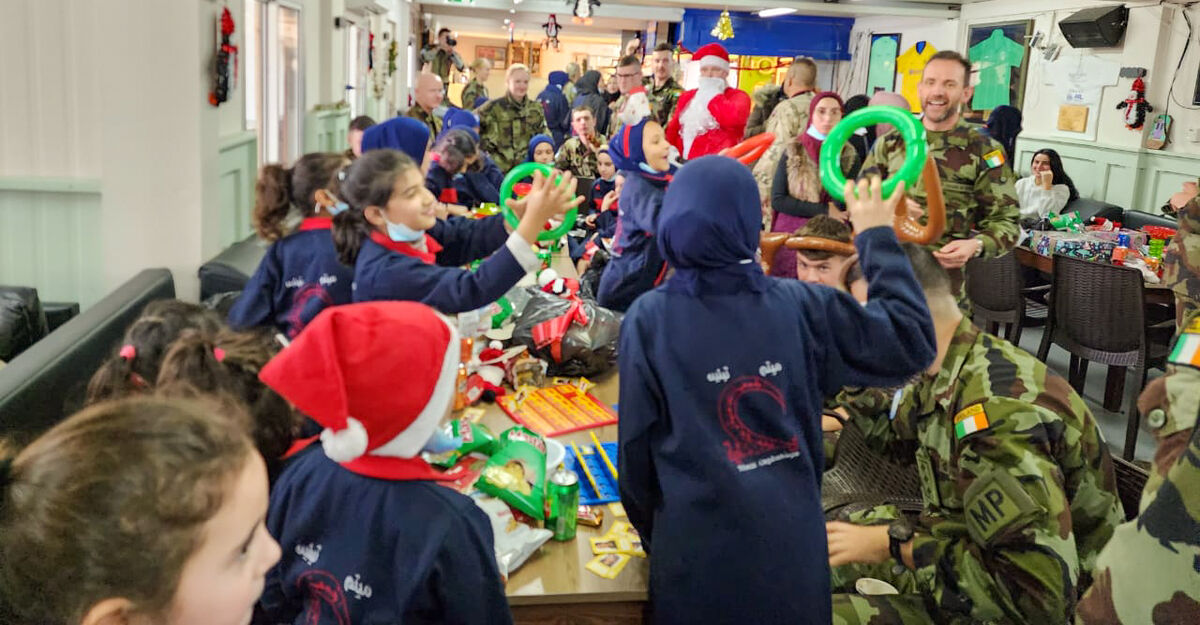
Irish medics serving with the UN have also done health checks on the children and as well as providing fresh water, while soldiers have also taught English to the children.
Funding for the orphanage comes from a variety of sources, including the Lebanese government, Defence Forces personnel serving with the UN, and donations from UN veterans. Funding usually comes via Irish Aid, Ireland’s development co-operation programme, and is for so-called 'micro projects'.
Funds supplied by Irish Aid and Defence Forces personnel have supplied buses over the years, as well as a kitchen and a playground.
Irish soldiers came into their own during the so-called July War of 2006, when Irish peacekeepers helped shield and protect orphans during what turned out to be a 34-day armed conflict between Hezbollah paramilitaries and Israeli forces.
It had started when three Israeli soldiers were killed in a Hezbollah ambush on the border between the two countries that led to air strikes and then a ground invasion of southern Lebanon.
Although a UN-brokered ceasefire came into effect in September 2006, the July War had left up to 1,300 Lebanese dead, and some 165 Israelis dead.
Micheál Martin has repeatedly met children and staff from the orphanage when he has visited in his capacity as Taoiseach or Tánaiste and Minister of Defence in the last two years.
Fast forward to now, and while the Irish Defence Forces are ready to provide humanitarian assistance, the movement of UNIFIL soldiers is currently severely restricted. Added to that, Irish peacekeepers are no longer operating in Tibnine.
So far the attacks by the Israelis have led to around 37 casualties and three dead in the areas directly around Tibnine Hospital. The victims were all hit when properties near the hospital were bombed.
The town’s Lebanese Red Cross depot managed to escape damage when bombs exploded beside its perimeter walls, and the small yard where they park their vehicles.
Asked why Tibnine has been targeted by the Israeli air strikes, an Israeli Defence Forces spokesperson told the : “On Wednesday, numerous projectiles were fired from Tibnine in southern Lebanon toward Wadi Ara.
“Shortly afterward, the Israeli Air Force struck the launcher from which the projectiles were fired. Additionally, the Israeli Air Force struck dozens of weapons storage facilities belonging to the Hezbollah terrorist organisation in southern Lebanon.”
For its part, the Defence Forces say that Irish Peacekeepers in southern Lebanon are “positioned, willing and ready” to assist the local community in line with its mandate from the UN.
“Irish troops have a long and close relationship with the local communities in South Lebanon and will not be found wanting in supporting any UNIFIL humanitarian assistance program,” the Defence Forces said. “This humanitarian assistance will be co-ordinated at a UNIFIL level as dictated by the (UN) mandate.”
It also points out that Tibnine is in the Malaysian Peacekeeping Battalion (MALBATT) Area of Operations — run by the Malaysian Army — and said that “even though the Irish have a long history of service in this area, it is not currently our Area of Operations”.
It also pointed out that it was not asked to help in the evacuation of the orphanage.
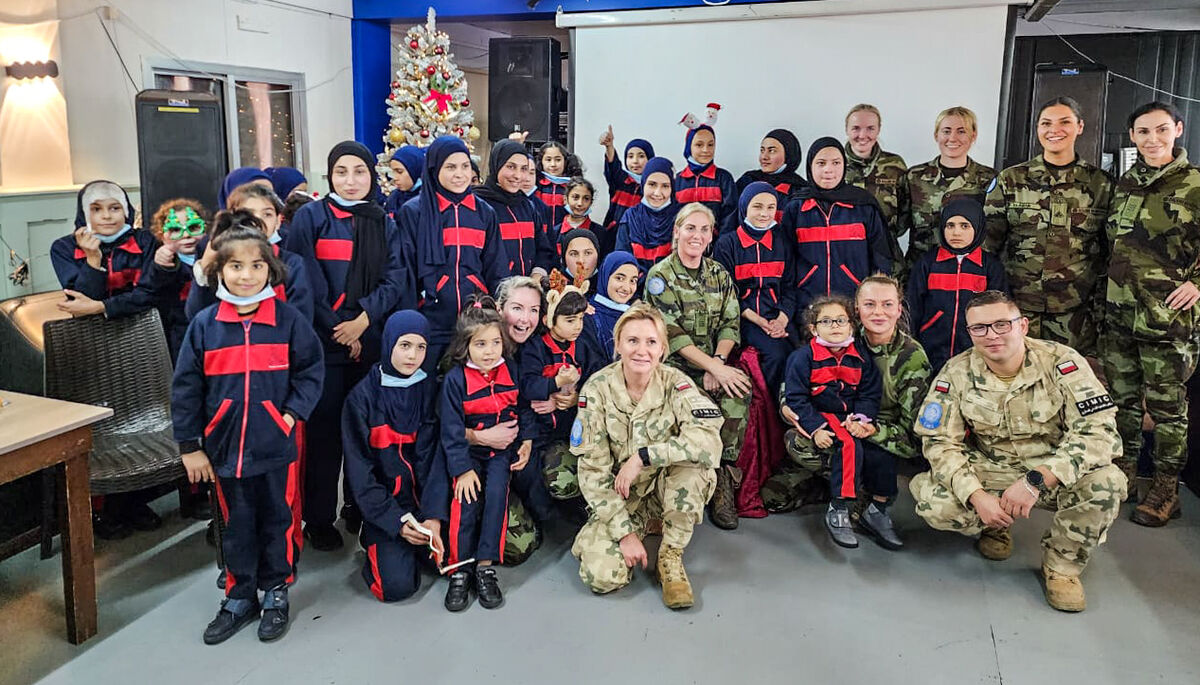
For now, the orphans are being housed in a hotel in central Beirut. Quite what fate holds for them is anybody’s guess.
“We have no idea when we will be returning to southern Lebanon,” Ali said. “There is a heavy war in south Lebanon, it is not just an exchange of fire. It is a heavy war, and we do not know what the future holds. We have no choice but to live day-to-day and hope for the best.
"Given that we left the orphanage with nothing, we are hoping that, like after the 2006 war, Irish veterans will be able to help us financially with the costs on the orphanage."

CONNECT WITH US TODAY



Be the first to know the latest news and updates