'I was very angry': Lack of interpreters leaves Cork deaf community waiting to be heard

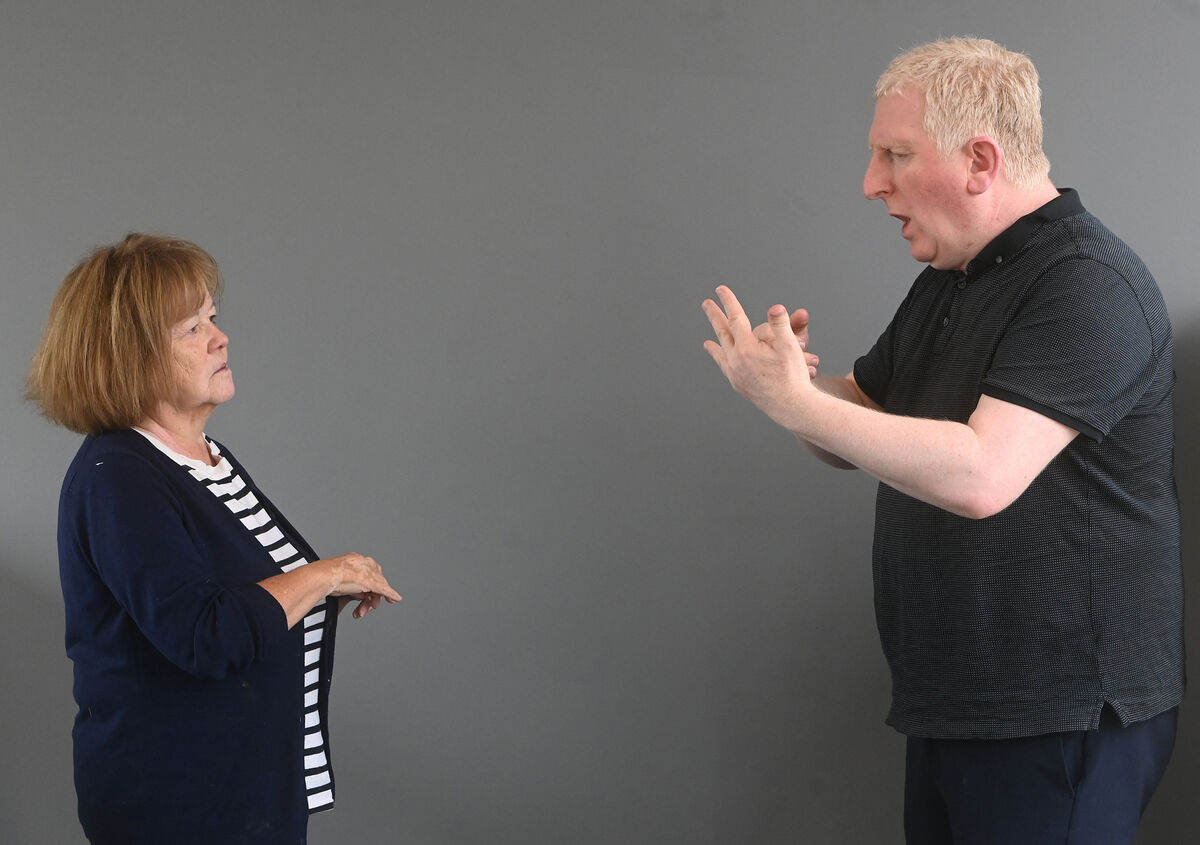
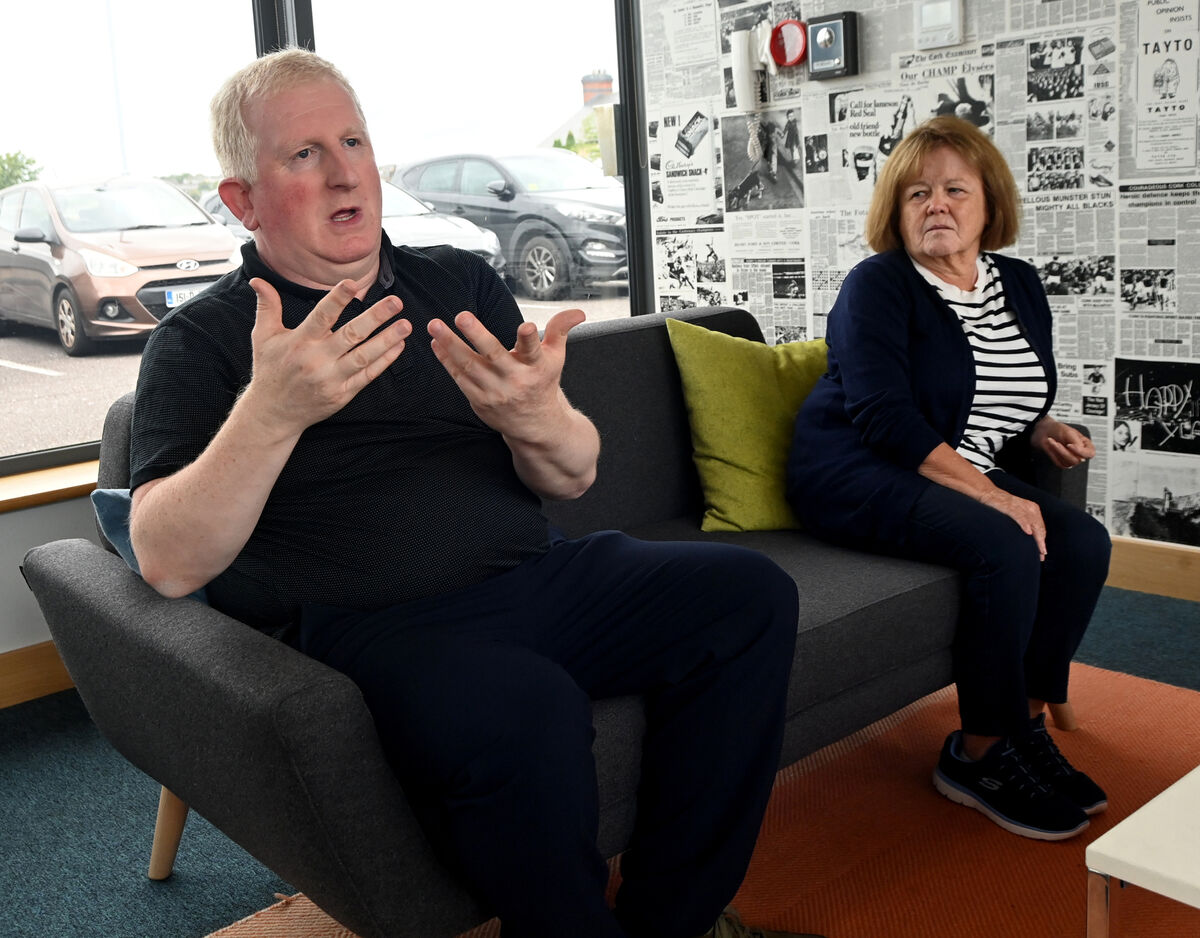
Graham O'Shea (left) and Breda Brosnan of Cork Deaf Club. They say there is an acute shortage of interpreters in Cork, which is compounding existing complications. Picture: Larry Cummins
A deaf woman from Cork has described the frustration of being forced to rely on pen and paper to communicate her medical details after a sign language interpreter failed to show up on time for a hospital appointment.
Breda Brosnan said she is going public with an incident as it is just another example of the gaps that exist when members of the deaf community try to access medical care.
Ms Brosnan and secretary of Cork Deaf Club, Graham O’Shea, said there is an acute shortage of interpreters in Cork, which is compounding existing complications. Both say they have experienced these challenges firsthand in incidents they described as “extremely frustrating.”
Ms Brosnan had to give vital medical information to a nurse by using pen and paper ahead of her operation after the interpreter failed to show up in time for the hospital appointment.
“I was very angry and frustrated in myself,” Ms Brosnan told the . “However my health came first. This was preparation for surgery so it was very important. I had to go ahead with the appointment.
"The nurse was also very angry because she had booked her. The interpreters are always booked through the hospital. This interpreter rang the hospital and said that she wouldn’t be there until 1pm even though the appointment was at midday.
"The nurse and I wrote notes to each other and luckily I understood what she said. However, if I hadn’t been dealing with that particular nurse things might have been very different. It’s so difficult to get a sign language interpreter. In the meantime it’s hard to know what to do when our hospital appointments get postponed.”
Meanwhile, the lack of a male interpreter in the Cork area has raised significant challenges for Graham O’Shea. “A woman has the right to pick a female interpreter,” said Mr O'Shea.
“It might be a female issue in the hospital but sometimes a male interpreter could be brought in. If this is a female issue then that’s not appropriate. I will always choose a male interpreter for any issues that are personal.
"If it’s something like my eyes or ears that’s fine but it’s important I have a male interpreter for a specific private area of health. There are an awful lot of female interpreters in comparison to male interpreters. If I need this service it means having someone come all the way from Dublin.”
He explained why accessing a male interpreter is so important to him.
“For a male issue this is very important. In my case, I can’t have a woman come into the room. I wouldn’t be able to sign. I would freeze because of the embarrassment of talking about something so private.
"The presence of a female interpreter would make me very uncomfortable when you consider the private medical issues men have. Having the advantage of a male interpreter would make the conversation with the doctor much smoother.
"I have the right to pick a male interpreter but whether I get one or not depends on the specific location. If I look for a male interpreter there is a chance the date of my appointment will have to be postponed until I get what I’m looking for.”
Mr O'Shea explained that many decisions regarding interpreters come down to funding.
“Much of the time I am being told the same thing, that it would be too expensive to bring an interpreter down all the way from Dublin. This is a health issue yet we are constantly arguing with the health service and trying to explain that funding is there.
"You find yourself constantly challenging beliefs. Sometimes I’ll ask for the person in charge because they are the ones who will eventually approve it. It’s more administration where the problem lies.
"I can remember becoming really angry one time because I asked for my preference of interpreter who was in Dublin. They told me they could only access an interpreter who was in Clare or Galway because this was cheaper. The expense would have been the same but it was like they didn’t understand the geography.”
He puts some of the problems down to a lack of knowledge.
“You would expect that someone would understand this but we are constantly trying to re-educate people and make them aware of these issues. Very little change has happened. Attitudes are great but no matter how much education we do it will always depend on funding.”
He emphasised that interpreting in a hospital requires specialist skills.
“It depends on what the interpreter's skills are. Some will have strengths and weaknesses in the areas that they work in. One interpreter might be very strong in hospital work but can’t do court. Hospital settings might not be their strength.
"The assumption is that interpreters are skilled in working in all areas but that just can’t be true.
Mr O'Shea said that members of the deaf community can find the complaints process challenging.
“I can remember a hospital telling me 10 years ago that they never had a complaint from a deaf person. Deaf people never complained about anything. However, that wasn’t the truth. We were angry but we didn’t complain because of our literacy issues.
"There is a problem with literacy in the deaf community. A deaf person can only complain if they have the support. If we were able to do this in sign language we would be well able to complain but when it comes to literacy we don’t have the confidence and that’s very frustrating.”
He stressed that there is no substitute for face-to-face interpretation, including remote options.
“Sometimes the interpreter will be live on screen. They will have a remote interpreter who is at home and that can be very poor. Sometimes you might have poor wi-fi as hospitals often do.
"In these situations you are at a greater risk of misunderstanding what is being said, whereas if an interpreter is there face-to-face between the doctor and the client that is a much smoother process. Remote interpreting carries great risks. In a hospital you need to be face-to-face.“

CONNECT WITH US TODAY



Be the first to know the latest news and updates