'I could be homeless': The realities of life in a houseboat and the fear of proposed mooring hikes
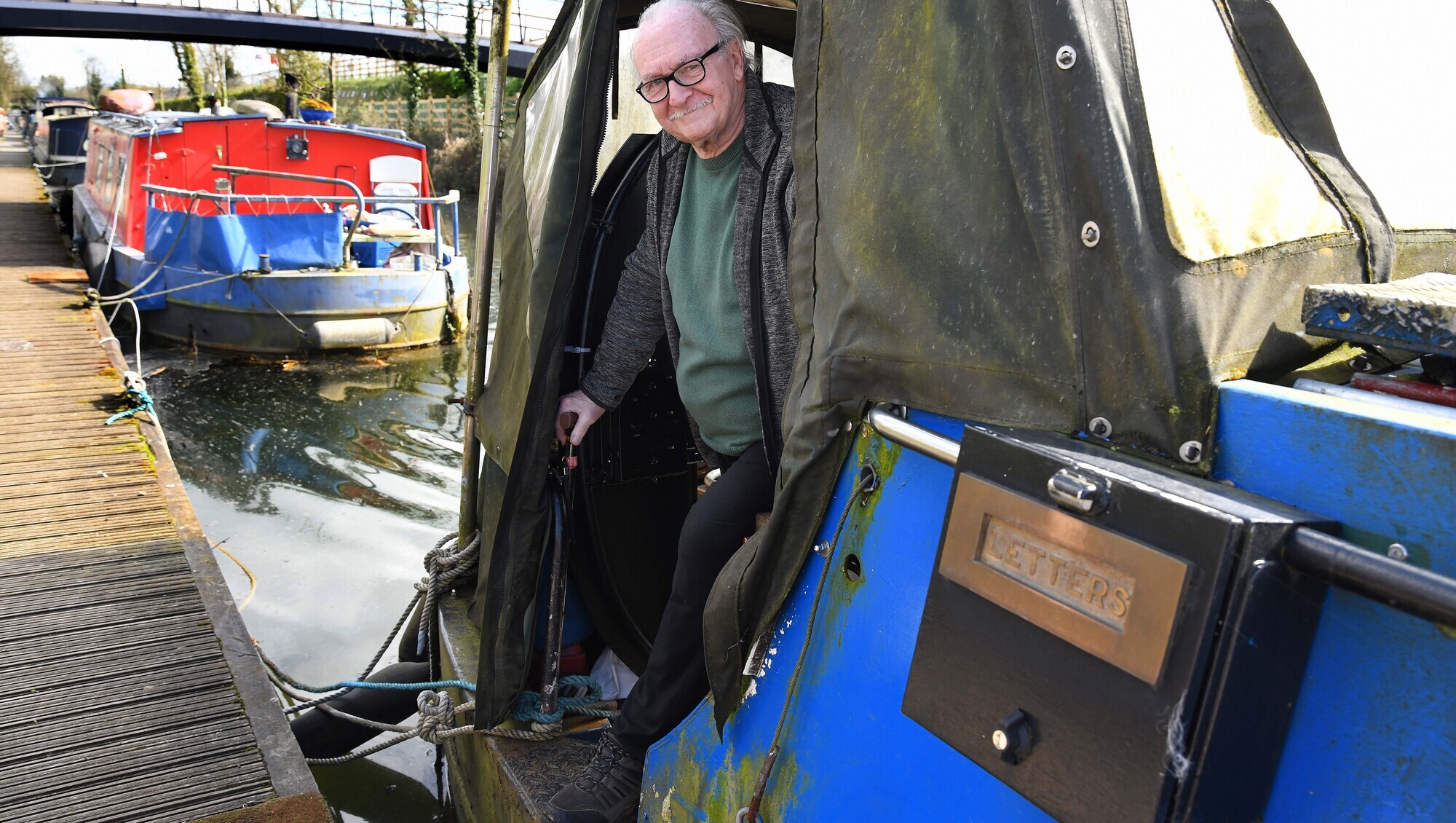
Ray Ledder on his houseboat near Sallins, Co KIldare. Photo: Moya Nolan
At 78, Ray Ledder thought his days of making waves were long over. After a career spent working on ships, he’s been enjoying his golden years on board his beloved Celtic Count barge in the rustic village of Sallins, Co Kildare, for the past 24 years or so.
Or at least he had been.
These days however, he and many of his elderly neighbours in the 10 houseboats nearby are facing the daunting possibility they will be forced to move from a community they’ve called home for decades as they cannot afford to pay new mooring permit fees proposed by the inland waterways governing body, Waterways Ireland (WI).
If approved by Housing Minister Darragh O’Brien, they will push Ray’s mooring permit from €280 to €2,000 annually.
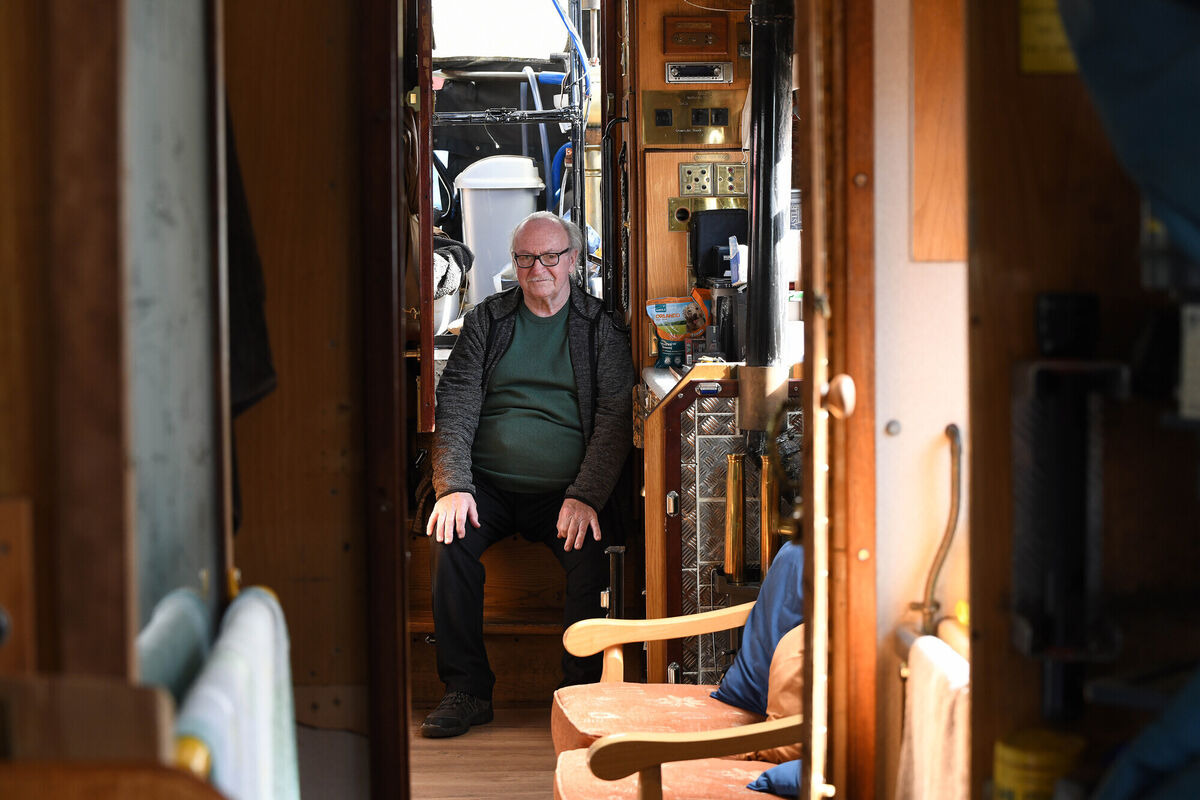
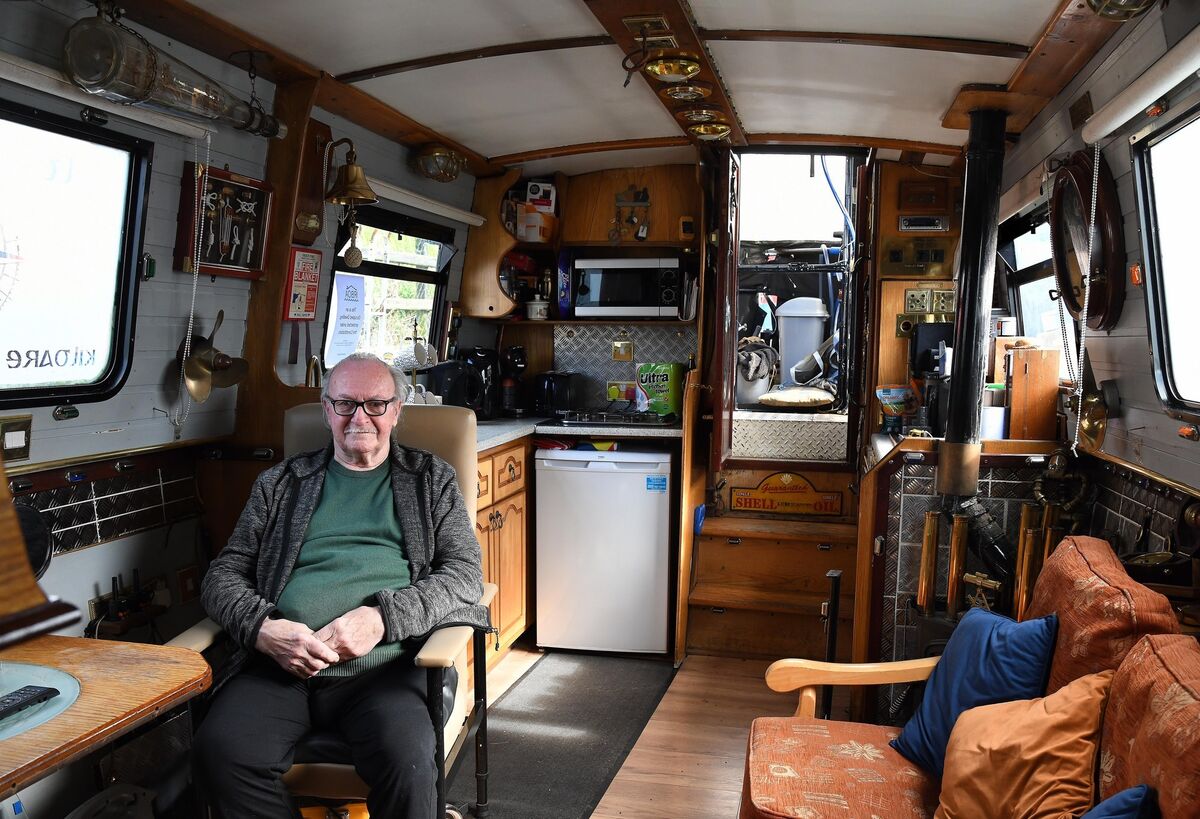
“It doesn’t seem to make any sense. There’s no logic attached to it as far as I can see. How do you go from €280 a year to €2,000? That’s a big jump,” he tells the inside his floating cave of twinkling brass rudders, gleaming light switches, old clocks and rope knots — “souvenirs of other days.”
“Of course I’m worried, I’m a pensioner. I was unexpectedly taken ill 18 months ago and had my main colon removed. I couldn’t afford that,” he says. He is “prepared for any kind of reasonable increase. But certainly not what they're suggesting at the moment.”
The cross-border authority is currently redrafting outdated bylaws for the Royal and Grand Canals and Shannon waterways, last updated in 1986. It is now reviewing the 850 submissions received under Phase 2 of the public consultation, and will make any changes before preparing a post-consultation report for the Housing Minister over the next three months.
Among many worthy proposals are improvements to fire safety, pollution and navigation bylaws for both recreational and houseboats. But it’s their proposed mooring permit price increases for urban, suburban and rural jetties that have Ray and the majority of the 350 ‘liveaboards’ on 270 boats up in arms.
In Dublin, the proposed fees begin at €4,000 rising to €7,500 at Grand Canal Dock. For those who can afford the huge price hikes, the thinking is if their neighbour can’t afford a permit, how could they in good conscience buy one?
At an Oireachtas Housing Committee meeting on January 30, members were scathing in their views on the proposed price hikes. Senator Victor Boyhan called the figures — proposed by an independent report prepared by KPMG — “outrageous” and “a crisis” for OAPs and other vulnerable members of the liveaboard community.
Jerry Gleeson of the Irish Residential Boat Owners Association asked the committee to recommend that Minister O’Brien reject the proposed bylaws, claiming they would lead to homelessness for traditional canal boat dwellers, break up established communities and criminalise law-abiding citizens.
Under the proposals, anyone who is moored at a jetty without having bought a new permit will be fined €150 on the spot and can only appeal this in the local District Court because there is no independent appeals process against a WI fine outside of legal proceedings. And a boat without a permit may be removed by WI.
When asked what would happen to people who cannot pay, WI Operations Controller Éanna Rowe replied that “alternative sites will be offered to people who do not avail of a serviced houseboat mooring”. A different site is simply not a viable option for Ray and others like him.
“They’re suggesting another mooring on a green bank somewhere — I couldn’t get off the boat on a green bank. I walk with a stick and the balance isn’t good. I’d be stuck on the boat. Plus, on a green bank, you don’t have access to water, which obviously is a human right. I could be homeless,” he says.
Social Democrats Deputy Cian O’Callaghan said that for someone who had ties to their community, “Waterways Ireland’s proposal is eviction,” something Éanna Rowe refuted. “We will not be evicting anybody… We are not a landlord,” he insisted.
Yet therein lies the conundrum. The body has a monopoly on moorings.
“They’re the ones who say if you’re entitled to stay or move. They control everything and the jetty. They’re in charge. I guess that makes them the landlords,” says Ray.
Established in the aftermath of the Good Friday Agreement in 1999, Waterways Ireland’s remit is to maintain, manage, develop and promote almost 1,100kms of inland navigable waterways and 600kms of greenways and blueways which generate an impressive €600m a year for Ireland Inc.
Yet there is a notable caveat at the end of their mission statement: “…principally for recreational purposes.” While it purports to “welcome and support” the people who actually live on our waters, one wonders if its overarching ethos sidelines them instead.
“The only option if you do not get these services is it will give you some place beside a field and a riverbank that nobody uses and you can live there,” summed up Sinn Féin TD Pat Buckley.
What specific proposal had WI for residents who will struggle to pay, wondered Green Party Senator Vincent P Martin. Éanna Rowe answered with a question of his own: “My question is around how people can demonstrate their inability to pay. Is the committee suggesting we do a means test?”
Senator Martin’s response was cutting: “Waterways Ireland is bringing in the charge, not us.”
In summer the swans of Sallins call for their lunch every day. In winter they waddle past on frozen ice, white on white. “It’s very picturesque,” Ray says nodding towards the water outside, “to wake up in the morning and see that. I had a mink looking in the window the other day.”
That’s the best part of living on a boat, “the wildlife, the companionship, the friends.”
“The water has been my friend. From the time I was a grasshopper, I’d been working on ships. I wouldn’t know how to be anywhere else. I couldn’t sleep in a house now because the bed doesn’t move. I'm okay. Happy. If they would just leave me alone,” he adds.
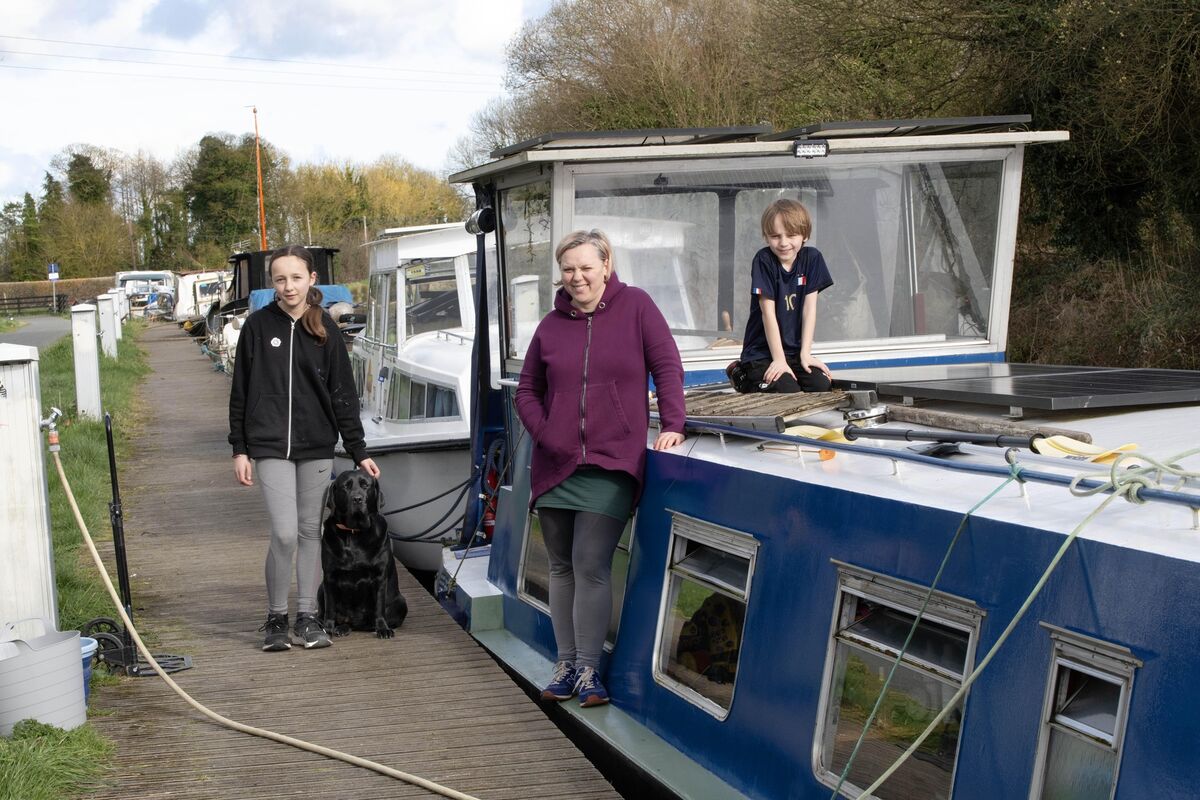
Ireland is now “more home than anywhere else” for Polish natives Marta and Michal Golubowska who arrived here over 20 years ago. In 2015, when their daughter was four and their son was just three months old, their landlord served them notice to quit.
They couldn’t find anywhere affordable to rent or buy. The banks refused them a mortgage because Marta is a sculptor. They knew if they wanted to provide a stable home for their growing family, it was time to try something different.
“I just knew from that point I never wanted to be in that situation ever again, where someone else could just decide you had to move,” she tells the from her 56ft long 40-year-old French barge, tucked away in rural Lowtown on the Grand Canal.
As fate would have it, she met a liveaboard who invited them over for tea and her eyes were opened. Here was the possibility of an affordable, independent home of their own. “I saw that you can do it. It's possible. It's not that much of a sacrifice,” she says.
Today, Marta’s family is completely self-reliant thanks to four solar panels and a wind turbine. By the time they’ve finished paying their Credit Union loan, their houseboat will have cost them the price of a small studio apartment in Dublin — a willing sacrifice “we had to make to have somewhere of our own.”
They only use a fridge in summer — the outdoors is fridge enough in winter — and decided they can live without a freezer. Like Jennifer and Ray, their six neighbours and those in the nearby marina form a tight-knit community, supporting each other through the everyday challenges of life on a boat.
“We were even surprised by how people got together for this,” Marta says, referring to their campaign against the proposed bylaws. While Marta can absorb the proposed increase in their annual houseboat permit from €126 to €500, she knows for certain there are others who can’t.
“If someone is over 70 years old, living at the serviced mooring for the last 25 years — how will they move them to unserviced moorings and will it be safe for them?”
Her biggest concern is the “lack of clarity” surrounding the annual houseboat permit and licencing changes and how that will play out in reality for her family.
“What's going to happen next year if they refuse me a licence? What am I going to do? Are we going to be moved?” she asks. “I put a lot of effort to put my children into local schools. You know how hard it is to get the kids into a secondary school?” she adds, her frustration clear.
Common among all the liveaboards is recognition that the bylaws need upgrading, especially the annual permits which have not been rising in line with inflation over the preceding four decades. “But we can't be a generation that has to absorb all their increases,” says Marta.
“It’s like the way Dublin was about 50 years ago,” new mother Jennifer Fitzpatrick says of the liveaboard community on the Grand Canal at Confrey, Kildare.
What started out as a two-year plan has turned into five years and counting for the child psychologist, her fiancé Chris Barnard (38) and nine-month-old daughter Fiadh.
“Everyone just watches out for each other. Like if someone’s going to the shop. If you run out of milk — you text. It's really supportive,” she told the .
The value of their community spirit was brought home to them recently. The starter motor on their engine broke down. They just texted their group and someone came down and had a look at it.
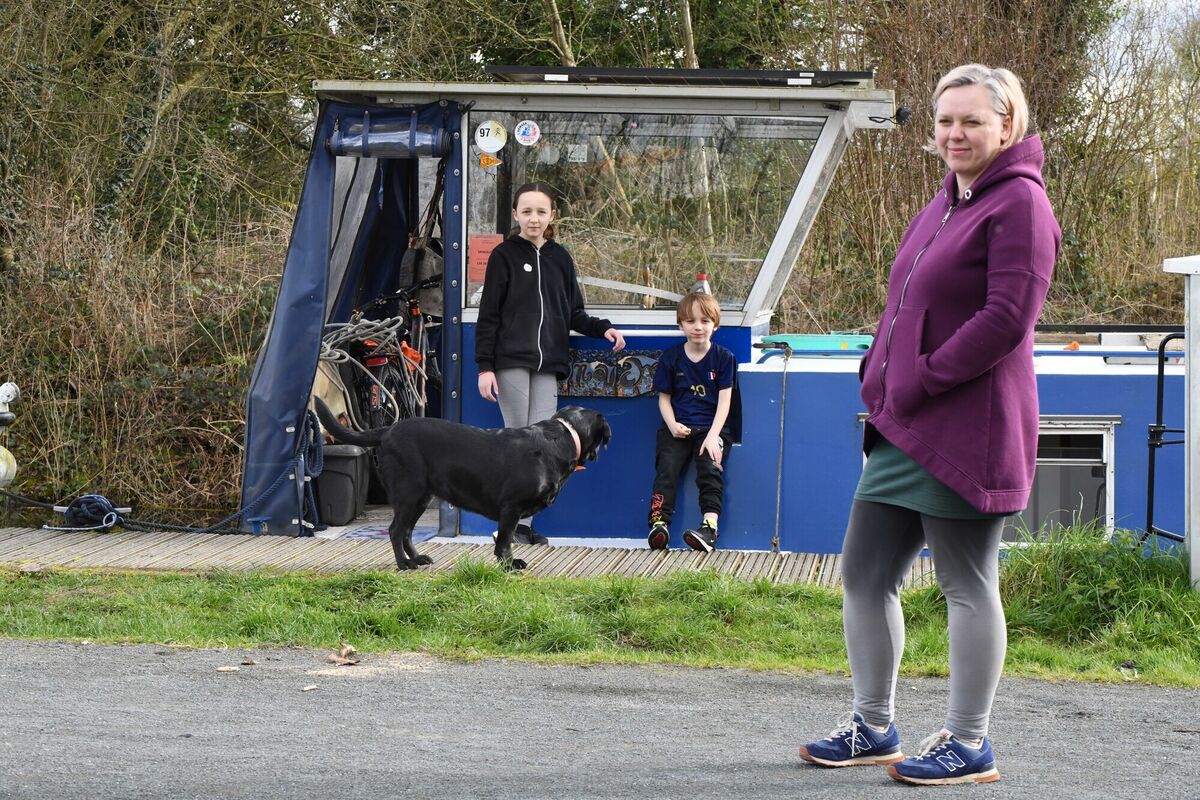
“They’re really, really supportive. We’ve retired people, we've professionals, we’ve families, we've a real mix of people. I don't know any other community in Ireland where you get that, to be honest,” she says.
Their decision to live on a boat was prompted by the lack of housing in Jennifer’s home town of Confrey around 2018. “We just couldn’t find anything,” she says.
It’s paid off in spades in terms of the freedom, financial and otherwise.
“It’s better than I thought it would be. The freedom it gives you. We’re able to save our money. Our money is ours. That’s huge. That’s a huge pressure off us as a couple,” she says.
"We each have our little jobs that we do with the boat. We love it. We absolutely love it,” she says.
Jennifer lives at an unserviced mooring, which has no services. They are fully self-sufficient with electricity generated by solar panels and a generator. Under the new proposals, their annual permit will rise from €300 to €1,500.
“That’s outrageous considering it’s essentially a parking spot they’re giving us,” says Jennifer.
The pricing structure prepared for Waterways Ireland by KPMG estimated that demand on the navigations for ‘liveaboards’ would be in line with Scotland. But Jennifer says this is not comparing like with like.
“In Scotland the canals are navigational. You can't navigate the canals here. It's really, really difficult. They lock the locks during winter, so you can't move around really. They're so overgrown with reeds as well during the summer. It's just really, really difficult,” she points out.
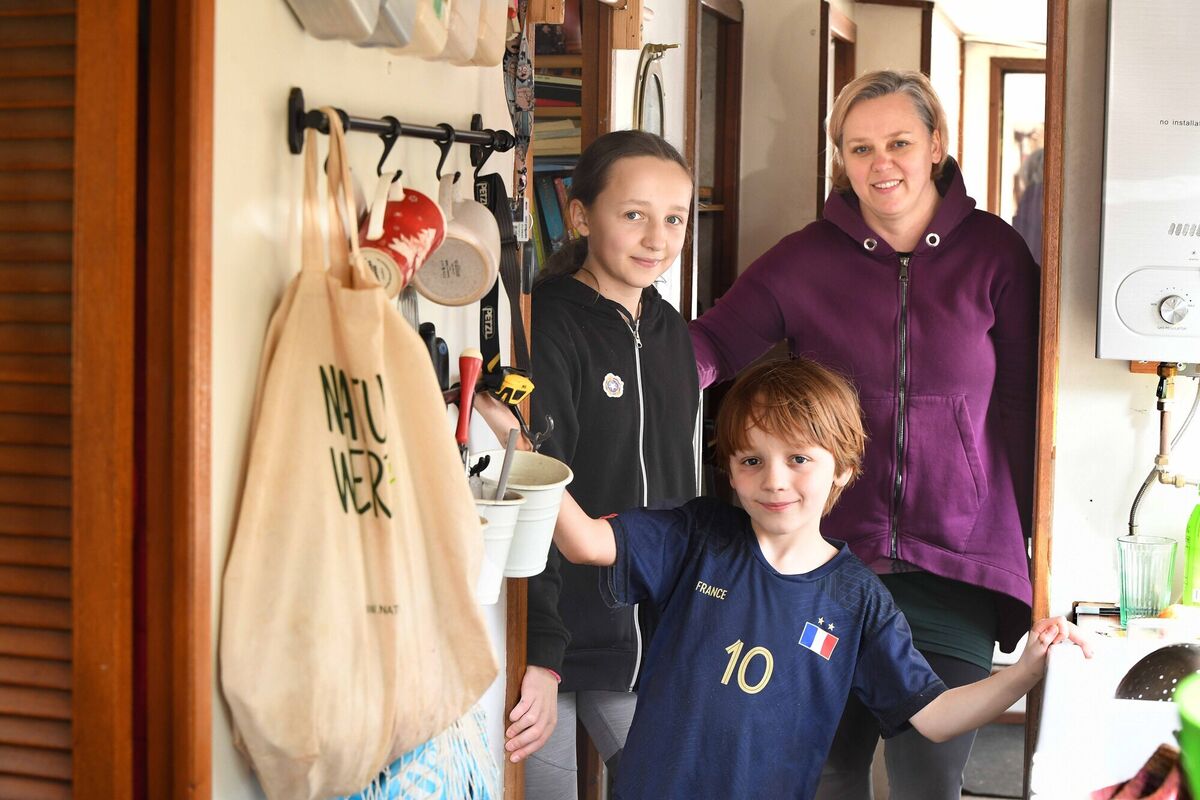
The introduction of the new bylaws highlights just how vulnerable ‘liveaboards’ are, according to Jennifer.
“From year to year they can decide whether or not they give someone a permit. Our families are here. Our friends are here. People arrange childcare from here and to think that someone can say ‘No you have to move’ or take the permit off us,” she says.
If WI decides not to renew someone’s permit, they would have to appeal it to the local District Court under the draft bylaws.
“We're not gaining anything other than the potential breaking up of communities, because there's absolutely people that won't be able to afford to pay those fees and where are they going to go? They will be made homeless,” says Jennifer.
“We'll stay here for as long as we're all happy. We need to know that we're getting services for fees. There needs to be conscious effort and evidence that they're protecting communities,” she adds.

CONNECT WITH US TODAY



Be the first to know the latest news and updates