Una Lynskey cold case review may raise more questions for gardaí than deliver answers
A Garda team is reviewing a cold case murder, an associated revenge murder, and potential garda brutality and perjury. But will they investigate one of their own with a legendary reputation, even if they are deceased? Mick Clifford writes
Una Lynskey cold case review may raise more questions for gardaí than deliver answers

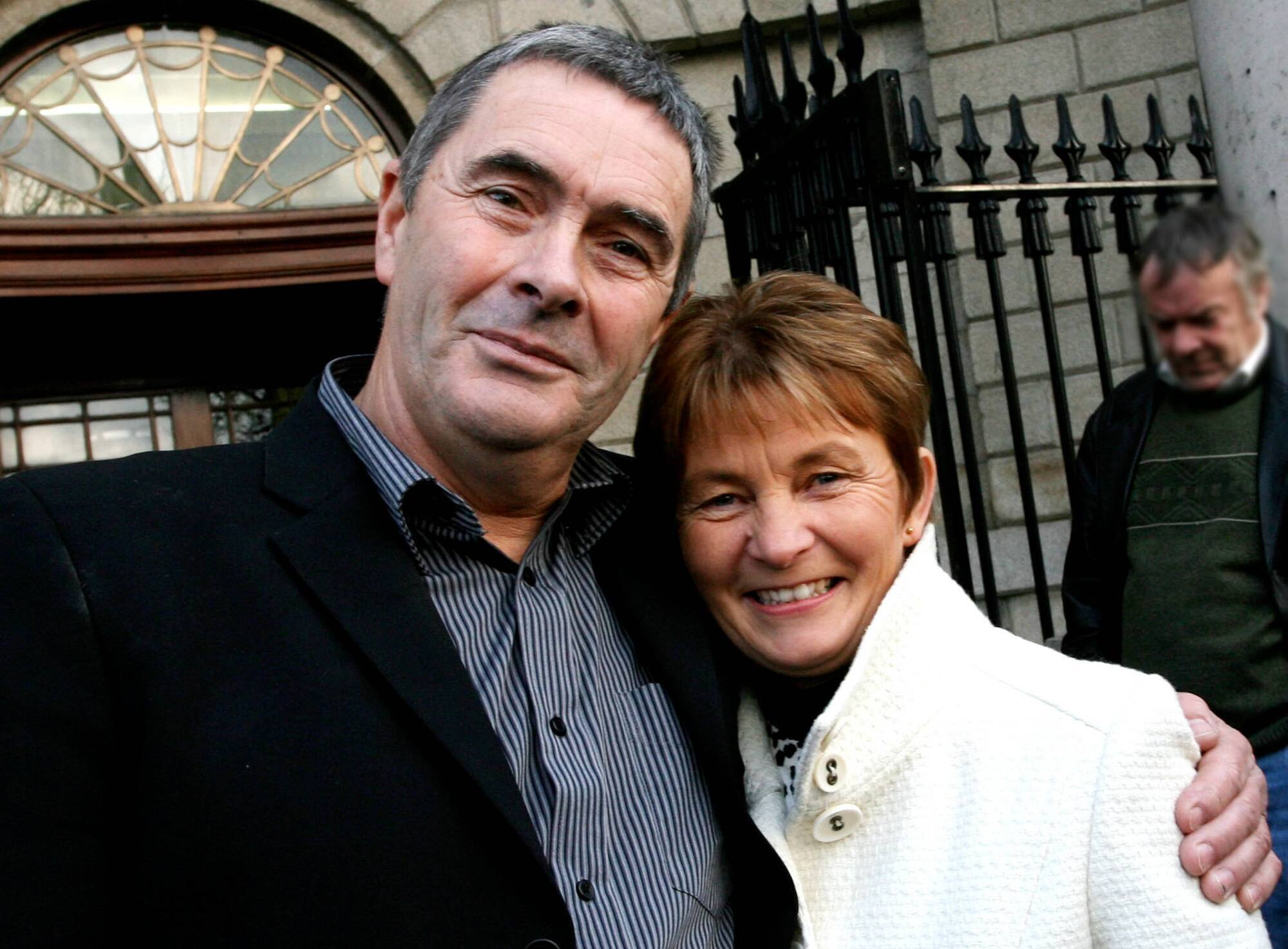
Martin Conmey with his wife, Ann, after his conviction for the manslaughter of Una Lynskey was quashed by the Court of Criminal Appeal. Picture: CourtPix

On Thursday, An Garda Síochána held a press conference, timed to coincide with the anniversary of Una Lynskey’s disappearance on October 12, 1971.

The gardaí’s Serious Crime Review Team is conducting what it calls “a review” into the investigation of Una’s murder. It is also reviewing the investigation into the violent revenge killing of Marty Kerrigan by Ms Lynskey’s two brothers and a cousin.

Normally, the Serious Crime Review Team is called in to deal with a cold case of murder that happened many years ago but did not have a conclusive outcome. 

Sometimes, the result of the review is a successful prosecution, delivering delayed justice on foot of dogged and detailed police work. This particular review, however, is a strange affair and one that may raise more questions than deliver answers.

Una Lynskey was 19 years of age, from a large family in a tight-knit community living south of the village of Ratoath in Co Meath. 

Une Lynskey was 19 years old when she disappeared. She got off a bus near where she lived in Co Meath, but never made it home.

Her family and up to a dozen others living on Porterstown Lane had been transplanted from the west of Ireland in the 1940s under a land commission scheme. The lane was about 1.5 miles long, shaped like a V, and running from the Fairyhouse Road at one end to the Navan Road at the other.

Una Lynskey was working in Dublin city centre. On October 12, 1971, she got off the bus from the city on Fairyhouse Road near the mouth of the lane. The time was around 6.55pm. Her home was a walk of around 15 minutes across the lane. She never made it. Somewhere along the stretch of the lane from Fairyhouse Road to her home she went missing.

Crime in Ireland at the time

It was big news in the Ireland of the times. Within 48 hours, the murder squad arrived from Dublin. The squad was part of the Technical Bureau of An Garda Síochána. 

Every other element of the bureau had technical knowledge in areas like fingerprints, ballistics, or photography. 

The murder squad was ostensibly practiced at interviewing suspects and obtaining confessions.

Later in the 1970s and into the 1980s, the squad would form the nucleus of what came to be known as the “heavy gang”. 

This loose grouping was the subject of numerous allegations of garda brutality in custody, particularly when suspects were being interrogated. Many among them were present in the Sallins mail train robbery, for which Nicky Kelly was convicted and later pardoned. He and three other men received substantial compensation for how the State had treated them.

Members of the squad were also present in Tralee Garda Station in 1984 when Joanne Hayes admitted to killing her baby and three of her siblings admitted being complicit in disposing of the body. Subsequently, it was shown that the family did not nor could not have had anything to do with the dead baby in question.

Thirteen years earlier in Ratoath, as a community was shocked about the disappearance of one of their own, nobody had heard of the heavy gang.

One of the most prominent figures in the murder squad was John Courtney. He was a detective sergeant when he arrived in Ratoath, an inspector five years later investigating Sallins, and a superintendent when he oversaw the Kerry babies investigation. Many within An Garda Síochána who knew him speak in awe of his work ethic and ability.

Investigation into Lynskey disappearance

In the days after Una’s disappearance, an extensive search was conducted across south county Meath. The investigation got underway with the collection of statements from dozens of people in the immediate area. What emerged was a number of sightings of a strange car around 7pm on the evening in question. Up to eight local people related sighting of a car. Some were more specific than others, with a few describing a big car, a Ford Zephyr or Zodiac, driven by a middle-aged man.

Despite this, it appears that the murder squad focused on what they considered other suspects. Three local men, Dick Donnelly, 22; Martin Conmey, 20; and Marty Kerrigan, 19, had been driving around that evening.

Donnelly and Conmey were coming home from work in a local farm, and they stopped to pick up Kerrigan at his house. 

Donnelly, driving his gold-coloured Zephyr, told the gardaí that he entered the lane from the far side Ms Lynskey had entered it, around 7.10pm-7.15pm.

The gardaí didn’t believe them. They believed that the three men in the car had entered the lane at least 10 minutes earlier, had encountered Ms Lynskey, whom they knew, and something happened. 

Thereafter they disposed of her body. There was other testimony from people like Martin Conmey’s mother, which supported the three men’s timeline but the gardaí weren’t interested.

Two weeks after Ms Lynskey’s disappearance, two other young men from the lane were brought to Trim Garda Station. 

Martin Madden and Sean Reilly were detained for over seven hours. 

Reilly subsequently told a court that he was intimidated and assaulted in custody in an effort to get him to change an earlier statement to one implicating the three men. He did so, as did Madden.

Within an hour of their release, the by now three prime suspects were brought to Trim. They would subsequently claim to have been subjected to repeated threats, intimidation and assault. 

During 45 hours in custody, with little sleep, Conmey and Kerrigan made admissions implicating themselves in Ms Lynskey’s disappearance. 

The admissions were partial, contradictory, confused, and, in places, simply didn’t make any sense. Crucially, the interrogation of the men yielded nothing on the whereabouts of Ms Lynskey’s body. (she was presumed at that stage to be dead). 

Subsequently, Martin Conmey would claim that the gardaí led him to make admissions and he was going along with it on the basis that he was afraid for his life in the station.

Revenge murder, sentences, and miscarriage of justice

On December 10, Una Lynskey’s body was found in the Dublin mountains. A post-mortem failed to determine the cause of death. 

Nine days later, Marty Kerrigan was kidnapped by two of Ms Lynskey’s brothers and a cousin and brought to a spot near where Ms Lynskey’s body was found. They claimed he was alive when they left him. He was dead when the gardaí arrived at the location within an hour. The cause of death was asphyxiation.

Martin Kerrigan’s sisters who was kidnapped and killed during the Una Lynskey murder investigation, from left: Kathleen O’Neill, Mary Ryan, Eileen O’Brien, and Ann Donnelly. Picture: CourtPix

The Lynskey brothers and their cousin were convicted of manslaughter and sentenced to three years. 

A few months later, Martin Conmey and Dick Donnelly were convicted of Ms Lynskey’s manslaughter and sentenced to three years. Donnelly’s conviction was overturned on appeal. The Lynskey family, deeply traumatised, moved out of the area and relocated to Co Kildare.

In 2010, Martin Conmey’s conviction was set aside after he brought an action. Four years later, he received a certificate of miscarriage of justice, an apology from the State, and a substantial financial settlement.

Una Lynskey’s siblings, and her wider family, have never indicated whether they accept that the three local men were not involved in the murder. Following Martin Conmey’s successful appeal, some in the wider Lynskey family posted negative and abusive comments on social media about him and the others.

Mary Gaughan, a sister of Martin Conmey, and her husband, Pauraic Gaughan, a cousin of Una Lynskey, speaking to the media on leaving the Court of Criminal Appeal. Picture: Collins Courts

Modern-day review

So who killed Una Lynskey? That, the press conference on Thursday was told, is what the Serious Crime Review Team will attempt to discover. 

The team’s leader, Superintendent Des McTiernan, acknowledged that may be a tall order. Finding a suspect now would be extremely difficult. Even if one were identified, there is a high chance that he — or they — are no longer alive.

The superintendent was asked whether any fresh information had prompted this review. He said he wouldn’t comment on that right now.

Superintendent Des McTiernan is the lead of the Serious Crime Review Team looking into the murders of Una Lynskey and Martin Kerrigan in the 1970s. Picture: Gareth Chaney/Collins

“The family of Una Lynskey are seeking clarity on matters relevant to the murder of their sibling,” Supt McTiernan told the assembled press. 

When asked what matters he was referring to, he said he wouldn’t comment on that at this stage. 

Normally, the only matter a bereaved family in these circumstances pursues is the identity and prosecution of whomever may be responsible for their loved one’s death. If their concern is beyond that it is difficult to understand what exactly the gardaí can do about it.

The review into Marty Kerrigan’s death is even more curious. His family have long been aggrieved that he died while a suspect, unable, like his two friends, to pursue justice through the courts where they both managed to clear their respective names. 

They have made it known over the years that they would like an apology from the gardaí for their role, if any, in leading up to his violent death at the hands of Una Lynskey’s brothers and cousin.

Potential brutality and perjury

The review will examine the Garda investigation to see whether the Kerrigan family are entitled to an apology. 

This is where things could get very tricky as what is at issue here is the old chestnut of gardaí investigating gardaí.

Supt McTiernan and his team will have to determine whether, as credible allegations have it, the murder squad in 1971 identified the wrong suspects and then tried to build a case around them by intimidation, assault, and ultimately organised perjury. It may turn out that the review team will decide there is not supporting evidence to make such a determination but what if there is?

“That’s a hypothetical situation,” he said at the press conference. 

Any review worth its salt has to be independent and impartial and rest assured that this review will be that.”

No doubt, the superintendent and his team will approach their task without fear or favour, but what is being asked of them is potentially enormous in terms of the culture of the organisation they serve.

Take John Courtney, the outstanding sleuth who was one of the main gardaí in the investigation into Una Lynskey. Courtney died in 2017. 

He was considered within An Garda Síochána to have given sterling service to the state. Despite myriad allegations of being party to garda brutality in custody, he was never charged with anything of that nature or even cited in any official report.

If the current review determines that he oversaw assault and intimidation of the three men in custody — and their two neighbours, Sean Reilly and Martin Madden — and also, as a result engaged in organised perjury, what will that do to his reputation? 

For one thing it would be the first official recognition that this sort of thing went on in An Garda Síochána, as per the numerous allegations and media coverage.

It may turn out that the Serious Crime Review Team don’t uncover evidence to support the allegations of garda brutality. But irrespective of that, Supt McTiernan and his team are in the unenviable position of possibly having to go where no garda has gone before in calling out shocking abuses against citizens perpetrated by a deceased and highly lauded former colleague. 

Is that fair on the Serious Crime Review Team?

The obvious alternative would be for a senior counsel or retired judge to examine all the evidence and report on whether an apology should be forthcoming to Marty Kerrigan’s family. Such an inquirer could also examine whether or not Una Lynskey’s family were influenced or misled by the murder squad to believe that their three neighbours had murdered their loved one.

It wouldn’t cost much and would go a long way towards some reparation to all of the families involved who were thrust into a nightmare that has since resonated down through the lives of all belonging to them.

On Thursday, Supt McTiernan set out what he was hoping to achieve.

“My intent is that this full review will hopefully answer all questions highlighted by the Lynskey, Kerrigan, Donnelly, and Conmey families and bring the events at the end of 1971 to some conclusion for those involved.”

The super’s intent is laudable, but history suggests that any inquiry of this nature would be far better dealt with by an outside agency, one which does not, in either actuality or perception, have skin in the game. All of the families involved were badly wronged by the State 52 years ago. 

Surely they are entitled, at this late, late stage to have the whole affair now considered with the due care it deserves.

More in this section

Lunchtime News

Newsletter

Keep up with stories of the day with our lunchtime news wrap and important breaking news alerts.

Cookie Policy Privacy Policy Brand Safety FAQ Help Contact Us Terms and Conditions

© Examiner Echo Group Limited