Enda Brady: Is the fashion world about to have a male #MeToo moment?

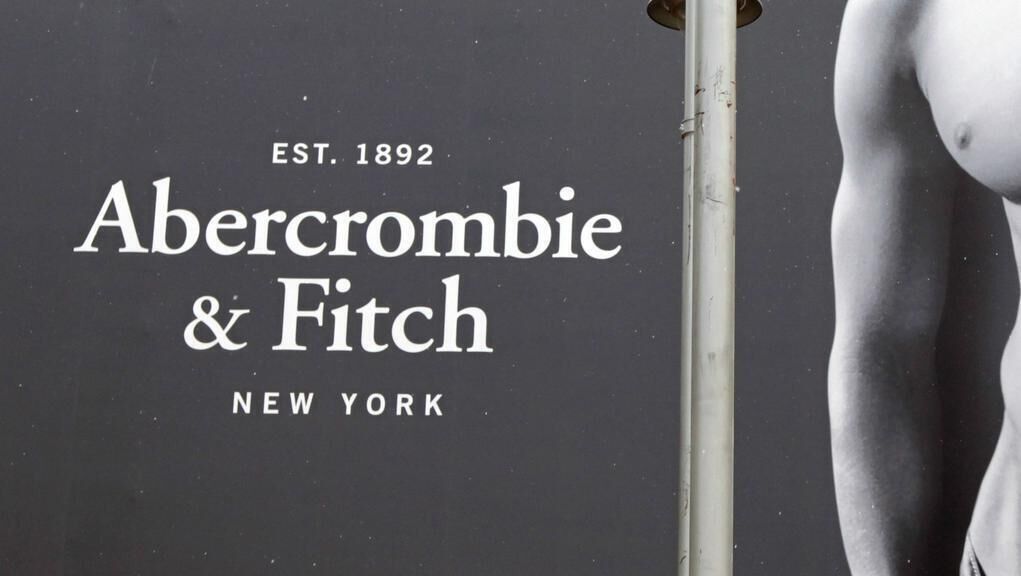
Abercrombie & Fitch built its fortunes on the back of shirtless male models. Picture: Daniel Acker/Bloomberg
Abercrombie & Fitch had once again reinvented itself and its fortunes on the back of scantily-clad, shirtless male models.
New CEO Mike Jeffries’ formula for success was as old as the hills — sex appeal, male sex appeal — and lots of it. You couldn’t escape the giant posters of semi-naked male models that adorned store windows and street corners.
“We knew we wanted to be the coolest brand for the 18 to 22-year-olds,” Cindy Smith-Maglione, former vice president of merchandising, told Netflix documentary .
And it worked. According to Bloomberg, when Jeffries took over in 1992, Abercrombie & Fitch had 36 stores and $50m in annual sales. By 1996, the company had about 125 stores and $335m in sales.
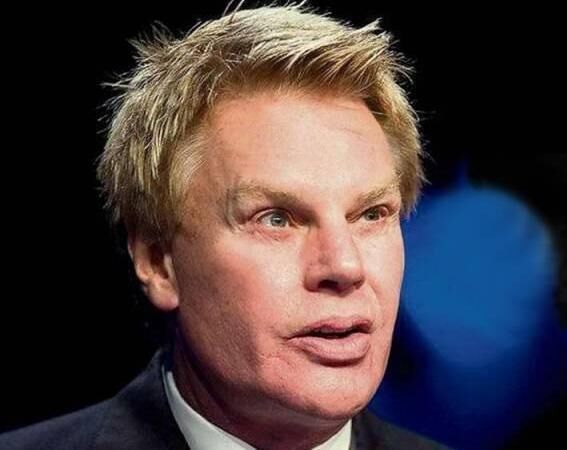
Jeffries was riding the wave of success and was one of the highest- paid CEOs in the US. But the gloss soon began to wear off after a series of controversies rocked the global brand.
Jeffries was in the eye of one particular storm in 2012 after comments he made some years earlier resurfaced.
In an interview with , he said that Abercrombie made clothes for the “cool kids”.
“A lot of people don’t belong [in our clothes] and they can’t belong. Are we exclusionary? Absolutely.”
Jeffries added that the brand only hired good-looking people because they “attract other good-looking people”.
After a backlash, he was made to eat his words. Two years later as sales nose-dived, Jeffries retired as Abercrombie’s CEO — with an exit package worth $27m.
This week, the man who once ran one of the most successful fashion labels in the world is back in the news after Jeffries and his British partner Matthew Smith were accused of exploiting men at sex events they hosted around the world.
The BBC team interviewed eight men who claimed they had been recruited (and paid) to attend events at a private residence in New York’s Long Island and in luxury hotels in Paris, London, Venice, and Marrakesh.
The men, all young adults at the time of the parties between 2009 and 2015, alleged that they had been exploited for sex or abused at the events, which were put together by a highly-organised network that used a middle man.
Some of the men dreamed of working in the fashion industry and claimed that the middle man raised the possibility of modelling for A&F, before demanding sexual favours from them and insinuating that they wouldn’t meet the “powerful” Mr Jeffries unless they complied.
One of those interviewed, David Bradberry, told the BBC that he met the middleman who recruited him to an event through an agent in 2010.
Bradberry, 23 at the time, told the BBC that his initial meeting with the middleman did not involve anything relating to sex. The conversations later shifted.
“Jim made it clear to me that unless I let him perform [a sex act] on me, that I would not be meeting with Abercrombie & Fitch or Mike Jeffries,” Bradberry told the BBC, referring to James Jacobson, who the outlet identified as middleman for Jeffries and Smith.
They described the person who recruited them for the events as a man missing part of his nose, which was covered with a snakeskin patch. That man was Jacobson, according to the BBC.
In a statement through his lawyer, Jacobson told the BBC that he was offended by any claims of “any coercive, deceptive, or forceful behavior on my part” and had “no knowledge of any such conduct by others”.
The men all claim they were paid in cash for attending the parties and were made to sign non-disclosure agreements.
Barrett Pall, a former model-turned life coach and activist, told the BBC he was pressurised to attend a glitzy event at the Hamptons in 2011. He said other men at the event performed oral sex on him as Mr Jeffries and Mr Smith watched.
“But with the language I now have today, I can sit here and tell you that I was taken advantage of,” he said.
Jeffries and his partner did not respond to the allegations, though his former employer said they were “appalled and disgusted” by the men’s claims.
The headlines this week have been hugely damaging for Jeffries and Smith, not to mention Abercrombie & Fitch. And the question must now be asked: Is the fashion world about to have a male ‘Me Too’ moment?
The lurid claims that swarmed around Harvey Weinstein — and eventually put him in prison — shone a spotlight on Hollywood’s dark corners and its so-called “casting couch” culture. His victims were all female.
When people read about alleged abuses of power by individuals at the top of an industry, they nearly always feature aspiring young women who have been singled out and targeted by predatory older men. What stood out about the investigation this week was the bravery of the men who came forward and spoke openly about what they claimed happened to them.
One of the men, Alex, claimed to have had his drink spiked at a party in Morocco, waking up the next day with a condom inside him. He tested positive for HIV a few years later.
He told : “When I put things together, I believe there is a very good possibility I was drugged and raped. I’ll probably never, never know for sure the answer of what happened.”
The company responded quickly to the allegations, but its senior executives must be privately seething that the company’s name has hit the headlines as a result of a former CEO’s alleged behaviour.
Jeffries, now 79, oversaw the rejuvenation of A&F in the 1990s from an outdated outfitter losing $25m a year into a hip, cool brand that young people all over the world wanted to be seen in.
He took over in 1992 and completely transformed the label; sales rocketed and the money rolled in, billions and billions of dollars of it.
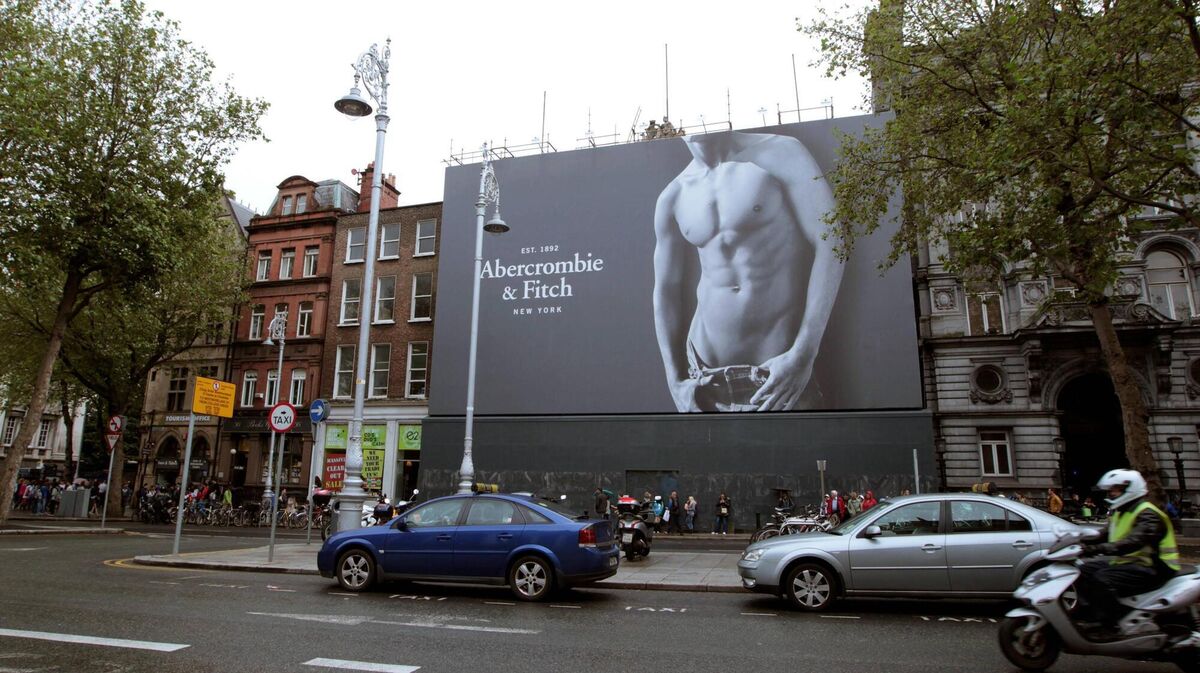
Critics highlighted the use of semi-naked models, provocative billboards, and crude slogans, but nobody could argue with the astronomical profits. In fashion, as in business, that’s very often all that counts.
Jeffries made no secret of what was behind the company’s success, telling one journalist in the now-infamous 2006 interview that their marketing had targeted “cool kids”.
He made it clear that if you weren’t cool and attractive, you had no business being seen in his company’s clothes, even if you could afford them.
It wasn’t the first time that the company had found itself in the headlines for the wrong reasons.
- In 2002, Abercrombie was at the centre of a racism storm following the release of a t-shirt range depicting Asian stereotypes. It led to protests across America by Asian Americans. In response, the company pulled the products from its shelves and burned them, according to the Netflix documentary .
- In 2003, a group of former and prospective employees filed a class-action lawsuit claiming the company refused to hire them or fired them on the basis of their race. According to the Netflix documentary, Abercrombie had a handbook that dictated what employees should look like, down to their underwear, jewellery, and hair. The handbook prohibited dreadlocks and gold chains and mandated a look Abercrombie described as “natural”, “American”, and “classic”. reported that Abercrombie settled the class-action suit in 2004 without admitting any wrongdoing. It agreed to pay more than $40m.
- In 2012, a former pilot sued the company on age discrimination grounds. Court papers lifted the lid on “aircraft standards” for Abercrombie’s executive jet. The pilot claimed crew were required to wear Abercrombie polo shirts, sandals, underwear, black gloves when handling silverware, and white gloves when setting the table. Abercrombie settled without admitting fault.
- In 2015, the US Supreme Court ruled against Abercrombie in a religious discrimination case. Oklahoma teenager Samantha Elauf applied for a job and was recommended. But her local store later backtracked because she wore a black headscarf, which the company said violated its policy that salespeople couldn’t wear caps at work. In the court’s opinion, religion was a protected characteristic and must be accommodated.
After this week’s expose, prosecutors said there are grounds for a criminal investigation.
- Additional reporting by Reuters and Bloomberg
CONNECT WITH US TODAY



Be the first to know the latest news and updates