Fermented foods are suddenly all the rage, but what are they, and what are their benefits?

Fermentation releases processes which add to the flavour or texture of food as well as prolonging its shelf-life. Photo: Noel Sweeney
From farmer’s markets to supermarket fridges, foods like kefir and kimchi are suddenly everywhere. But are they really good for our gut — and why should we care so much about gut health anyway?
This explosion of interest is built on scientific discoveries that our intestines are host to trillions of good bacteria which can have a significant impact on our behaviour and brains.
Paul Cotter sees this as a return to an older way of eating, something he welcomes in his roles as head of the Food Biosciences Department at Teagasc and principal investigator with APC Microbiome Ireland, located in University College Cork.
“A fermented food is one in which good or desirable micro-organisms are added to a food substance, so a raw material like a milk or meat or a plant like cabbage to make sauerkraut,” he said.
“Those microbes are added consciously, so you do something to add those microbes in or they are naturally present on the surface and you make the conditions right in order to encourage those micro-organisms to grow.”
This could be milk converted to cheese or yoghurt, or cabbage converted to sauerkraut or kimchi, he said.
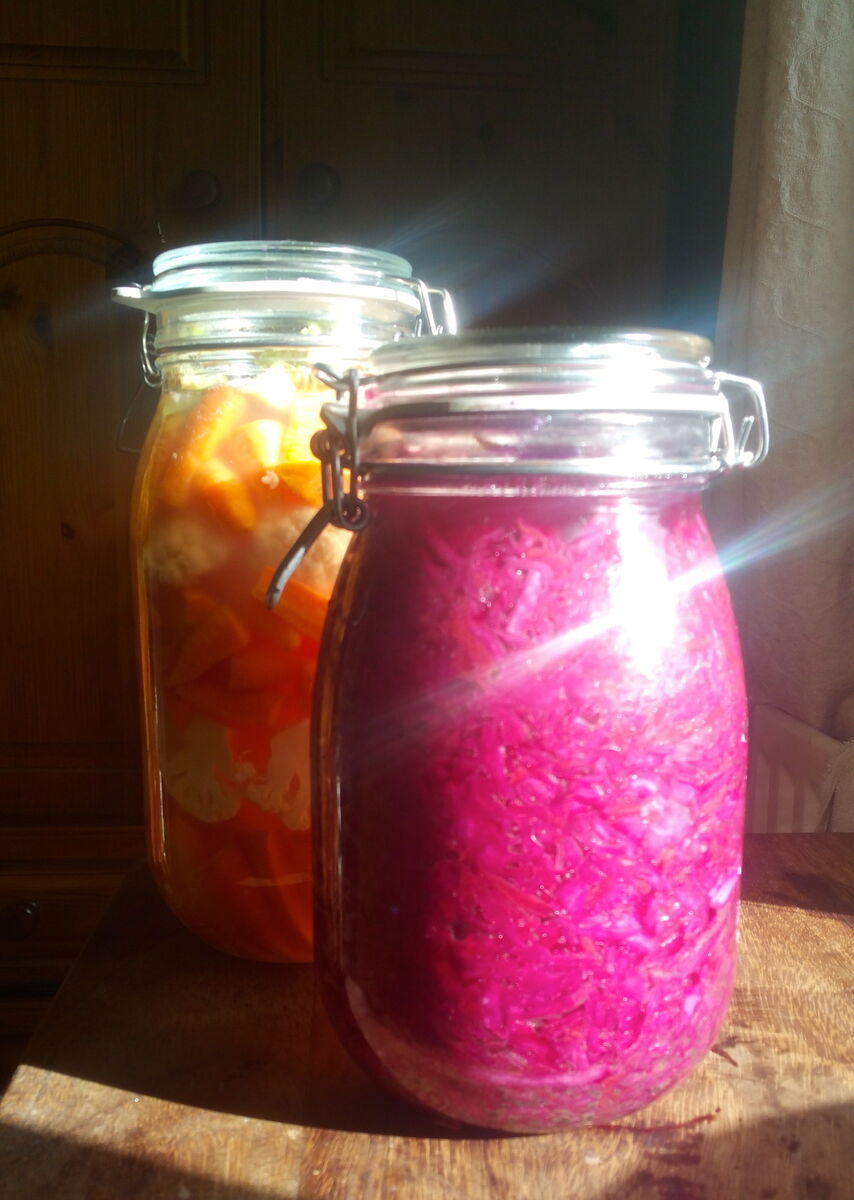
“Some of the benefits can be simply the growth of the microbes alone. Those microbes might be health-promoting so when you consume the food those microbes get into your gut,” he said.
Another plus is that fermentation releases processes which add to the flavour or texture of food as well as prolonging its shelf-life.
Ironically, the progress of pasteurisation or canning foods meant fermentation was displaced.
“So the detrimental effect was we stopped consuming so many fermented foods, and also stopped consuming live micro-organisms in our diet,” he said. “There is a lot of evidence now to suggest that simply having more microbes in our diet might be a major contributor to our health.”
Some studies suggest these deficiencies “might have contributed to the increase of different autoimmune diseases and inflammatory diseases like IBD and cirrhosis, and asthma as a consequence of a shift in our diets over the last century or so,” he said.
However, he emphasises that no single product is the answer for everyone. He explained certain milk kefirs, for example, have microbes which are good at reducing cholesterol or addressing gut-brain disorder.
“The problem is if I am making one in my kitchen, or someone is making one in their kitchen in Kerry, they don’t know which one has the right microbes for that particular issue,” he said. “I encourage people to consume fermented foods in general, there is a better chance they will get a health benefit.”
A weekly intake could include, he suggested, cheese, natural yoghurt, milk kefir, kombucha, water kefir, skyr (Icelandic yoghurt), sauerkraut, kimchi and olives.
Diarmuid Duggan, Dietitian Manager with the Bon Secours Hospital in Cork echoes this, saying while the link between gut microbes and health is “very exciting”, a broad-brush approach is needed.
“What fermentation does is it tends to encourage your own gut bacteria to grow, you are encouraging your own innate bacteria to be better, to be more healthy,” he said.

“It affects our mood, there is a gut-brain reaction, the bacteria can affect mood, the health benefits are huge. It’s really exciting times for the gut microbiota but we don’t know enough yet.”
Better gut health can come from eating more fibre, whole fruit rather than juice and adding more vegetables including raw vegetables, he also advised in a joint presentation with colleague Caitriona Lordan recently.
Fermented foods including sauerkraut, sourdough bread, buttermilk and yoghurt were listed as good options as part of a whole diet approach.
“Fermentation is more natural, we are happy with that,” he said. “The caveats would be for people who are immunocompromised, so cancer patients or people with chronic disease with low immunity. We don’t know enough about it in those cases, is it better for them or worse for them?”
He welcomes the focus on local foods, saying gut health issues are a recognised challenge for people who emigrate and fill up on new foods. “Research is trending towards eat locally, freshly grown or do what your ancestors did,” he said.
He recommended reading ‘The Psychobiotic Revolution’ co-authored by UCC professors John Cryan and Ted Dinan, specialists in anatomy and psychiatry who collaborate with APC Microbiome Ireland.
hey delve into the developing understanding of links between gut health and mental health, having coined the phrase ‘Psychobiotic’ to mean “a live organism that, when ingested in adequate amounts, produces a health benefit in patients suffering from psychiatric illness.”
A health benefit is not the same as being a treatment, however, and they also say the links are not clear-cut.

“There is more than one way to be depressed, of course: Loss or other kinds of psychic trauma can depress you. At first blush, external events like this don’t seem to be related to your gut microbiota, and initially they usually aren’t,” the book states.
“But the gut-brain connection is a two-way street. Despair, anxiety, and depression can lead to negative changes to your microbiota, called dysbiosis. That disruption can channel anxiety and depression right back into your brain. It creates what most of life tries its best to avoid: a positive feedback loop, otherwise known as a vicious cycle.”
The authors also said many of us start life drinking “a sort of homemade kefir” or breastmilk as it is more commonly known. “We now know it is a microbial balm for your vulnerable baby gut,” they said.
So while you might feel a bit unsure about trying some of the new-to-Ireland fermented foods, maybe it is not all so foreign after all.
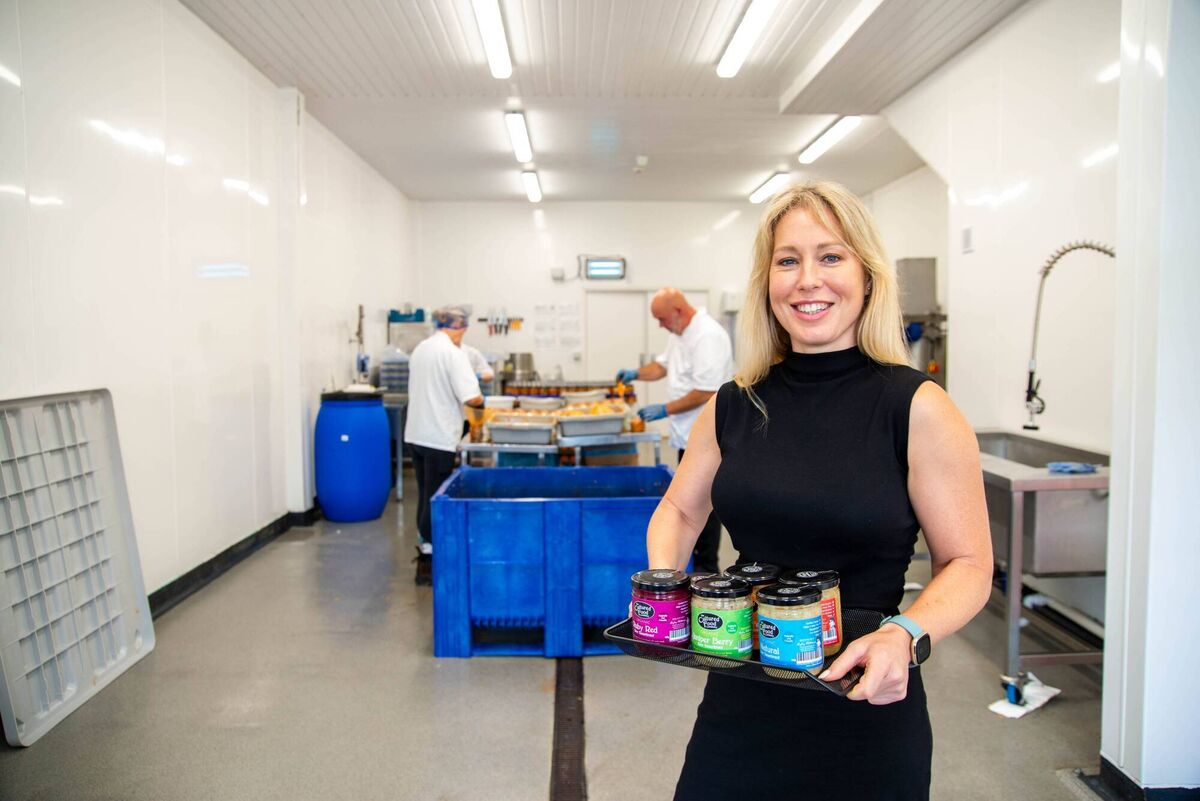
While fermented foods such as kimchi, kefir or sauerkraut can be seen in most supermarkets now, it was small local companies who got the ball rolling in the Irish market.
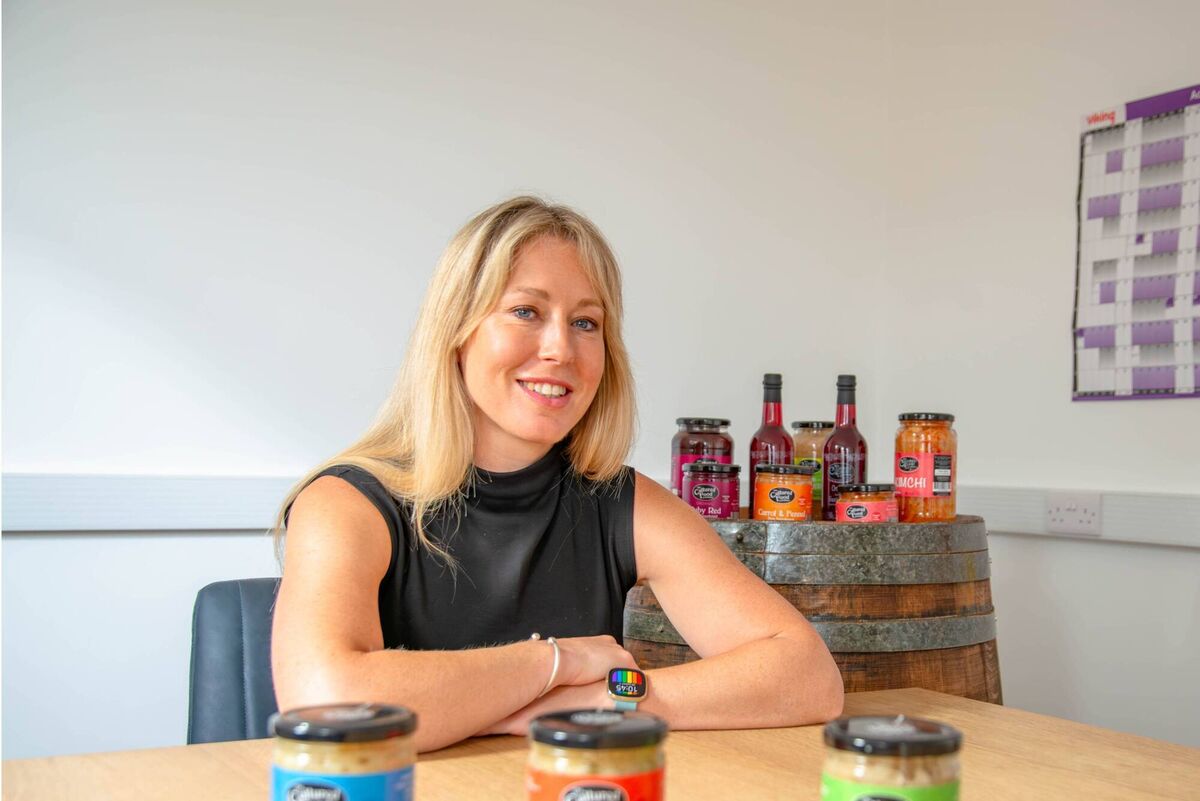
For Hayley Milthorpe fermented products are “our missing food group”. She founded The Cultured Food Company nine years ago to fill that gap.
“I strongly believe that once people eat these foods, they get hooked on them,” she said.
“And it’s not a fad, it’s our missing food group basically. Before we had refrigeration and chemicals, this is how we used to preserve our foods, we used to preserve the milk, the bread, the vegetables so we had this constant stream of fermented foods in our diet, which was feeding our gut flora.”
She links the surge in interest to the renewed focus on immunity during the pandemic.
“A lot of people are afraid to try fermented foods because they don’t have an understanding,” she said.
“They think of bacteria and they don’t know is that good bacteria or bad bacteria, there is a little bit of fear around the fermented foods but that is changing.” She produces flavoured sauerkrauts as well as kimchi, flavoured sauerkraut juice and beet kvass to drink.
Shop online and find stockists.
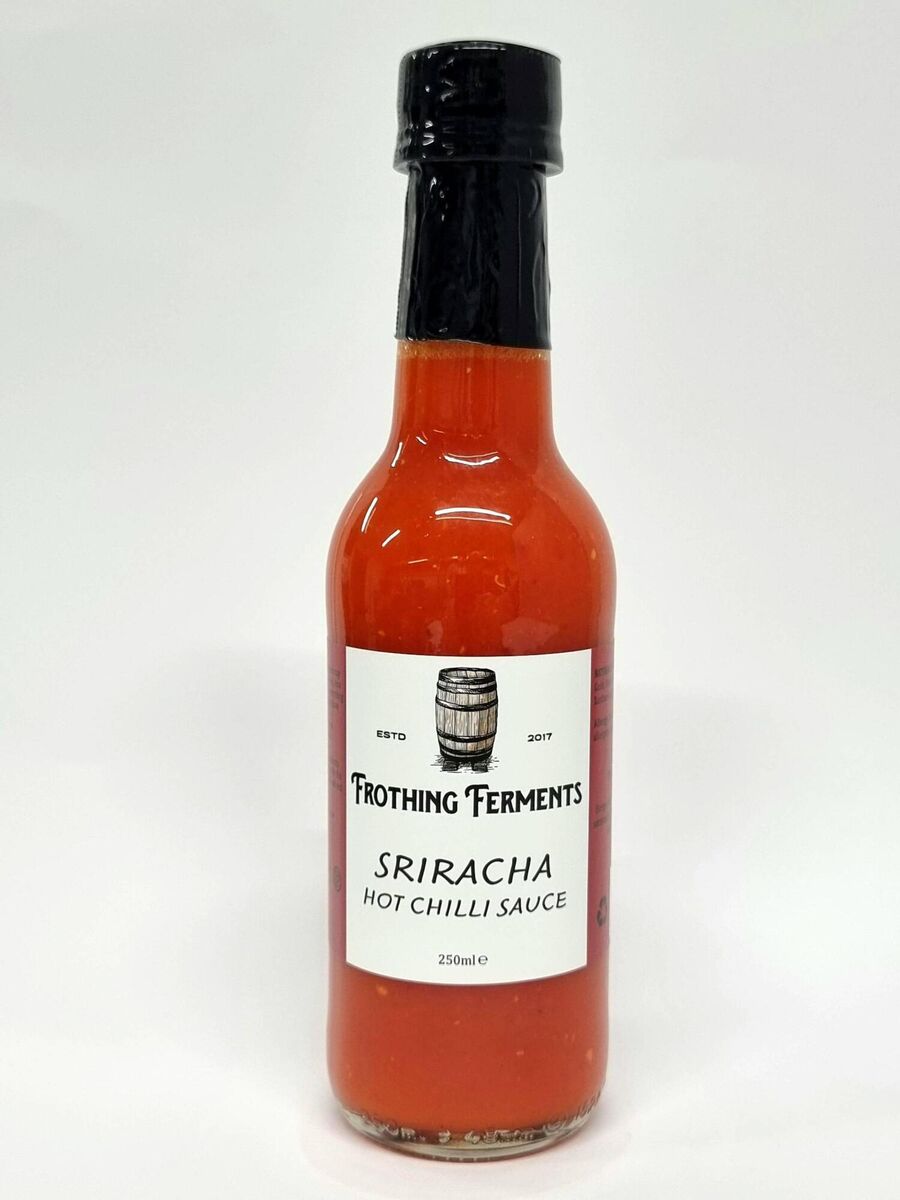
In Waterford, Norbert Thul set up Frothing Ferments after a brush with cancer sparked an interest in the benefits of these products over five years ago.
“For some people this is an acquired taste,” he said of kimchi. “If you like a funky, salty, crunchy flavour, that’s what it is.” The lecturer in culinary arts at the South East Technological University sells sauerkraut, raw kimchi, lemon & lime water kefir, and sriracha hot chilli sauce.
“Lacto-fermentation creates an acidic environment that safely preserves the vegetables and nutrients, protects from spoilage, renders vegetables more digestible and provides an array of natural enzymes and good bacteria,” he explains when promoting his products.
While he stresses these are food products so health claims cannot be made, anecdotal feedback is positive.
“We really should introduce more fermented products into our diet, to get a healthy microbiome to sort out our gut,” he said.
He recalls growing up with “a massive barrel of sauerkraut in the outhouse” during his German childhood.
He advises buying products sold from fridges, and eating these raw, saying: “If you cook it, you kill the beneficial bacteria”.
Frothing Ferments sells through Supervalu and Musgraves for wholesale.

When Niamh Hegarty took bottles of water kefir to the Ploughing Championships for the first time, she discovered many farmers already use similar products.
“So I was pitching the ginger & turmeric flavour, the benefits of anti-inflammatories and antioxidants and a lot of the farmers feed their cattle with the same supplements,” she said.
“When I was speaking to them about the benefits of kefir and gut health, they were saying they actually feed kefir to their cattle, especially to sick calves. They feed turmeric for anti-inflammatory (properties).
"So it was really amazing, I didn’t have to do much pitching to the farmers at the Ploughing Championships because they were already on board.”
She first learned about water kefir while training at Ballymaloe cooking school.
“Water kefir has all the gut health benefits, because its full of live probiotics and live bacterias, then it’s got this amazing factor that it just taste really good,” she said.
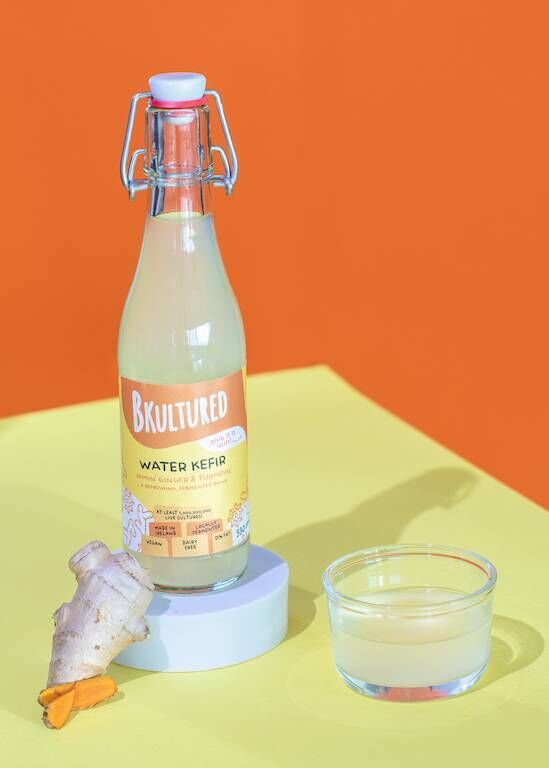
“It’s really enjoyable, it’s lightly carbonated. It’s slightly sweet but it’s low in sugar.” She also recommends trying a range of different fermented foods.
“You could have your yoghurt kefir in the morning,” she said. “Then water kefir during the day or kombucha because they’ve all got different strains of bacterias and cultures in them which is what you want for gut health.”
Find stockists on the BKultured website.
: a way of preserving food used for thousands of years in different ways around the world. The approach involves controlled microbial growth and fermenting over time.
you might eat already: yoghurt, sourdough bread, beer, wine
: fermented milk, it looks like a thin yoghurt and has a tangy taste. It is now often sold with added fruit flavours. It is sometimes sold in a bottle, but also in more yoghurt-like cartons
: a fermented carbonated drink made with water, sugar and kefir grains
: a traditional Korean way of fermenting vegetables usually cabbage and radish. This can be spicy but the Irish versions are often adjusted
: a traditional German way of fermenting vegetables, usually cabbage but you can now buy sauerkraut made from a range of Irish vegetables

CONNECT WITH US TODAY



Be the first to know the latest news and updates