'Ireland is a difficult country to be sick in if you’re young': One woman's battle for medical care
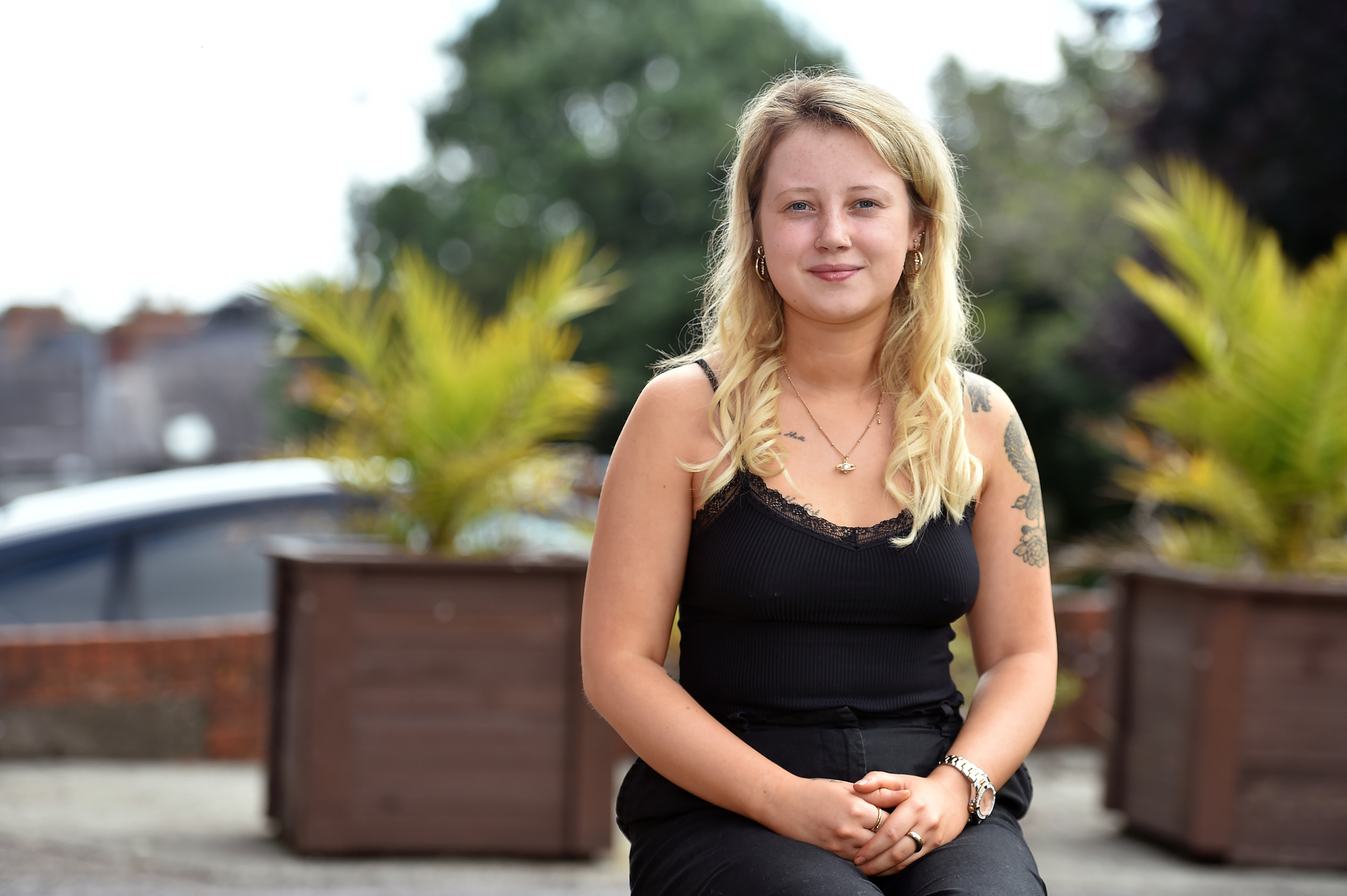
Emma Kelly: 'I think there needs to be a better assessment when someone’s sick. You should not have to jump through so many hoops to get help.' Picture: Dan Linehan
Emma Kelly’s hands started swelling so much that her skin grew painfully tight and she almost lost control of her fingers as she scrolled through her phone in bed one night.
Her hands had suddenly ballooned to double their normal size. The diagnosis of rheumatoid arthritis she would receive in the coming weeks would change her life unrecognisably.

At just 19, she would be unable to walk unaided due to shooting pains from her knees through her legs some days.
She would have to crawl up the stairs in her home to get to bed and shrank from people’s intrusive eyes when she limped across the laboratory in college, or leant on a walking stick while serving customers at work.
Ms Kelly would quickly go from an outgoing, friendly, confident teenager to a young woman who could sometimes no longer leave the house due to pain and anxiety.
And a battle to secure somewhat timely medical care was only won with financial help from her parents.
Being a young person with an illness is so tough in Ireland that she now hopes to leave the country.
Not enough is being done to help people in her age cohort with chronic illness and not enough research is being done into autoimmune disorders like hers which is normally thought of as an illness of middle and old age, Ms Kelly said.
“Our system is so broken but until you’re stuck in the middle of it you don’t see the enormous cracks.
“Ireland is a difficult country to be sick in if you’re young.
“A lot of people think arthritis gives someone sore knees but it can be so much more than that. It can affect lots of different parts of your body and change your whole life.
“Rheumatoid arthritis can affect your hair, your eyesight, your lungs. Even if I don’t smoke I’m more likely to develop lung cancer than other people. I’m at a higher risk of diseases like diabetes, heart disease and lupus.
“My granddad had it and he died aged 64. His mother was in a wheelchair by 45, she was very sick with it.
“I don’t know what my future will look like.”
Rheumatoid arthritis is an autoimmune disorder in which the immune system mistakenly attacks the body's own tissues and causes chronic inflammation.
Although it is commonly associated with joint pain and joint damage, it can also impact other parts of the body, including the skin, eyes, lungs, heart and blood vessels.
Unlike the wear-and-tear damage of osteoarthritis, rheumatoid arthritis affects the joint lining, causing a painful swelling that can eventually result in bone erosion and joint deformity.

Before her diagnosis, Ms Kelly had been living a very independent, energetic life. She moved out of home at 17 and was studying pharmaceutical sciences at Athlone Institute of Technology and worked four days a week in Claire’s Accessories in the town.
Described by a lecturer as "one of the best they had seen in the lab, strong academically, a diligent worker who would not let anything stop her", she loved learning and loved science.
She also loved electronic music and going out with friends and she was always on the guest list for club nights and parties.
Now, even her love of high heel shoes has been relegated to history as she can no longer wear them.
And sometimes she is unable to sleep with the acute pain in her knee, which vacillates from a pulsing pain through her leg to a crushing pain as if someone was standing on it.
And achingly slow access to medical care has made her condition more difficult and more painful, she said.
Ms Kelly, now 21, said she was lucky her parents could pay for her to get some private treatment. She was told a wait for a rheumatologist would be two years on the public system and nine months if she went privately.
“I got really sick when I was waiting. I couldn’t walk up the stairs. My mum called and put pressure on them to give me a faster appointment.”
But when she was then put on the chemotherapy drug and immune-system suppressant methotrexate, she said she became even more unwell.
“I really went downhill then. It made me extremely sick. I’d take it on a Monday evening and within one hour of taking it I’d be extremely nauseous. I’d get very dizzy and extremely weak. After I was on it for a while, I’d have that feeling of nausea and be extremely tired all the time.
“My doctor said I had to stay on it for six weeks to see if it would be effective. But it took so long to get another appointment that I ended up taking it for much longer even though I knew it did not suit me.
“The side-effects were so much worse than the symptoms it was treating.”
She was also on steroids for “the better part of two years” although she knew from her own research she should not be taking them long-term, she said.
“I’d get stretch marks on my back and my legs that would split open and bleed.
“I gained a lot of weight and my face was permanently swollen.”
Losing her hair has been one of the hardest and most unexpected parts of her diagnosis to cope with, she said.
“Last summer my hair started to fall out. That was one of the hardest things to deal with.
“I didn’t’ look like myself anymore. I looked like a boy or someone who was going through chemo. I looked really ill.
"Losing my hair was the nail in the coffin for me. I didn’t cry when I was told I had rheumatoid arthritis but I cried about my hair loss.
“It was really awful. I didn’t want to leave the house
“At the same time I gained a lot of weight from medication.
“I stopped going out. I stopped taking photos."
Ms Kelly's parents helped her to pay to see a dermatologist about her hair loss privately. The waiting list was two years on the public system.
"Waiting two years would have been torture," she said.
“I got hair extensions as a graduation present from my parents and grandparents and that made a huge difference.”
“Getting hair extensions made me feel more like myself again and gave me the motivation to lose weight.
“I lost three stone this year.”
When Ms Kelly's arthritis treatment was switched to biological medication, her life also improved.
Her medication works by suppressing the immune system so it cannot attack itself. And while this dulls her pain and protects her joints and other parts of her body from long term damage of inflammation, it leaves her vulnerable to picking up illnesses.
“I pretty much always have a flu or a cold or a cough.
“And most cough bottles and cold and flu medication is over the counter so it’s an additional cost.”
The financial burden of illness is difficult to bear, she said, especially when she cannot work.
Although she has applied for a medical card some nine times, she been consistently refused.
“I don’t know why they make it so difficult.
“I think there needs to be a better assessment when someone’s sick. You should not have to jump through so many hoops to get help.
“Other people just get the medical card — people on low income, people with certain conditions — why is it so hard to get one for a young person who is sick?
“When people become sick at my age there should be more help for them.
“No counselling service was offered, despite the difficulty of dealing with a serious diagnosis and the cost of paying privately.
“It’s a constant stress worrying how you will have enough money to pay for all your medical expenses, particularly when you’re too sick to go to work.
“I applied for a free travel card, all my specialists are in Limerick which is €25 on the bus, but I was denied.
“I need to get to appointments. It would help me be able to get a job."
She is currently in receipt of illness benefit at the lowest rate of €98 a week as she lives at home. But when she first became too ill and too exhausted to work she was initially denied it and spent all her savings just surviving and paying bills.
Her consultant is €130 or €160 per visit depending on the intervention.
Physiotherapy has helped her knee “tremendously” but that’s €60 per session at a reduced rate.
A €500 Government grant for people who suffer hair loss through illness is available for hair replacements which helps but does not cover one full year of hair extensions, she said.
Her dermatologist costs €150 per appointment.
“I take Perfectil vitabiotics for my hair which is not too expensive but the Minoxidil hair spray is €50 every three weeks. Sometimes I can’t afford it.”
With the drug payment scheme, her medication costs €80 every three weeks, otherwise her prescriptions would cost thousands of euros.
But nutritional supplements, which she finds help her energy levels, are sometimes too expensive to afford.
Illness can also be lonely.
Although she has “fantastic” friends who call over to visit her and keep in contact, she is often too unwell or too broke to accompany them on nights out or trips away.
Ms Kelly became tearful when she said she no longer looks for a boyfriend. She feels like she would be saddling a partner with caring for her when her condition flares up or if it gets more debilitating in time.
One young man ghosted her after she told him about her illness.
“He acted like he could catch it off me when I told him,” she said.
“I’m lucky I have good friends. And dogs. They give you something to do and they’re really good to me.
“One of them usually doesn’t like being touched but when my knee flares up he comes and lays his head on my knees. And the other one runs up and licks away the tears on my face when I’m upset.”
Ms Kelly wants to work in research to advance knowledge and treatment for illnesses like her own and cancer. She now plans to study biomedical sciences to allow her reach that goal.
But her illness makes her more concerned about her future than most people her age.
“I want to go far in my career. I want to be someone who makes a difference. I love being in labs, I want to work there for as long as possible.
"I hope that treatments will have advanced but I don’t know if they will. There does not seem to be that much research on rheumatoid arthritis.
“I want to travel as much as I can now because I don’t know if I’ll be able to when I’m 50.
“I’m on a Facebook group with other people with rheumatoid arthritis from around the world. It’s a great support. But it’s also scary. You see pictures of people and their legs are so swollen they’re unrecognisable as legs, people who have to have surgery all the time, you hear about people’s hair loss.
“I don’t know what will happen when I’m older. And I don’t know how long I’ll have.
“People don’t die of rheumatoid arthritis anymore but I developed it so young, what impact will it have on my body? No one can tell me what could happen in the future."