Taking the next step forward in Alzheimer's disease treatment

In Ireland 64,000 people have Alzheimer's disease, with the figure likely to reach 150,000 by 2045.
Treatment for Alzheimer’s disease appears to have taken a step forward in recent weeks, with two new drugs and espresso coffee making headlines, but the question now for people in Ireland is how might this news affect them.
As we wait to see whether the medical treatments will be approved for
Europe, a leading brain health expert advises that awareness of 12 risk factors is vital for the public in the meantime.
In Ireland there are 64,000 mainly older people living with the disease, according to the HSE, with this projected to reach 150,000 by 2045.
Dr Sabina Brennan, author and research assistant professor in the Institute of Neuroscience at Trinity College Dublin, urged people at risk to focus on prevention.
“Rather than catastrophising the prospect of dementia, however, it is crucial to focus on prevention,” she said.
“Research suggests that modifying 12 risk factors could delay or prevent 40% of all dementia cases.”

These risk factors have been identified as hearing loss in mid-life, education level, traumatic brain injury, hypertension, excessive alcohol consumption, obesity, smoking, depression, social isolation, physical inactivity, air pollution, and diabetes.
The link between hearing loss and dementia is not yet properly understood, she said, but there are theories.
“One proposes that the sensory stimulation lost through hearing loss may disrupt the production of neurotransmitters, affecting cognitive function,” she said.
“Another suggests that the difficulty in perceiving speech, associated with hearing loss, diverts brain resources from other cognitive functions, potentially contributing to memory decline.”
Despite hearing loss being a significant risk factor, only one in four adults in Ireland (25%) are aware that this is associated with the early onset of dementia, a survey this month by Hidden Hearing found. Even fewer — just 16% — were aware that kidney disease is also linked to developing dementia.
In a sign of how common dementia and Alzheimer’s disease are becoming, the survey showed that among 509 people almost four in 10, 39%, have a relative diagnosed with these conditions.
Understanding links between risk factors and dementia is crucial, Dr
Brennan said.
While scientific developments around Donanemab, developed by Eli Lilly, and Lecanemab, developed by Eisai/Biogen, have been
welcomed by the medical community, they also caution that neither is a cure and they will not be suitable for everyone.
In practice, these treatments will only be used in Ireland if the European Medicines Agency (EMA) approves them. The EMA is already assessing Lecanemab, with findings expected next year.
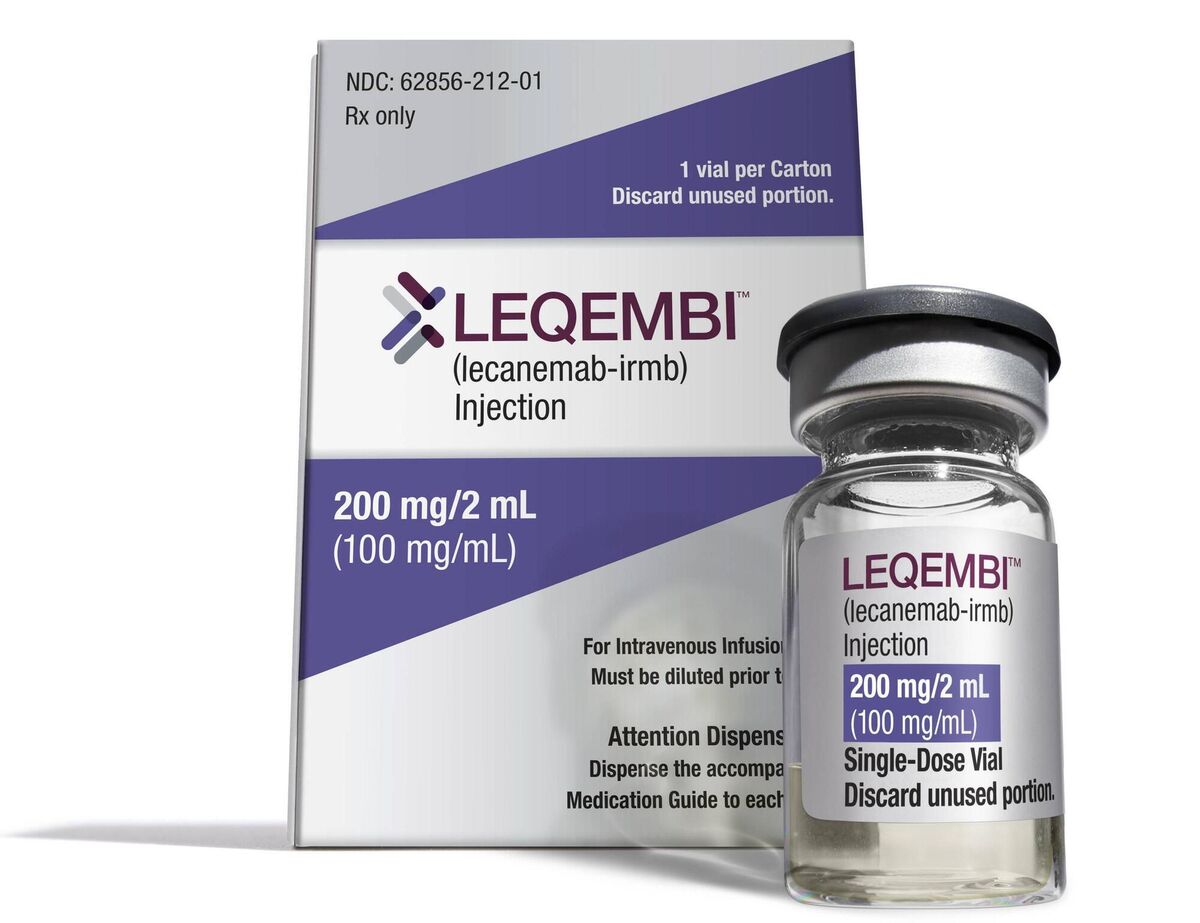
Lecanemab was given full approval on July 6 by the American Food and Drug Administration (FDA) meaning it can be used widely there now, when appropriate.
The drug is designed to target and clear a protein called amyloid that builds up in the brains of people with Alzheimer’s. Scientists found that after 18 months it slowed disease progression by 27%, compared with those taking the placebo. Findings were evident as early as six months after participants started taking the drug.
Donanemab made headlines this week when evidence of clinical trial success was presented at the Alzheimer’s Association International Conference. This also works by clearing amyloid.
Scientists found Donanemab was able to slow clinical decline by 35.1% in people with early-stage Alzheimer’s whose brain scans showed low or medium levels of a protein called tau.
Some 47% of people taking the drug who had early-stage disease and low or medium levels of tau found the disease stalled for a year.
Tau is an essential protein which usually maintains healthy cells. However in cases of Alzheimer’s disease, tau forms toxic clumps or tangles around nerve cells in the brain.
The Alzheimer Society of Ireland has welcomed both developments. Research and policy manager Dr Laura O’Philbin said the Donanemab results are “incredibly heartening”.
“We have entered a new era of drug development, particularly as this news comes just two weeks after the FDA granted full approval to the Lecanemab drug in the United States,” she said.
However she pointed to changes which will be needed, including greater access to MRI scanners to help identify people in the early stages of the disease.
These would also be needed to monitor potentially serious side-effects already noted with Lecanemab in a small number of study participants.
The HSE’s new model of care for dementia says MRIs are the preferred way to give an early diagnosis, with CT scans more appropriate in some cases, including for a person with claustrophobia or a pacemaker.
They also note, however: “The progressive nature of dementia and the low rates of early diagnosis mean that many people receive a diagnosis in the later stages of the condition.”
Dr O’Philbin said that “significant work” would be needed, if these drugs are approved, in order to get the services ready. “And that work must start now,” she said.
However, Dr O’Philbin sounded a note of caution against expectations being raised too high.
“It is important to note that these drugs are not cures and are only suitable for some people who are in the early stages of Alzheimer’s disease,” she warned.

“There will be countless people for whom this drug will not be helpful.
“We must continue to advocate for and resource non-pharmacological interventions and supports for people with all types of dementia, and their families.”
This week also espresso coffee and dementia treatment featured in new Italian research.
A University of Verona study indicated espresso is a source of natural compounds which may help prevent tangles or clumps of tau from forming in the brain.
Professor Mariapina D’Onofrio’s work showed the length of the tau tangles decreased as they increased the coffee extract concentrations. She said two or three cups of coffee daily may act on the tau proteins in this way.
“We expect that moderate coffee consumption may provide a sufficient amount of bioactive molecules to act separately or synergistically as modulators of tau protein aggregation and toxicity,” the study found.
The effect of the coffee extract was quite strong, she found, regardless of the concentration.
The team used a medium-roast ground coffee blend of Arabica coffee from South America and Robusta coffee from Africa and Southwest Asia.
Published in the Journal of Agricultural and Food Chemistry, the findings could pave the way for more investigation into the interaction between coffee and cognitive illnesses, the researchers urged.
CONNECT WITH US TODAY



Be the first to know the latest news and updates